
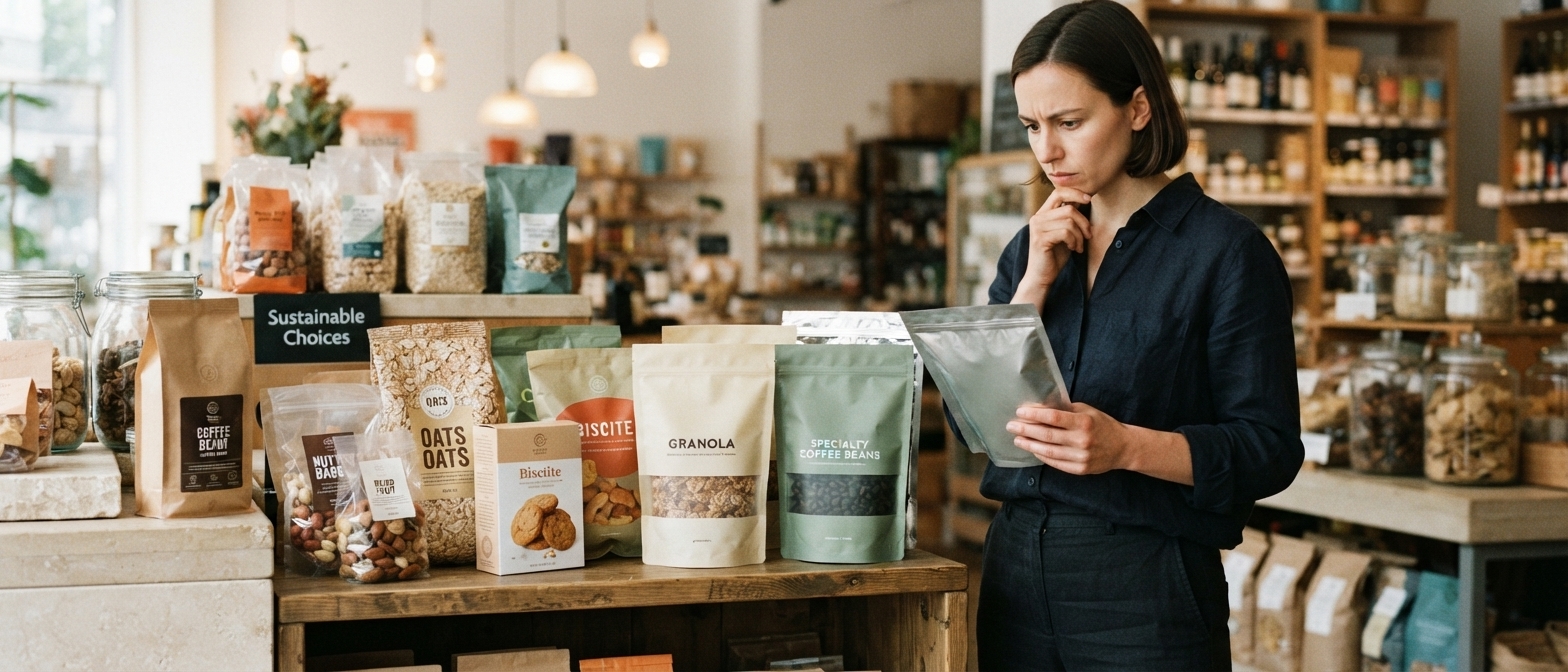
When a food brand considers switching to recyclable packaging, the real concern usually isn’t whether the package looks more sustainable. It’s much more practical: will the food still taste right, stay crisp, keep its aroma and color, and reach the end of its intended shelf life in good condition? If you’re comparing custom recyclable pouches with a traditional multilayer pouch, the better question isn’t “Which material is better?” It’s “Which structure gives this particular food the protection it actually needs?”
01. What Actually Keeps Food Fresh Inside a Package?
02. Traditional Packaging vs. Recyclable Packaging
03. How Can Recyclable Packaging Achieve High Barrier Performance?
04. What Should Food Brands Check Before Switching?
05. Can Recyclable Packaging Really Match Traditional Packaging?
06. How DINGLI PACK Helps Brands Develop Recyclable Food Packaging
07. Key Takeaway: Freshness Comes Before the Recyclable Label
What Actually Keeps Food Fresh Inside a Package?

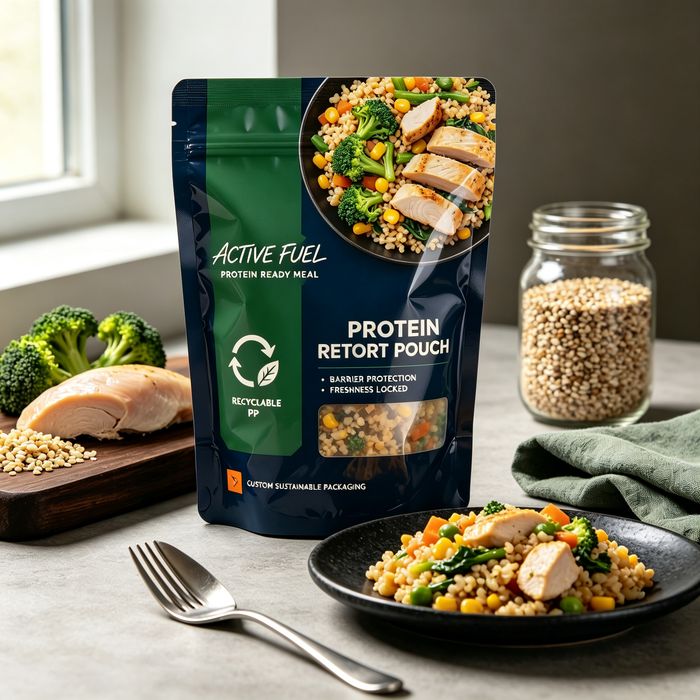
A package protects food by controlling what can move in and out of it. Oxygen, water vapor, light and heat can all affect product quality, while the package itself has to stay properly sealed through filling, shipping and storage.
That’s why a food pouch shouldn’t be judged by its material name alone. Two packages can both be called “recyclable” and still have very different barrier performance.
Oxygen Barrier: The First Line of Protection
Oxygen transmission rate, or OTR, describes how readily oxygen passes through a packaging material under specified test conditions. Generally, a lower OTR means less oxygen can pass through the film over a given period.
Why does that matter? Oxygen can accelerate oxidation, change flavors and aromas, affect color, and contribute to rancidity in foods containing fats and oils. Coffee, nuts and other oxygen-sensitive products therefore need more attention to oxygen barrier performance than many dry foods with shorter or less demanding storage requirements.
But there’s an important distinction: you don’t automatically need the lowest possible OTR. You need an OTR that makes sense for your product, package size, filling process, storage conditions and intended shelf life. Chasing a specification simply because it looks impressive on a material datasheet can add cost without solving a real packaging problem.
Moisture Barrier: Keeping Texture and Quality Stable
Water vapor transmission rate, or WVTR, measures the movement of water vapor through a packaging material under specified conditions.
For many foods, moisture can be just as troublesome as oxygen. Think about a cracker that loses its crunch after absorbing moisture, a powdered ingredient that starts to clump, or dried fruit whose texture changes during storage. The package has to control moisture movement in the direction that matters for that particular product.
This is why food packaging isn’t simply about keeping oxygen out. Moisture control can directly affect what your customer experiences when the package is finally opened.
Seal Integrity Matters As Much As Film Barrier
Here’s one packaging detail that is easy to overlook: excellent film barrier performance doesn’t guarantee excellent package performance.
A pouch can have a strong barrier film and still lose protection if the heat seal is inconsistent, the seal area becomes contaminated during filling, or a zipper or fitment doesn’t close properly.
Barrier performance is not only about the film. It is about the complete package.
For a brand, that means evaluating the film structure, pouch construction, sealing conditions and filling process together rather than looking at one specification in isolation.
Traditional Packaging vs. Recyclable Packaging: What Is the Real Difference?
Traditional multilayer packaging has been widely used because combining different materials can provide several functions in one structure. One layer may contribute strength, another may provide oxygen or moisture resistance, and another may support printing or sealing.
Recyclable packaging takes a different design approach. Instead of automatically combining materials with different polymer families, packaging designers can work toward a structure that is compatible with a particular recycling stream while still providing the required functional performance.
And this is where the comparison becomes more useful.
| Performance Area | Traditional Multilayer Packaging | Recyclable / Mono-Material Packaging |
|---|---|---|
| Oxygen Barrier | Often easier to achieve very high barrier levels | Depends on material and barrier technology |
| Moisture Barrier | Well-established | Can provide strong moisture protection in suitable PE/PP structures |
| Light Protection | Foil and metallized structures can be highly effective | Can be addressed through appropriate structure and design |
| Recyclability | Multiple material families can complicate recycling | Designed around a more compatible material system |
| Shelf Life | Mature and widely established | Must be matched and validated for the product |
| Material Selection | Broad range of combinations | More constrained by the intended recycling route |
| Customization | Highly established | Requires more deliberate structural design |
There is also a common misunderstanding worth clearing up: recyclable does not mean single-layer plastic. A mono-material pouch can contain several functional layers or components. The important consideration is whether the overall structure is compatible with the recycling system it is designed for, rather than whether the package physically contains only one layer.
How Can Recyclable Packaging Achieve High Barrier Performance?
The interesting part of recyclable packaging is not simply replacing one film with another. It’s how packaging engineers build the necessary functions into a structure while keeping the material system suitable for the intended recycling route.
High-Barrier Mono-PE and Mono-PP Structures
Mono-PE and mono-PP structures are designed around polyethylene or polypropylene material families rather than relying on conventional combinations of unrelated polymer types.
Depending on the construction, these structures can incorporate functions for oxygen, moisture and other forms of protection. Mono-PE, mono-PP, MDO-PE and high-barrier coextruded structures can all play different roles depending on the application.
For example, 100% recyclable PLA flat-bottom pouches can be considered for specific applications where the material properties, product requirements and intended end-of-life route align.
For brands, the important word is “specific.” A material should be selected because it fits the food and market requirements, not simply because “mono-material” appears on the specification sheet.
Barrier Coatings and Thin Functional Layers
Some recyclable structures use barrier coatings or very thin functional layers to improve protection without returning to a conventional, highly mixed material structure.
Depending on the application, technologies can involve materials or coatings such as EVOH, PVOH, SiOx or AlOx, as well as other barrier treatments.
However, this is where you should ask a supplier a more detailed question than “Is this recyclable?” Ask: “Is this complete structure compatible with the recycling requirements of my target market?”
The answer depends on the complete construction, the amount and function of each component, the applicable recycling system and the relevant requirements for making a recyclability claim.
Recyclable Does Not Mean Lower Performance by Definition
The more accurate answer is neither “recyclable packaging is just as good” nor “recyclable packaging can’t protect food properly.”
The right recyclable structure can provide sufficient barrier performance for many food applications, but there is no single recyclable package that works equally well for every food product.
That distinction matters. A pouch designed for dry snacks does not necessarily need the same structure as one designed for coffee, high-fat foods or a product requiring a demanding shelf life. Good packaging design starts with the product and works backward to the material structure.
What Should Food Brands Check Before Switching to Recyclable Packaging?
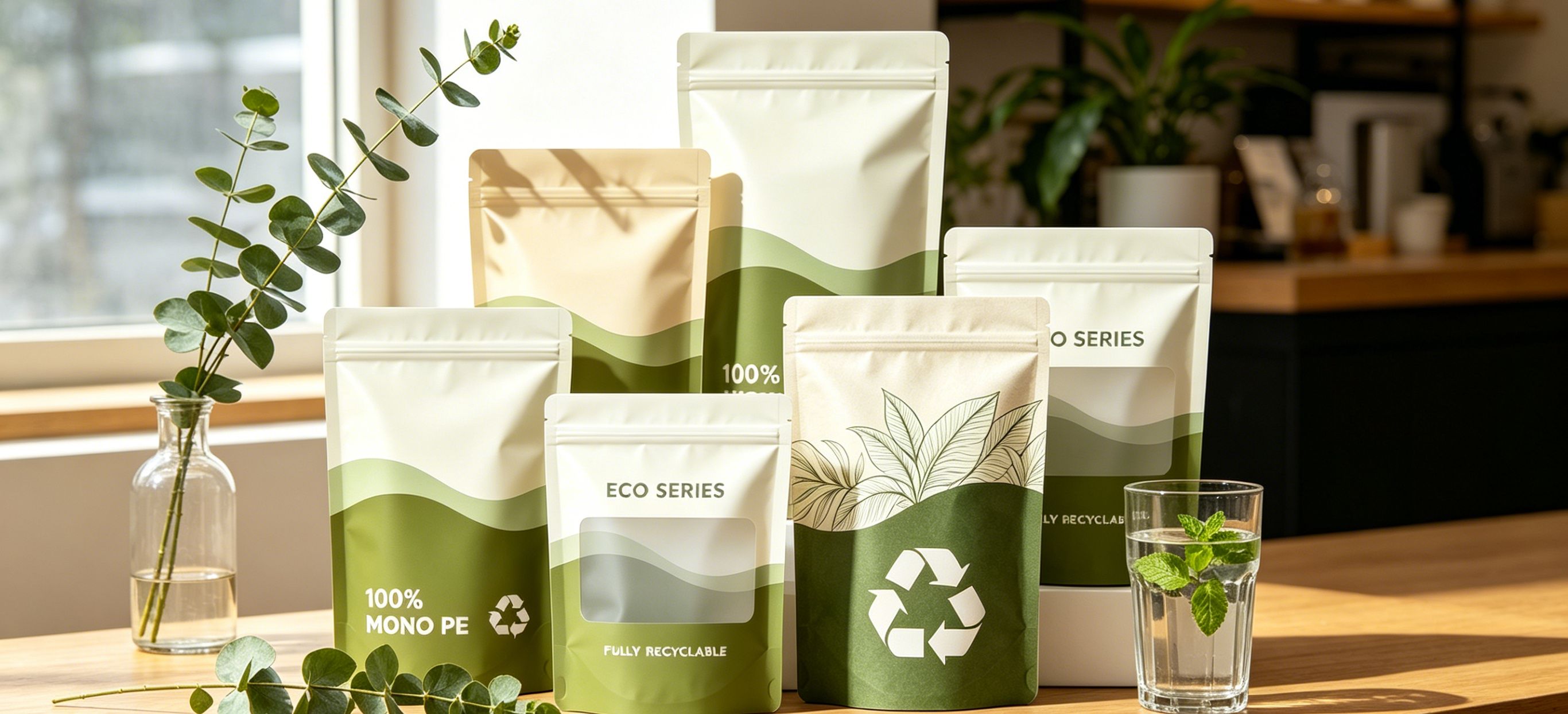
If you’re talking with a packaging supplier about changing an existing package, don’t start with the question, “Which recyclable pouch is cheapest?” Start with what the food needs.
1. Define the Required Shelf Life
First establish how long the product needs to remain within your acceptable quality range.
Consider the entire journey: intended shelf life, production and filling time, international transportation, warehouse storage, retail storage, expected sales cycle, target market and climate.
A package that works well for a product sold locally may need a different protection strategy when the same product is shipped internationally and stored for longer periods.
2. Specify OTR and WVTR Requirements
When comparing recyclable films, ask your supplier for the actual technical information rather than relying on broad terms such as “high barrier.” Useful information includes OTR data, WVTR data, test conditions, film or packaging structure, and temperature and humidity conditions.
This last point matters more than it first appears. Barrier results are meaningful only when you understand the conditions under which they were measured. So don’t compare two “high-barrier” materials as though the numbers are automatically interchangeable.
3. Check Seal Performance and Package Format
The package format can affect how the final product performs. You may be considering stand-up pouches, flat pouches, zipper pouches, spouted pouches, vacuum pouches or retort pouches.
A film’s laboratory barrier result is not the same thing as the performance of a finished pouch with seals, zippers, corners, spouts or other structural features.
For example, a custom mono-PE recyclable spout pouch involves more than choosing a recyclable film. The fitment, sealing area and pouch construction also become part of the packaging system.
4. Verify the Intended Recycling Route
“Recyclable” is not a universal label.
Before approving a structure, ask which country or market the package is intended for, what recycling system is relevant there, whether the package is intended for curbside collection or another collection route, whether the complete structure fits the applicable requirements, and what supporting documentation or testing is available.
This is particularly important for brands selling across multiple countries. A structure suitable for one market should not automatically be presented as universally recyclable everywhere.
Can Recyclable Packaging Really Match Traditional Packaging?
Sometimes yes. Sometimes no. The product decides.
In Many Dry Food Applications, Yes
For many dry foods, a properly designed recyclable structure can provide the oxygen and moisture protection needed to maintain the intended product quality and shelf life.
Dry snacks, grains and similar products are good examples where the packaging requirement can often be defined around moisture protection, oxygen exposure, seal integrity and the expected storage period.
For products such as rice, cereals and roasted grains, custom recyclable 1kg–5kg flat-bottom pouches illustrate how recyclable packaging can be designed around a specific food category rather than treated as a generic material swap.
In High-Barrier Applications, It Depends
Coffee, nuts, fatty snacks and other sensitive foods can place greater demands on oxygen, moisture, aroma and light protection.
That doesn’t mean recyclable packaging is automatically unsuitable. It means the structure needs to be selected more carefully, and the required barrier performance should be connected to the actual product and shelf-life target.
For a coffee brand, for instance, “recyclable pouch” is only the beginning of the conversation. You may also need to discuss the product’s sensitivity to oxygen, the importance of aroma retention, the desired shelf life, the filling method and whether a valve is required.
For Some Applications, Traditional Structures May Still Be Necessary
There are applications where a conventional structure may remain the more appropriate technical choice.
That isn’t a failure of recyclable packaging. If a packaging change significantly reduces product shelf life or causes food to deteriorate before it reaches the consumer, the environmental benefit becomes more complicated to evaluate. Preventing unnecessary food waste is part of responsible packaging design too.
The goal should therefore be the right level of protection with the most appropriate material structure, not recyclability at any cost.
How DINGLI PACK Helps Brands Develop Recyclable Food Packaging
When you approach DINGLI PACK with a recyclable packaging project, WE don’t think the first question should be, “Which pouch do you sell?”
The better starting point is: What are you putting inside it, how long does it need to last, where will it be sold, and what does the package need to withstand along the way?
From there, the packaging structure can be considered around the product’s barrier requirements, format, sealing needs, printing requirements and intended recycling route.
DINGLI PACK can also work with different packaging formats and customized printed structures. For brands using roll-fed or form-fill-seal production, custom printed recyclable rollstock film can be another option when the production setup calls for film rather than pre-made pouches.
The practical advantage of discussing these details early is simple: you can avoid choosing a material first and discovering later that it doesn’t suit your filling process, shelf-life target or market requirements.
If you already know your product, package size and target market, you can talk to DINGLI PACK before moving into bulk production.
Key Takeaway: Freshness Comes Before the Recyclable Label
Recyclable packaging does not have to mean giving up food freshness.
But “recyclable” by itself tells you very little about how well a package will protect a particular food. Oxygen barrier, moisture barrier, seal integrity, package format, shelf life and the intended recycling route all have to work together.
That’s the part worth remembering.
The best recyclable food package isn’t necessarily the one with the most advanced material or the simplest structure. It is the one that provides the protection your product needs while fitting the recycling requirements of its intended market.
If you’re evaluating a new recyclable pouch, start with the food—not the film.
Frequently Asked Questions
01 What Recyclable Packaging Works Best For Food? +
02 How Do I Choose The Right Pouch Size And Format? +
03 How Do Zippers, Spouts, And Seals Affect Performance? +
04 Can Recyclable Pouches Provide Enough Barrier For Long Shelf Life? +
05 What Food Contact And Compliance Documents Should I Request? +
06 What MOQ, Pricing, And Support Can I Expect? +
ONE-STOP PACKAGING SOLUTION - From Concept to Shelf in 7 Days
At DINGLI PACK, we know how stressful packaging can be for small brands, store owners, and startups. That’s why we focus on making it simple, reliable, and tailored to your needs. From stand up pouches, coffee bags with valves, flat bottom bags, spout pouches, shrink sleeves...
Our team provides hands-on support—from free package design and material advice to practical OEM guidance—making sure your product looks great and stays protected. Want to see us in action? Check our Video Center.
With a 5,000 m² workshop and 24/7 support, we deliver fast replies, consistent quality, and peace of mind. Stay updated with our tips and stories in the News Section, or explore all our solutions on the Products Page.
We’re more than a supplier—we’re a partner who understands the challenges of growing a brand and is ready to make your packaging shine.
Related Packaging Solutions

HuizhouDingli Packaging Products Co.Ltd.


Post time: Oct-05-2026