
Is your packaging ready for PPWR 2026, or will you discover a compliance problem only after your European customer asks for documents?
This is a question more and more brands are asking right now. Many companies already have stable packaging suppliers, finished product designs, and regular shipments to Europe. The problem is that packaging compliance is changing, and some existing packaging structures may not meet future requirements.
If you are looking for PPWR compliant packaging, the first step is always understanding your current packaging structure, documentation, and recycling options.
PPWR Compliance Checklist: 5 Things Brands Should Do Now

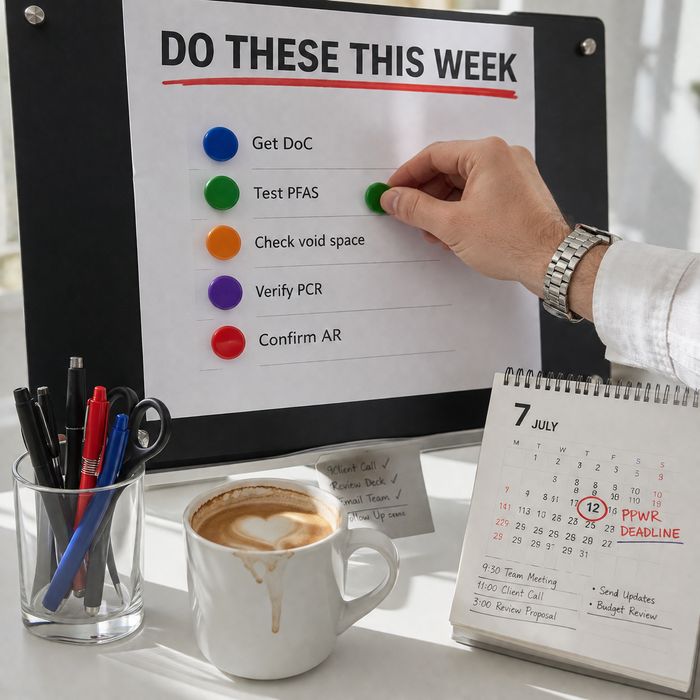
1. Ask Your Packaging Supplier for PPWR Documents
The first thing you should do is contact your packaging supplier and ask for compliance information before your next production order.
Do not wait until a retailer or distributor requests it. By that time, changing packaging may already affect your inventory, production schedule, and product launch plans.
Your supplier should be able to explain:
- Packaging material structure
- Food contact compliance information
- Testing reports
- Recycling information
- Material specifications
One common situation we see is that brands receive a package described as “recyclable”, but nobody can clearly explain why it is recyclable or provide supporting documents.
A professional packaging supplier should not only manufacture the bag. They should understand the material structure and explain the advantages and limitations of that structure.
For many dry products, supplements, snacks, and powder applications, brands are now considering recyclable mono PE stand up pouches as an alternative to traditional mixed-material packaging.
However, there is one thing worth mentioning: mono-material packaging is not suitable for every product.
Some products require extremely high oxygen or moisture barriers, and a different structure may still be necessary. The right choice depends on your product requirements, shelf life, and market regulations.
2. Complete PFAS and Hazardous Substance Checks
Recyclability is only one part of PPWR compliance. Chemical safety is another area brands need to review carefully.
Before placing packaging on the EU market, companies should confirm whether their packaging contains restricted substances, including:
- Lead
- Cadmium
- Mercury
- Hexavalent chromium
- PFAS substances
PFAS has received increasing attention in food packaging because some historical packaging applications used these chemicals for grease and water resistance.
The practical approach is simple: ask your supplier for test information instead of relying only on marketing descriptions.
For food-related packaging projects, DINGLI PACK can support customers with third-party testing documents, including SGS reports when required.
The goal is not to add unnecessary paperwork. It is to make sure you know exactly what packaging you are putting into the market.
3. Review Your Packaging Recyclability
One question we often receive from brands is:
“What type of packaging will meet PPWR requirements?”
The honest answer is that there is no single packaging solution for every product.
Coffee requires aroma protection. Protein powder needs moisture control. Pet food packaging needs strength and durability. Different products have different priorities.
The challenge is finding a balance between product protection, cost, and recyclability.
Traditional aluminum foil laminate structures are still widely used because they provide excellent barrier performance. However, multi-layer structures can be more difficult to recycle because different materials are combined together.
For brands looking for a simpler recycling pathway, recyclable mono PE packaging is one option worth evaluating.
This type of structure can help brands reduce material complexity while maintaining the flexibility and printing quality needed for modern retail packaging.
4. Review Packaging Reduction and Empty Space Requirements
PPWR is not only about recycling. Another important part is reducing unnecessary packaging.
Many brands focus on the material itself but forget about the amount of packaging they are using. Under the new requirements, companies need to think about whether every layer, box, and filling material is actually needed.
For example, an online product may arrive in a large shipping box with a lot of empty space, extra plastic fillers, and unnecessary inner packaging. From a customer’s perspective, it feels wasteful. From a regulation perspective, it may also become a problem.
Brands should review questions like:
- Is the outer packaging larger than necessary?
- Are there unnecessary layers between the product and customer?
- Can the same protection be achieved with less material?
- Is the packaging designed for the actual product size?
This does not mean every package needs to become smaller or thinner. A package still needs to protect the product during transportation and storage.
The right approach is finding the balance between protection and material efficiency.
For many brands, flexible packaging already provides an advantage because pouches usually use less material compared with rigid packaging formats while still offering strong product protection.
If your goal is reducing packaging impact while maintaining retail quality, options such as recyclable kraft paper stand up pouches can be considered for products such as vitamins, powders, snacks, and dry foods.
5. Non-EU Brands Should Confirm Their EU Authorized Representative
If your company is located outside the European Union but sells products into Europe, this step should not be ignored.
Many overseas brands focus on the packaging itself but forget that compliance also involves responsibility. Someone needs to handle regulatory communication and documentation if questions come from authorities or market partners.
Before selling under PPWR requirements, non-EU companies should confirm:
- Who is responsible for compliance communication?
- Who keeps packaging documentation?
- Who works with importers or distributors?
- Is the correct EU representative arrangement in place?
This is especially important for brands selling through multiple channels, including distributors, marketplaces, and retail partners.
A packaging issue can quickly become a sales issue if nobody knows who is responsible for solving it.
The Complete PPWR Compliance Checklist Brands Should Follow
Before your next packaging order, it is worth going through this checklist with your supplier.
| Compliance Area | What Brands Should Check |
|---|---|
| Material Safety | Confirm restricted substances testing, food contact compliance, and PFAS information. |
| Packaging Structure | Understand every layer and check whether the structure supports future recycling requirements. |
| Recyclability | Review whether the packaging can be recycled within available systems. |
| Documentation | Request technical specifications, test reports, and supplier compliance documents. |
| Packaging Reduction | Check if unnecessary materials, oversized packaging, or excessive layers can be removed. |
| Future Planning | Choose materials that can support upcoming regulatory changes instead of only today’s requirements. |
A good packaging review does not mean immediately replacing everything you currently use.
Sometimes a small change in structure, material selection, or supplier documentation can solve the problem.
The key is knowing where the risks are before they affect your business.
Common PPWR Compliance Mistakes Brands Should Avoid
Mistake 1: Choosing “Eco-Friendly Packaging” Without Proof
One of the most common mistakes is believing that a sustainability claim automatically means compliance.
It does not.
Words like “green”, “eco”, or “environmentally friendly” are often used in marketing, but PPWR compliance requires technical information.
A better question is:
“Can my supplier prove why this packaging meets the requirement?”
The answer should come from material information, testing, and documentation.
Mistake 2: Waiting Until Regulations Become Mandatory
Some brands wait because they think packaging changes are simple.
Usually, they are not.
A packaging update may involve:
- New packaging design
- New samples
- Testing approval
- Production adjustment
- Inventory planning
If you discover a problem after your stock is already produced, your options become limited.
Starting earlier gives you more choices.
Mistake 3: Choosing Complex Packaging Structures Without Considering Recycling
Multi-layer packaging exists for a reason. It provides excellent protection for products that need strong barriers.
However, brands should understand the trade-off.
A structure that performs well technically may not always be the easiest option from a recycling perspective.
This is why more companies are reviewing simpler structures such as mono-material packaging.
For brands exploring alternatives, DINGLI PACK provides recyclable mono PE packaging options for different food, supplement, and retail applications.
How DINGLI PACK Helps Brands Prepare for PPWR Compliance
When brands contact us about PPWR, we usually start with a basic question:
“What product are you packaging, and what does the current package look like?”
Because the best packaging choice depends on the product.
A coffee brand, a vitamin company, and a pet food manufacturer may all need different solutions.
Our approach is simple: understand the product first, then review materials, structure, and production requirements.
1. Recyclable Mono Material Packaging
Mono-material packaging is becoming one of the main options brands are exploring for future recycling requirements.
Compared with traditional mixed-material structures, mono-material designs use a simpler material system, which can make recycling processes easier.
DINGLI PACK provides recyclable mono PE stand up pouches with custom printing, zipper options, and different sizes for food and consumer products.
2. Compostable Packaging Options
Compostable packaging is another option some brands are considering, especially for products where sustainability positioning is an important part of the brand message.
However, compostable packaging also requires careful evaluation.
It is not suitable for every recycling system or every product category. Brands should check local regulations, product requirements, and disposal conditions before making a decision.
For suitable applications, we provide compostable stand up pouches with customized printing and zipper closure options.
3. Kraft Sustainable Packaging for Brands Looking for a More Natural Option
Kraft paper packaging has become popular among brands that want a more natural appearance while still maintaining practical packaging performance.
It is especially common in markets such as organic food, tea, coffee, supplements, and wellness products where customers often connect the packaging appearance with the brand story.
However, there is one important point brands should understand:
Kraft paper appearance does not automatically mean the package is recyclable or compostable.
The actual material structure matters. A kraft-style pouch may still contain different layers inside to provide moisture, oxygen, or aroma protection.
Before choosing kraft packaging, brands should check the complete structure and ask suppliers about recyclability information.
For brands looking for paper-based packaging options, DINGLI PACK provides biodegradable kraft zipper pouches and kraft packaging solutions for products such as organic food, superfoods, and dry goods.
How to Prepare Your Packaging Strategy Before PPWR 2026
Many companies make the same mistake when preparing for new regulations: they only focus on the deadline.
The better approach is to treat PPWR preparation as a packaging review process.
Start by looking at your current products and asking:
- Does our current packaging structure still make sense?
- Can we simplify the material combination?
- Do we have enough compliance documents from our supplier?
- Will this packaging still work if regulations become stricter?
You do not always need to completely redesign your packaging.
Sometimes the solution may be changing the material structure, improving documentation, or selecting a packaging supplier with stronger compliance support.
The earlier you review these points, the more options you have.
Need Help Reviewing Your Packaging Before PPWR 2026?
If you are unsure whether your current packaging structure is ready for European requirements, start with a packaging review.
Share your current packaging details, product information, and target market with our team. We can help you evaluate possible material options and recommend a practical direction based on your product needs.
Whether you need recyclable mono-material pouches, compostable packaging, kraft solutions, or customized flexible packaging, DINGLI PACK works with brands to develop packaging that fits both product requirements and market expectations.
You can contact DINGLI PACK to discuss your packaging project and PPWR preparation needs.
For more information about our packaging capabilities and manufacturing experience, visit our DINGLI PACK official website.
Frequently Asked Questions About PPWR Compliant Packaging
ONE-STOP PACKAGING SOLUTION - From Concept to Shelf in 7 Days
At DINGLI PACK, we know how stressful packaging can be for small brands, store owners, and startups. That’s why we focus on making it simple, reliable, and tailored to your needs. From stand up pouches, coffee bags with valves, flat bottom bags, spout pouches, shrink sleeves...
Our team provides hands-on support—from free package design and material advice to practical OEM guidance—making sure your product looks great and stays protected. Want to see us in action? Check our Video Center.
With a 5,000 m² workshop and 24/7 support, we deliver fast replies, consistent quality, and peace of mind. Stay updated with our tips and stories in the News Section, or explore all our solutions on the Products Page.
We’re more than a supplier—we’re a partner who understands the challenges of growing a brand and is ready to make your packaging shine.
Address
Block B-29,
VanYang Crowd Innovation Park ,
No 1 ShuangYang Road,
YangQiao Town, BoLuo District,
HuiZhou City, 516157, China
Phone
Support: +86 13410678885
Hours
Monday-Friday: 9am to 6pm
Saturday, Sunday: Closed


Post time: Jul-20-2026