A good pet product can still get overlooked if its packaging looks like every other bag on the shelf. Walk into a pet shop and you'll see rows of dog treats, dry food, and supplements competing for attention. Your package has a job to do: catch the eye, explain what's inside, and give shoppers a reason to remember your brand. Whether you're launching your first pet product or refreshing an established range, well-planned custom pet food packaging can help you stand apart while meeting the practical demands of storage, handling, and retail display.
Where should you start? You don't need a complete redesign. A recognizable logo, a consistent color palette, readable typography, and the right pouch format can make a real difference. Let's look at what matters—and what to check before your design goes to print.
Quick Overview EXPLORE THIS GUIDE +
Building a recognizable pet brand takes more than a good logo. This guide covers the design choices and packaging details that help your products stand out on the shelf and stay consistent across orders.
- Design a Memorable Logo for Your Pet Brand
- Choose the Right Colors for Your Pet Brand
- Choose Fonts That Match Your Pet Brand Identity
- Keep Your Pet Brand Design Consistent
- Choose Packaging That Supports Your Brand Design
- Make Sure Your Printed Packaging Matches the Design
- Avoid Common Pet Packaging Design Mistakes
- Plan Your Pet Packaging Budget Before Placing an Order
1. Design a Memorable Logo for Your Pet Brand

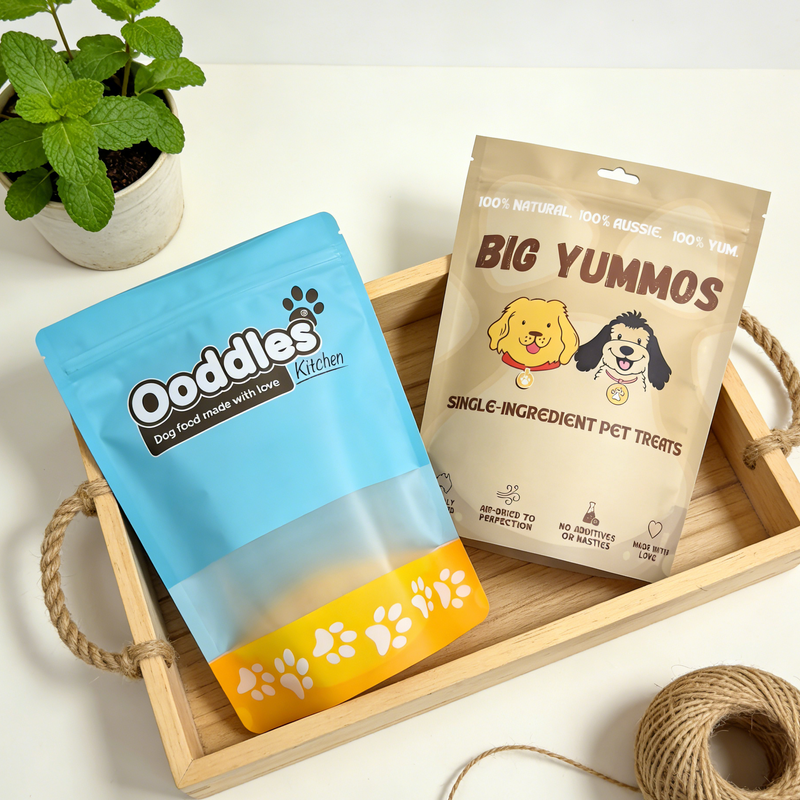
Your logo might be the first thing a shopper notices, whether they're browsing a pet store shelf or scrolling through an online listing. It doesn't need to tell your entire brand story. It needs to be recognizable and work wherever your products appear.
Imagine a small dog treat brand with a detailed illustration of a golden retriever. It looks great on a website banner, but on a small pouch, the fine lines blur together. A simpler logo may hold up better across different package sizes, product photos, and promotional materials.
Keep Your Logo Simple and Easy to Recognize
Before approving a design, check a few basics:
- Can shoppers recognize the logo when it's printed small?
- Does it remain clear against light and dark backgrounds?
- Can people read the brand name without squinting?
- Will important details stay visible around folds and sealed edges?
Leave enough room for the product name and essential information, too. If the logo, dog illustration, slogan, and decorative elements all compete for attention, the product itself can get lost.
Make Sure Your Logo Works Across Packaging Formats
Your logo might appear on a small treat pouch today and a larger pet food bag next year. It may also show up on shipping cartons, labels, and product listings. Design for those different uses from the start.
Check the logo against the actual pouch dimensions, not just a screen mockup. Keep key details away from seals and gussets, and ask your packaging supplier to confirm the printable area. A design that only works at full size isn't ready for production.
2. Choose the Right Colors for Your Pet Brand
Color helps shoppers recognize your brand before they read the product name. It can also separate flavors, product types, and different price ranges. But there's no universal formula: green doesn't automatically mean natural, and black doesn't guarantee a premium look.
Create a Consistent Brand Color Palette
Start with one primary color, one or two supporting colors, and a limited number of accents. A premium dog treat brand might use a restrained palette, while a playful pet snack line could lean on brighter colors and expressive illustrations. Both can work when the design fits the product and remains easy to read.
When choosing your palette, consider:
- Shelf visibility: Does the package stand out without looking cluttered?
- Readability: Is there enough contrast between the text and background?
- Brand consistency: Do the colors work across different flavors and pouch sizes?
- Print results: Can the selected colors be reproduced on your chosen material?
That last point deserves attention. A bright blue on your monitor may look different on matte film than on a glossy surface. The material and printing process both affect the final result, so don't rely on screen colors alone.
Use Color to Differentiate Flavors and Product Lines
Say you sell chicken, beef, and salmon dog treats. Keep the logo, typography, and basic layout consistent, then use a different supporting color for each flavor. Shoppers can recognize the brand while finding the product they want.
This approach also makes expansion easier. When you introduce another recipe, you can build on an existing design instead of starting from scratch. Before mass production, confirm your color references and printed sample with the supplier.
3. Choose Fonts That Match Your Pet Brand Identity
Typography gives your brand personality, but it also helps customers understand what they're buying. A playful display font may suit dog biscuits, while a clean typeface may work better for pet supplements. The right choice depends on your brand—not on whichever font happens to be trending.
Balance Personality With Readability
Try using two main font families: one for headings and another for supporting information. You can create hierarchy through size, weight, and spacing instead of giving every message a different typeface.
Pay particular attention to the product name, flavor, net weight, and required product information. These details should remain readable at the size shoppers will see on the shelf. Decorative lettering can work for a short brand name; long ingredient lists need a more practical approach.
Check Typography on the Finished Pouch
A layout that looks spacious on a desktop screen can become crowded on a small pouch. Folds and sealing areas can create further problems. Review the artwork at its intended print size, keep small text legible, and check that essential information sits clear of edges and seals. Product labeling requirements also vary by market, so have the final copy checked before printing.
4. Keep Your Pet Brand Design Consistent
A recognizable brand doesn't need identical packaging for every product. It needs a visual system that connects the range without making every item look the same.
This becomes especially useful when you expand from dog treats into dry food or supplements. Customers who already know your brand should be able to spot the connection without confusing one product with another.
Apply the Same Visual Identity Across Products
Set a few design rules and use them across your range:
- Logo placement and proportions
- Primary brand colors
- Typography and heading styles
- Illustration or photography style
- General layout and spacing
Then decide what can change: flavor colors, product names, ingredient images, and package sizes, for example. This gives each SKU its own identity without losing the overall brand look.
Match Your Packaging Design to Your Brand Positioning
A brand selling everyday dog treats may need a clear product name, approachable visuals, and a resealable closure. A specialist nutrition brand might prefer a more restrained layout with greater emphasis on ingredients and product information.
The material and finish also influence the look. Matte film can give a design a softer appearance; glossy film reflects more light and may make colors appear different. Neither is automatically better. Your artwork, budget, pouch structure, and shelf setting should guide the choice.
Check Consistency Across Print Runs
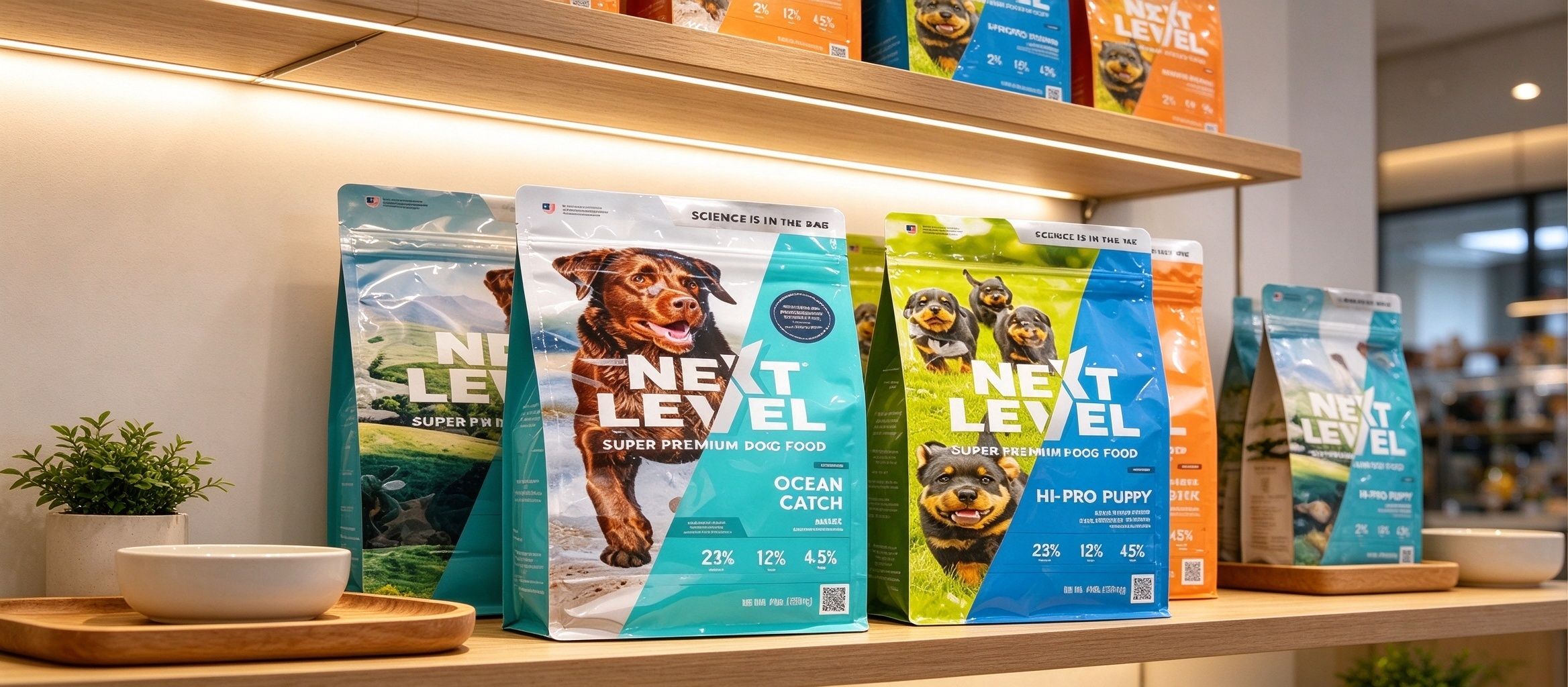
Brand consistency matters after the first order, too. Changes in artwork files, materials, or color references can make a repeat batch look different. Keep approved artwork and production specifications on file, and agree with your supplier on how print quality and color will be checked. This is especially useful when you manage several SKUs or reorder packaging regularly.
5. Choose Packaging That Supports Your Brand Design
A good design needs a suitable package. A beautiful pouch that fails to protect the product, fit your filling process, or close securely isn't doing its job.
Start with what's going inside. Is it dry kibble, a crunchy treat, a soft chew, or powdered supplements? How much will each bag hold? How long must the product maintain its quality? These details help determine the pouch format and material before you finalize the artwork.
Choose the Right Pouch for Your Pet Product
Stand-up pouches for treats and smaller pet food products
Stand-up pouches provide a visible front panel and can work well for retail display. Depending on the design, they can include resealable zippers, tear notches, and other useful features. When evaluating custom stand-up pet food bags, consider product protection, filling requirements, and the space needed for product information—not just how the pouch looks.
Larger bags for dry pet food
Larger packs bring different demands: bag strength, sealing performance, weight, and handling all matter. A pouch designed for a small handful of treats may not suit a multi-kilogram food product. Custom 2.5 kg pet food bags offer one starting point for evaluating larger formats. The final structure should match the product's protection needs and filling process.
Kraft-look and alternative packaging options
A kraft-style appearance can suit brands looking for a natural, understated look. But brown paper-like visuals don't automatically make a package recyclable or biodegradable. Those claims depend on the actual material structure, the available disposal systems, and the rules in your target market. If you're considering custom kraft-style pet food packaging, check the material composition and supporting evidence before making environmental claims.
Packaging for pet supplements
Powders, granules, and other supplements may need different protection from ordinary dry treats. Moisture sensitivity, aroma retention, serving size, and ease of opening all affect the choice. Explore stand-up pouch packaging for pet nutritional supplements as one option, then confirm the actual barrier and closure requirements with your supplier.
Match Packaging Materials to Product Protection Needs
Packaging materials should be selected for performance, not appearance alone. Depending on the product, you'll need to consider moisture and oxygen transmission, light exposure, aroma retention, puncture resistance, and seal integrity.
Before choosing a material, discuss these points with your supplier:
- Product characteristics: Is it oily, moisture-sensitive, aromatic, or easy to crush?
- Storage conditions: Will it face changing humidity or long-distance shipping?
- Shelf-life requirements: What level of protection does the product need?
- Package size and weight: Can the pouch handle filling, stacking, and delivery?
- Closure requirements: Does it need a resealable zipper or another opening feature?
No single material structure works for every pet product. If you're unsure where to start, share the product details and intended use with your supplier. That gives both sides a much better basis for comparing options than a product photo alone.
6. Make Sure Your Printed Packaging Matches the Design
This is where a good design meets the realities of manufacturing. The artwork may look perfect on a screen, but the finished pouch has other things to contend with: material surfaces, folds, seals, and the way the bag looks once filled.
These are normal production considerations. The goal is to catch problems before they affect a large order.
Prepare Your Artwork for Printing
Before submitting final files, confirm the pouch dimensions, dieline, bleed, safe areas, and required file format with your supplier. Keep the logo and key product information clear of sealing zones and folds.
If you plan to use the same design across several pouch sizes, check each layout separately. One file won't necessarily fit every format without adjustments. Confirm which design elements may need changes for the selected printing process, too.
Approve Colors and Samples Before Mass Production
Screen colors aren't a substitute for an approved printed reference. The substrate, surface finish, inks, and printing process can all affect the result.
For brands that rely on precise color matching, agree on the reference and approval process before production. Check logo clarity, text legibility, color balance, pouch dimensions, and closure performance. A physical sample can also reveal problems that a digital mockup misses—especially when the pouch is filled with the actual product.
Plan for Repeat Orders From the Beginning
Keep approved artwork, material specifications, dimensions, print references, and finishing details organized. These records give your supplier a clear starting point for the next order or a new SKU. They also help distinguish intentional design changes from production differences that need checking.
7. Avoid Common Pet Packaging Design Mistakes
You don't always need a full redesign. Sometimes, fixing a few practical issues does more for your packaging than adding another graphic or slogan.
Putting Too Much Information on the Front
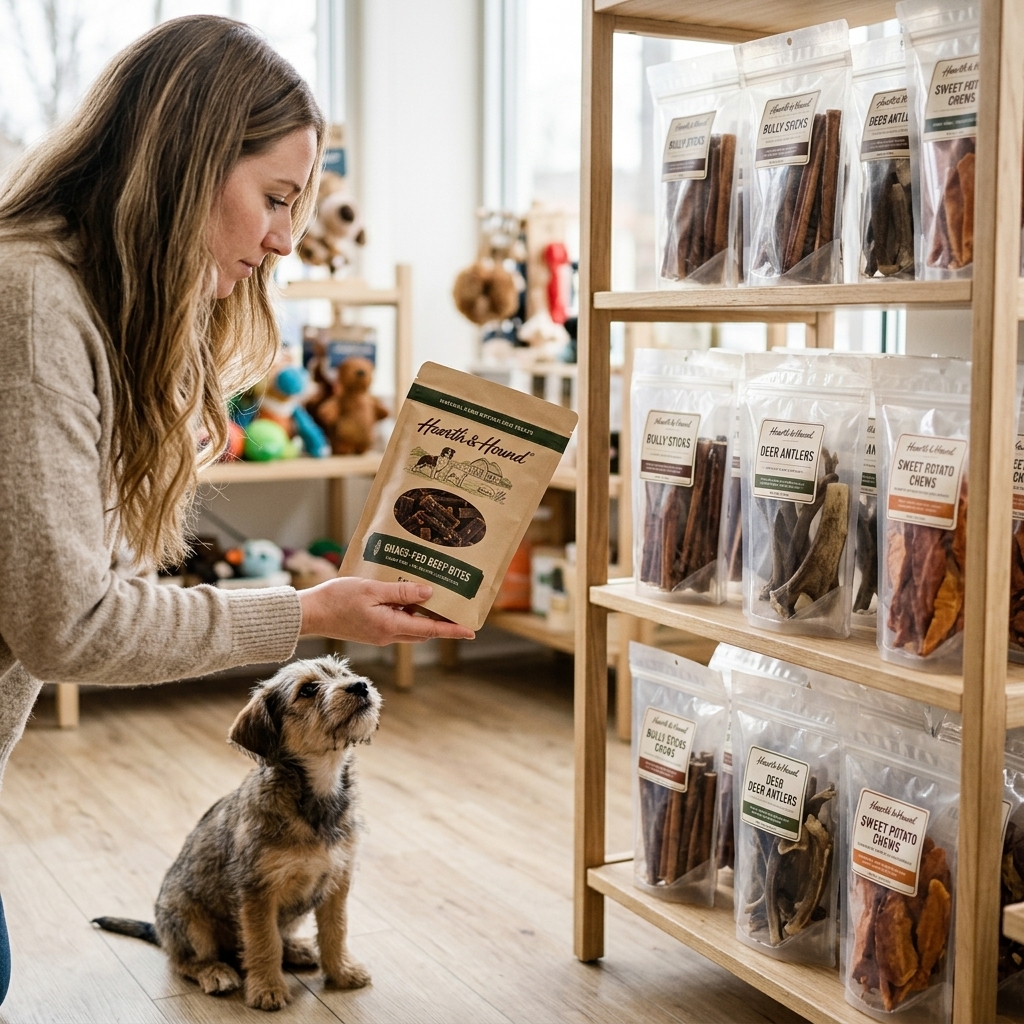
A front panel crowded with slogans, ingredient claims, illustrations, and badges can bury the product name. Give the brand and product type a clear hierarchy. Keep supporting information organized, and make sure required details remain legible.
Choosing Looks Before Function
A finish or material may look attractive but still be unsuitable for your product. Check protection, filling, storage, and distribution requirements before settling on the final structure.
Using Different Design Rules for Every SKU
Changing everything for each flavor weakens brand recognition and creates more artwork to manage. Keep the core elements consistent, then use a controlled set of variations to distinguish flavors, product types, and sizes.
Skipping the Sample Stage
A logo too close to a seal, a hard-to-read ingredient list, or a color that looks different on the actual film can create costly rework. Reviewing samples and confirming the final specifications before mass production helps reduce these risks.
Making Environmental Claims Without Checking the Materials
Terms such as recyclable, biodegradable, and compostable have specific implications. Don't base these claims on a natural-looking design or a general supplier description. Check the actual packaging structure, supporting evidence, and requirements in your target market before printing environmental statements.
8. Plan Your Pet Packaging Budget Before Placing an Order
Packaging costs go beyond the price of each bag. Artwork revisions, sampling, inventory, storage, and unused stock can all affect your budget. A little planning now can save money later.
Start With Your First Product Range
If you're launching several flavors, decide which elements can share a design and which need separate artwork. Standardizing suitable pouch sizes or layouts may simplify production, although the savings depend on order quantities and printing methods.
You don't have to launch every variation at once. Start with the products you can realistically sell and replenish, then expand as demand becomes clearer.
Understand MOQ and Unit Pricing
The minimum order quantity (MOQ) for custom pet food packaging depends on pouch dimensions, material structure, printing method, finishing options, and production requirements.
A lower unit price doesn't always mean a cheaper order if you end up storing bags you won't use for months. Compare the total order value, sampling costs, quantity, and expected usage—not just the price per pouch.
Working with a limited launch budget? Tell your supplier your target quantity and product plans. They can assess which options fit your needs instead of quoting a package that doesn't suit your business.
Prepare a Clear Brief Before Requesting a Quote
You don't need every technical detail finalized before contacting a packaging manufacturer. A clear brief is enough to get the conversation moving.
- Product type and filling weight
- Preferred pouch style and approximate dimensions
- Material and product protection requirements
- Logo and artwork, if available
- Estimated order quantity
- Target market and expected delivery schedule
Still deciding on the material or pouch format? Say so. A useful supplier conversation should help you compare options and identify what needs confirming before production.
Build a Pet Brand Customers Can Recognize
Memorable pet packaging starts with a clear brand identity, but it takes more than a logo and a color palette. Your design needs to work on the actual pouch, communicate the right product information, and suit the product's protection and storage requirements.
Start with the basics: make the brand easy to recognize, keep your product range visually consistent, and choose packaging for real-world use—not appearance alone. Then confirm the artwork, materials, and print details before mass production.
At DINGLI PACK, we work with businesses looking for customized packaging solutions across different products and order requirements. Whether you're developing a new pet food range, updating dog treat bags, or planning packaging for pet supplements, we can help you evaluate suitable pouch formats, materials, and printing options.
Planning Your Next Pet Packaging Order?
Share your product details, target quantity, and artwork if available. We'll help you explore suitable packaging options and discuss the requirements for your project.
You can also visit the DINGLI PACK website to explore more packaging options for your business.
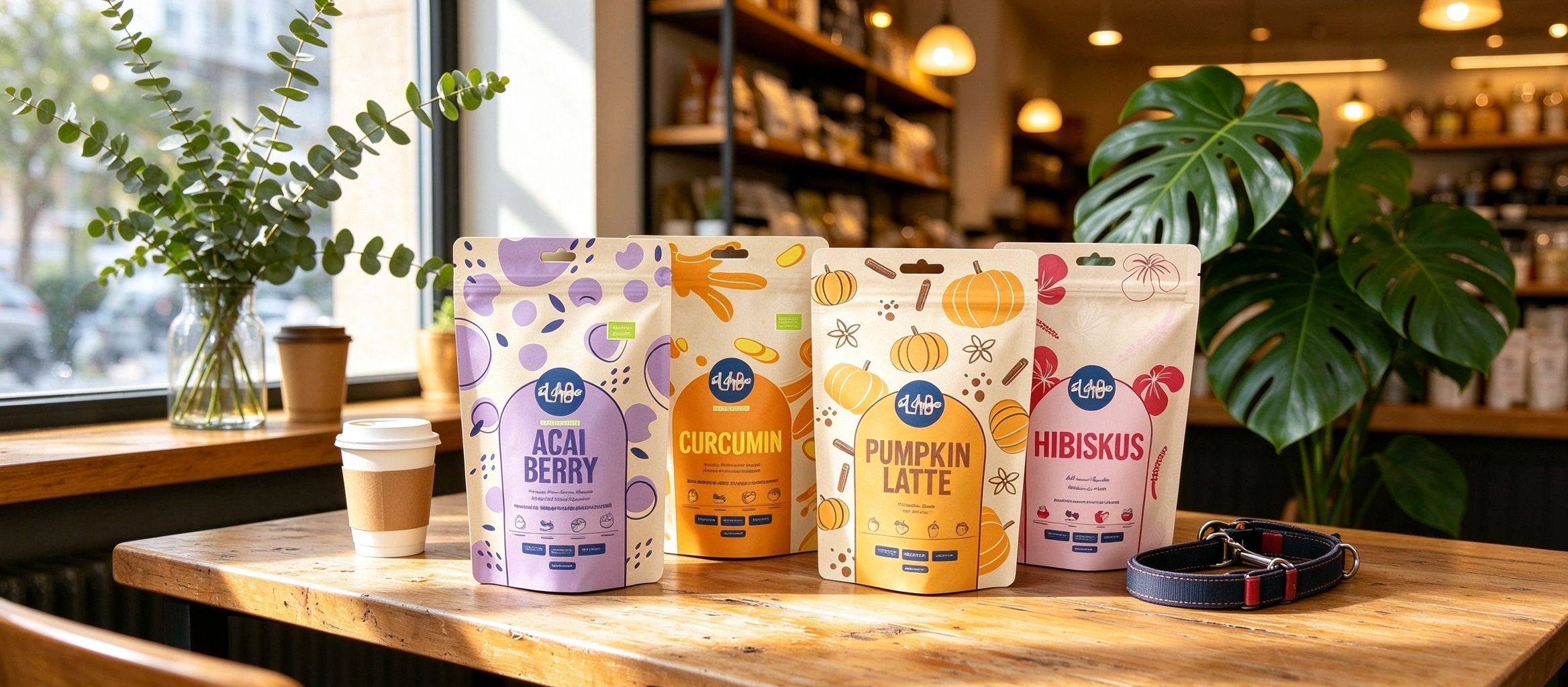
Related Pet Packaging Products
Custom Matte Three-Side Seal Dog Treat Pouches
A practical option for dog treats, training rewards, and smaller pet snack portions. Customize the print, pouch dimensions, and material structure to suit your product and retail presentation.
View Product Details →Custom Matte Foil Stand-Up & Flat-Bottom Pet Food Bags
Explore matte aluminum foil pouch options with stand-up or flat-bottom structures and zipper closures. Suitable for brands looking for shelf presence and packaging tailored to dog or cat food.
Explore Pouch Options →More Pet Packaging Guides
Compare packaging materials, pouch styles, and printing methods before planning your next pet product launch.
Why Choose Aluminum Foil Pouches for Pet Food?
Understand barrier protection and when foil-based packaging may suit your pet food product.
How Custom Stand-Up Pouches Can Support Pet Brand Sales
Learn how pouch presentation, shelf visibility, and brand consistency can support retail appeal.
Advantages of Digital Printing for Pet Food Packaging
Explore digital printing for customized artwork, product variations, and packaging runs.
How to Create the Right Pet Food Packaging Bag
Review the main decisions involved in choosing pouch style, materials, sizing, and printed design.
Frequently Asked Questions
01 Is compostable packaging better than recyclable packaging for food?
02 How do I choose the right food packaging bag for my product?
03 Which pouch size, bag style, and closure should I choose?
04 How can food packaging protect shelf life during storage and transportation?
05 Are custom food packaging materials compliant with food-contact requirements?
06 What should B2B buyers know about MOQ, pricing, and packaging support?
ONE-STOP PACKAGING SOLUTION - From Concept to Shelf in 7 Days
At DINGLI PACK, we know how stressful packaging can be for small brands, store owners, and startups. That’s why we focus on making it simple, reliable, and tailored to your needs. From stand up pouches, coffee bags with valves, flat bottom bags, spout pouches, shrink sleeves...
Our team provides hands-on support—from free package design and material advice to practical OEM guidance—making sure your product looks great and stays protected. Want to see us in action? Check our Video Center.
With a 5,000 m² workshop and 24/7 support, we deliver fast replies, consistent quality, and peace of mind. Stay updated with our tips and stories in the News Section, or explore all our solutions on the Products Page.
We’re more than a supplier—we’re a partner who understands the challenges of growing a brand and is ready to make your packaging shine.
Related Packaging Solutions