
Quick Overview: Packaging Recyclability Labels Explained
This guide explains how packaging recyclability labels work, what recycling symbols really mean, and how brands can choose the right labeling approach for recyclable flexible packaging.
- What Are Packaging Recyclability Labels?
- Why Recycling Labels Matter for Modern Brands
- Common Types of Recycling Labels on Packaging
- How to Choose the Right Recycling Label
- How Labels Work With Custom Flexible Packaging
- Common Recycling Label Mistakes Brands Should Avoid
- How DINGLI PACK Helps Develop Recyclable Packaging
- Frequently Asked Questions About Recycling Labels
Think about a finished pouch on a store shelf.
The customer opens it, enjoys the product, and eventually holds the empty package in their hand.
"Can I recycle this? If yes, how?"
That moment is where packaging communication begins.
At DINGLI PACK, we support brands looking for practical packaging solutions that combine performance, design, and sustainability considerations. Our custom recyclable pouches help businesses explore recyclable packaging options without ignoring product protection requirements.
A recycling label cannot replace good packaging engineering. It works together with material selection, package structure, and local recycling systems.
What Are Packaging Recyclability Labels?
Packaging recyclability labels are instructions or symbols that help consumers understand how to handle packaging after use.
However, the label itself does not determine whether a package is recyclable.
The recyclability of flexible packaging depends on several technical factors:
- Material structure
- Layer combination
- Recycling infrastructure
- Packaging accessories
- Regional requirements
Two pouches can share the same size, printing style, and shelf appearance — yet perform differently during recycling.
One may use a mono-material structure designed for easier recycling pathways. Another may rely on multiple layers because the product requires stronger oxygen or moisture protection.
Both designs can have valid reasons. The key is choosing the right structure for the product and market.
Why Recycling Labels Matter for Modern Brands
Recycling Labels Improve Customer Communication
Customers are not packaging engineers.
They should not need to study a material specification sheet to understand what to do with an empty pouch.
A clear recycling label turns a technical packaging decision into a simple customer instruction.
Good packaging communication answers one practical question:
"What should happen to this package after use?"
Recycling Labels Support More Credible Sustainability Messaging
Many brands use sustainability as part of their market positioning.
Common messages include:
- Recyclable packaging
- Sustainable packaging solutions
- Reduced plastic packaging
These claims need support from the actual package design.
A recycling symbol printed on a traditional structure does not automatically change its recycling performance.
The stronger approach is simple:
Material choice → Package structure → Recycling evaluation → Final label
Recycling Labels Differ Across Markets
International brands often face one challenge:
The same package may need different recycling communication in different countries.
| Region | Example Recycling System |
|---|---|
| United States | How2Recycle |
| United Kingdom | OPRL |
| European Markets | Country-specific sorting guidance |
Checking market requirements before mass production can save time, cost, and unnecessary packaging revisions.
Common Types of Recycling Labels on Packaging
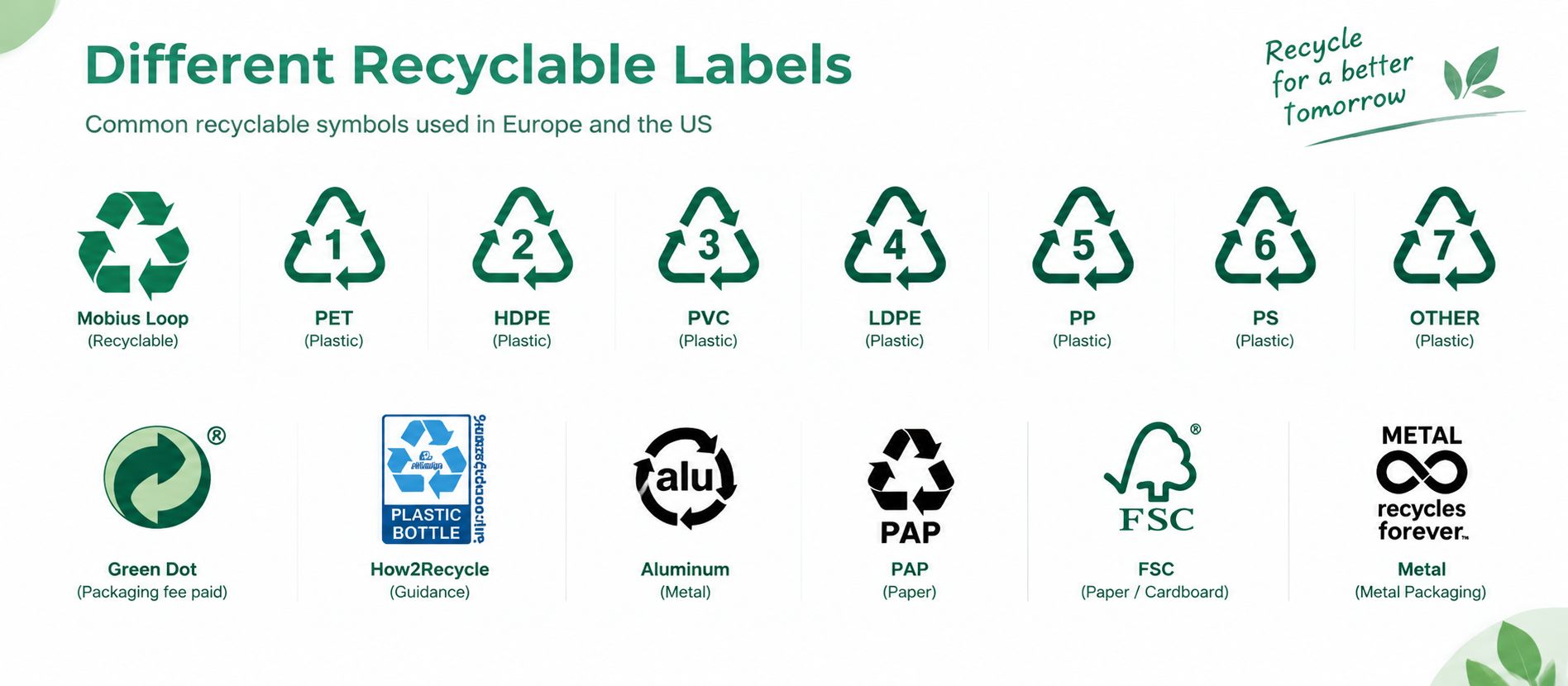
How2Recycle Labels
For brands selling in the United States, How2Recycle provides a structured way to communicate recycling instructions.
The system evaluates packaging based on actual components and recycling availability.
- Widely Recycled
- Store Drop-Off
- Check Locally
- Not Yet Recyclable
For flexible packaging projects, the evaluation often considers the full package:
- Film structure
- Zipper system
- Spout components
- Cap materials
Resin Identification Codes
Plastic recycling numbers are commonly found on many plastic products.
They identify resin types such as:
- PET (#1)
- HDPE (#2)
- PP (#5)
A common misunderstanding is assuming that every numbered plastic item belongs in a recycling bin.
The number identifies the plastic type — local recycling capability determines what happens next.
Mobius Loop and Other Symbols
The Mobius Loop is widely recognized, but symbols can represent different messages depending on the context.
They may communicate:
- Material information
- Recycled content
- Disposal instructions
- Environmental programs
How to Choose the Right Recycling Label for Your Packaging
Choosing a recycling label should happen during packaging development — not after printing files are finalized.
Step 1: Identify Your Packaging Material Structure
Start with a simple question:
What materials are actually inside this package?
Traditional Multi-Layer Packaging
Many flexible packages use structures such as:
- PET/AL/PE
- PET/PE
- Aluminum foil laminate structures
These structures remain popular because they provide strong protection against oxygen, moisture, and light.
The trade-off is that multiple layers can create additional recycling challenges.
Mono-Material Recyclable Packaging
Mono-material packaging is becoming an important option for brands reviewing their sustainability goals.
Common examples include:
- Mono PE
- Mono PP
For brands searching for a balance between packaging performance and recyclable design direction, custom recyclable mono PE stand up zipper pouches can provide a practical packaging format.
Step 2: Match the Label With Real Recycling Capability
Before adding a recycling label, brands should review the complete package.
- Has the material structure been confirmed?
- Does the target market accept this packaging type?
- Do all components work together?
The zipper matters.
The spout matters.
The cap matters.
Small components can change the final recycling guidance.

A pouch may include:
- Outer packaging film
- Zipper
- Spout
- Cap
- Adhesive layers
- Printing materials
Each part has a job.
A zipper helps protect freshness. A spout makes liquid products easier to use. A cap prevents leakage during transportation.
But these same features may also affect how the package is evaluated for recycling.
The package works as one system — not as separate pieces.
For liquid products, pet nutrition, and supplement brands, custom printed recyclable stand up spout pouches can help brands explore flexible packaging formats while considering product protection, convenience, and recyclable design goals.
Before approving artwork, review the complete package structure — not only the front design.
Where Should Recycling Labels Be Printed on Packaging?
The location of a recycling label may seem like a small design choice.
However, a label that customers cannot find is almost as ineffective as having no instruction at all.
Good packaging communication starts with visibility.
Front Panel or Back Panel?
There is no single answer.
The best placement depends on your product category, package layout, and market requirements.
| Location | Common Purpose |
|---|---|
| Front Panel | Highlight sustainability messages and brand values |
| Back Panel | Provide recycling instructions and disposal details |
Many brands use the front panel to introduce their sustainability story.
The back panel becomes the practical guide — where customers look for disposal information after use.
Design Guidelines for Better Recycling Label Visibility
A recycling label should not compete with every other graphic element on the package.
- Keep the label easy to read
- Avoid placing it over complex artwork
- Maintain enough contrast
- Follow required label formats
The goal is simple: make the correct recycling action easier for customers.
How Recycling Labels Work With Custom Flexible Packaging
Flexible packaging continues to grow because it solves several practical challenges for brands.
- Lower shipping weight
- Efficient storage
- Strong product protection
- Flexible branding options
But sustainable flexible packaging is not simply about making a lighter bag.
The real challenge is finding the right balance between:
- Product protection
- Shelf performance
- Consumer convenience
- Recycling expectations
Some products need stronger barriers against oxygen, moisture, or light.
That means the best packaging structure depends on the product itself.
There is no single solution that fits every category.
Recyclable Stand Up Pouches
Stand up pouches are widely used across industries such as:
- Snacks
- Coffee
- Pet food
- Supplements
- Dry foods
Brands choose this format because it offers practical advantages:
- Efficient storage
- Reduced transportation space
- Strong shelf visibility
- Flexible printing opportunities
However, recyclable pouch development happens below the surface.
The printed design catches attention — but the material structure does the technical work.
When developing recyclable stand up pouches, brands usually review:
- Barrier performance
- Film structure
- Printing requirements
- Closure options
- Recycling communication
For products that need a natural shelf appearance, custom kraft paper biodegradable packaging pouches can provide another packaging direction for categories such as pet food, grains, and nuts.
The final packaging choice depends on three things: product needs, target market, and brand positioning.
Recyclable Spout Pouches
Spout pouches are popular because they solve a very practical problem:
Consumers want easier ways to use liquid products.
A parent feeding baby food.
A customer taking a liquid supplement.
A pet owner giving nutritional gel.
The spout makes controlled dispensing simple.
Common applications include:
- Baby food
- Liquid supplements
- Beverages
- Household refill products
Compared with many rigid containers, flexible spout packaging can reduce package weight and improve storage efficiency.
However, the spout and cap should also be reviewed during recyclability evaluation.
A recyclable pouch is a complete structure — not only a recyclable film.
Baby Food and Food-Grade Packaging
Food packaging carries a different level of responsibility.
The package is not only protecting the product — it is also building customer confidence before the first bite.
For baby food especially, parents look closely at everything:
- Material safety
- Product freshness
- Easy opening
- Clear information
A baby food pouch is not just a container. It becomes part of the parent's daily routine.
Brands need packaging that protects the product while making the user experience simple.
DINGLI PACK provides OEM custom baby food stand up pouches for brands developing food-grade flexible packaging solutions.
The right structure depends on the product formula, filling process, and market requirements.
Common Mistakes Brands Make With Recycling Labels
Moving toward recyclable packaging is a positive step.
But the process can become complicated when brands treat recycling labels as a final decoration rather than part of packaging development.
Using Recycling Symbols Without Verification
One common mistake is adding a recycling symbol before confirming the actual packaging structure.
This often happens near the end of a project — the artwork looks finished, production is waiting, and everyone wants to move forward.
But the recycling message should start with the material decision.
A better workflow:
Material Selection → Structure Review → Label Decision → Artwork Approval → Production
This approach helps reduce confusion and prevents unnecessary packaging revisions.
Treating Every Market the Same
A packaging solution that works in one country may not automatically work everywhere else.
Recycling systems depend on:
- Local collection programs
- Available recycling infrastructure
- Regional labeling requirements
- Consumer habits
For example, a brand selling the same snack pouch in North America and Europe may need different recycling communication.
One package can travel globally — but recycling instructions may need local adjustment.
Focusing Only on Packaging Appearance
A beautiful package wins attention.
But packaging has a longer journey than the retail shelf.
It protects the product during shipping.
It sits in the customer's kitchen.
Eventually, someone decides what happens after use.
Strong packaging balances:
- Shelf appeal
- Product protection
- Clear communication
- Practical end-of-life guidance
The best designs do not only look good — they work well.
How DINGLI PACK Helps Brands Develop Better Recyclable Packaging
At DINGLI PACK, we understand that packaging decisions often create questions before they create products.
Brands usually ask:
"Which material should we choose?"
"Can this structure support our sustainability goals?"
"How should we communicate recyclability to customers?"
These are packaging development questions — not simply printing questions.
Our role is to help brands evaluate options before production begins.
Material Selection Support
Different products need different protection levels.
Coffee, pet supplements, snacks, and refill products may all require different packaging structures.
We help brands review options based on:
- Product requirements
- Barrier performance
- Market expectations
- Recycling considerations
Custom Printing and Design Support
A recycling label should fit naturally into the complete package design.
It should not look like an extra sticker added at the final stage.
DINGLI PACK supports custom packaging projects with:
- Custom graphics
- Brand colors
- Premium finishes
- Functional packaging layouts
Good packaging communicates without making customers search for answers.
Packaging Structure Consultation
Before production, brands can review:
- Material combinations
- Packaging formats
- Component compatibility
- Production requirements
A good packaging decision saves problems later.
Adjusting a structure during planning is much easier than changing thousands of finished bags after production.
To explore more recyclable packaging solutions, visit DINGLI PACK or contact our team through our contact page for packaging consultation.
Recycling Label Checklist Before Packaging Production
Before approving final artwork, brands can review these points:
| Check Item | Question |
|---|---|
| Material | Is the packaging structure clearly identified? |
| Market | Where will the product be sold? |
| Recycling System | Which label standard applies? |
| Components | Do zippers, spouts, or caps affect recyclability? |
| Artwork | Is recycling information easy to understand? |
| Claims | Are sustainability statements supported? |
A short packaging review before production can prevent long corrections later.
Conclusion: Better Labels Create Better Packaging Decisions
A recycling label is small.
But it represents a much bigger connection between brands and customers.
Sustainable packaging is not only about changing materials.
It is about making better decisions at every stage:
- Choosing the right structure
- Understanding the market
- Communicating clearly
- Helping customers handle packaging correctly
At DINGLI PACK, we help businesses turn packaging ideas into production-ready solutions — from material selection and structure planning to custom printed packaging.
When your next package needs to protect your product while supporting your sustainability goals, our team is ready to help.
Frequently Asked Questions
1 What does a recyclable packaging label mean?
A recyclable packaging label tells customers how to handle the package after use, but the label itself does not decide recyclability. At DINGLI PACK, we help brands review material structures and develop custom recyclable pouches that match product protection needs and regional recycling expectations.
2 How do I choose the right recycling label for my packaging?
The right label depends on your packaging material, market requirements, and recycling system. As a flexible packaging manufacturer, DINGLI PACK works with brands to evaluate structures such as mono-material films and recyclable stand up pouches before production and printing.
3 Are all plastic pouches recyclable?
Not all plastic pouches have the same recycling pathway. Multi-layer structures may provide excellent barrier protection, while some brands choose mono PE packaging to explore recyclable packaging options. DINGLI PACK helps businesses select suitable structures based on product requirements.
4 Can recyclable packaging include zippers, spouts, and other accessories?
Yes, but each component should be considered during packaging development. For liquid products, DINGLI PACK provides custom spout pouches with different closure options while helping brands review material compatibility and recycling considerations.
5 What recyclable packaging options are suitable for food brands?
Food brands usually need packaging that balances freshness, safety, convenience, and sustainability goals. DINGLI PACK supplies food grade stand up pouches for snacks, dry foods, baby food, and other applications with customized printing and structure options.
6 How can brands improve their sustainable packaging strategy?
A practical sustainable packaging strategy starts with choosing the right materials, understanding recycling requirements, and communicating clearly with customers. DINGLI PACK supports brands with OEM packaging solutions that combine functional design, custom printing, and recyclable material options.
ONE-STOP PACKAGING SOLUTION - From Concept to Shelf in 7 Days
At DINGLI PACK, we know how stressful packaging can be for small brands, store owners, and startups. That’s why we focus on making it simple, reliable, and tailored to your needs. From stand up pouches, coffee bags with valves, flat bottom bags, spout pouches, shrink sleeves...
Our team provides hands-on support—from free package design and material advice to practical OEM guidance—making sure your product looks great and stays protected. Want to see us in action? Check our Video Center.
With a 5,000 m² workshop and 24/7 support, we deliver fast replies, consistent quality, and peace of mind. Stay updated with our tips and stories in the News Section, or explore all our solutions on the Products Page.
We’re more than a supplier—we’re a partner who understands the challenges of growing a brand and is ready to make your packaging shine.
Related Packaging Solutions

HuizhouDingli Packaging Products Co.Ltd.


Post time: Oct-12-2026