
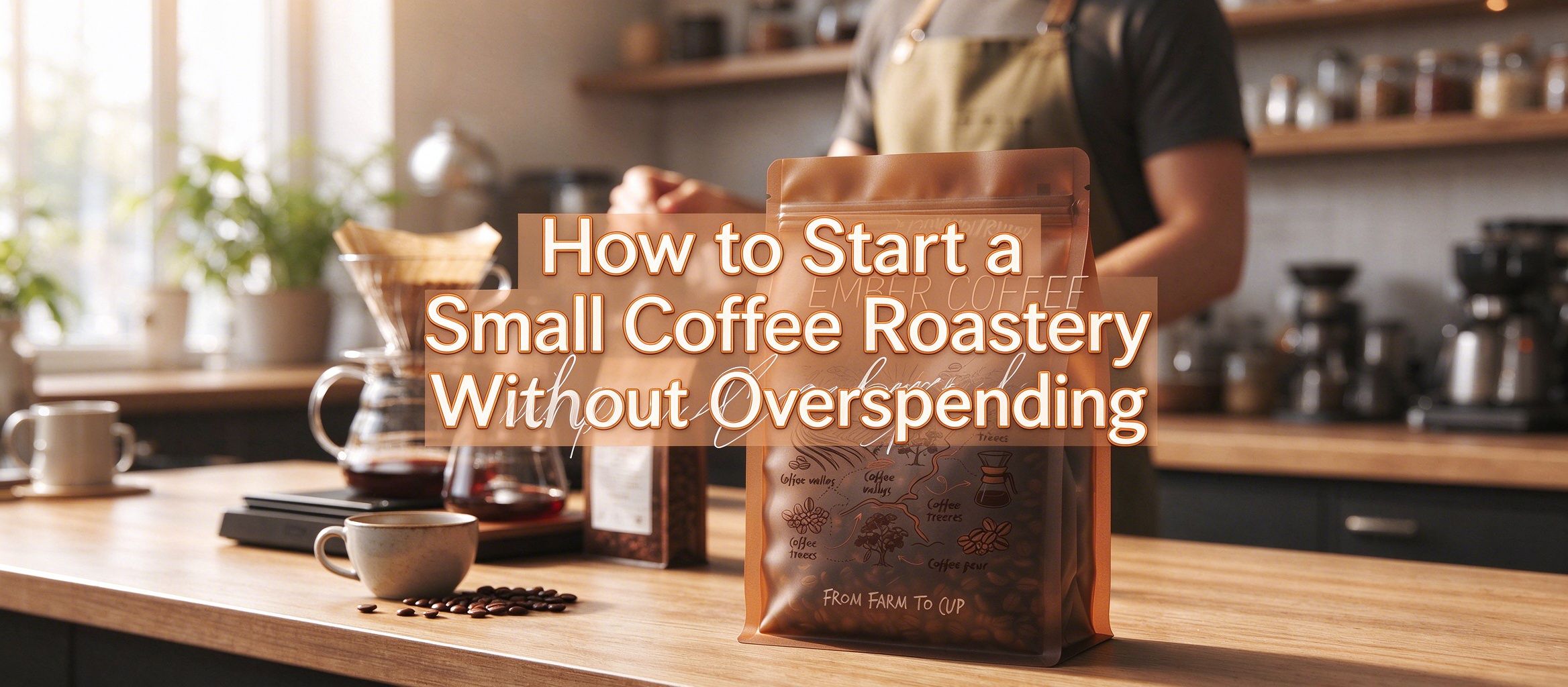
Starting a small coffee roastery sounds simple until you put everything on paper: a roaster, ventilation, green beans, scales, grinders, labels, packaging, a website, shipping materials, photography, and enough cash to keep the business moving before sales become predictable. The trap is easy to miss — not every expense creates the same value at the beginning. If you are building a small coffee brand, your first goal is not to own the biggest roasting setup or the fanciest storefront. It is to build a business model that customers will actually pay for. Packaging belongs in that calculation too. A 1kg heat-seal coffee bag with valve, for example, should work as part of the product system — not as a last-minute purchase.
The U.S. Small Business Administration makes a similar point from a broader business-planning perspective: startup costs should include both the expenses required to launch and the assets and cash needed to keep operating during the early stage.
So where should a small roastery actually spend?
QUICK OVERVIEW
1. Start With Your Business Model

Before you compare roasting machines, decide what kind of coffee business you are actually building.
There is a big difference between opening a neighborhood café that happens to roast its own beans, operating a small online coffee brand, supplying freshly roasted coffee to local restaurants, and running a small roasting operation with e-commerce as the main sales channel.
They may all sell roasted coffee. Their cost structures are still very different.
Imagine two new coffee businesses.
The first owner wants a retail location, espresso service, seating, pastries, retail shelves, and roasting equipment. The second starts with a small production space and sells a limited range of beans through an online store, local pickup, subscriptions, and selected wholesale customers.
Neither model is automatically right or wrong.
But combining the expenses of the first model with the sales volume of the second is where trouble starts.
Ask yourself a few uncomfortable questions before spending money:
Who is buying the coffee?
Are you selling directly to home brewers, supplying offices, working with cafés and restaurants, or building a consumer brand online?
Where does the first order come from?
If your answer is Instagram, your local community, farmers' markets, an existing customer base, wholesale outreach, or an e-commerce website, your launch plan should reflect that.
What are customers actually paying you for?
It may be the roast profile. It may be convenience. It may be local identity. It may be a distinctive origin story. Or it may simply be consistently good coffee delivered to their door.
That distinction matters because your packaging, production volume, website, shipping method, and even the size of your first roasting setup should support the same proposition.
Do not build five businesses at once.
2. Set a Realistic Startup Budget
A small coffee roastery can quickly become a collection of tempting purchases.
You start with the roaster. Then you realize you need ventilation. Then storage. Then green coffee. Then packaging. Then labels. Then a website. Then photography. Then shipping supplies. Then advertising.
Suddenly, the original budget has disappeared before the first serious customer order arrives.
A more useful approach is to divide your startup spending into several practical buckets:
- Roasting equipment and supporting equipment
- Facility, rent, utilities, and necessary setup
- Green coffee inventory
- Packaging and labels
- Website and e-commerce costs
- Shipping and fulfillment
- Licenses, insurance, and professional services
- Marketing and content
- Working cash for ongoing operating expenses
The SBA specifically recommends separating one-time startup expenses from recurring monthly expenses and considering the cash required to cover early operating deficits.
That last part is easy to underestimate.
A roastery can have attractive products and still feel financially uncomfortable if too much money is sitting inside equipment, inventory, or packaging while customer payments arrive slowly.
THINK BEYOND OPENING DAY
“How much money do I need to open?”
THE MORE USEFUL QUESTION
“How much money do I need to open and keep operating while I learn what sells?”
That is a much more useful number.
You should also calculate a basic break-even point. The SBA defines break-even as the point where total revenue equals total cost, and its basic formula is fixed costs divided by the selling price minus variable cost per unit.
You do not need an elaborate financial model on day one. You do need to know which products have enough contribution margin to pay for the business.
3. Don't Buy the Biggest Roaster First
This is where enthusiasm can become expensive.
A large commercial roaster looks like a serious commitment to the business. And, visually, it certainly makes a statement.
But equipment capacity and actual sales demand are two different things.
If your sales are still uncertain, buying equipment based on the business you hope to have rather than the business you currently have can lock up capital that could be used elsewhere.
A better question is:
What production capacity do I actually need for my first stage?
If your first customers are direct-to-consumer buyers, a small local wholesale network, and a handful of recurring accounts, your requirements may be very different from those of an established regional supplier.
There are also alternatives worth investigating, depending on your location and business model. Some founders start with shared roasting facilities, contract roasting, rented production space, or smaller equipment before moving into a dedicated larger operation.
The important thing is to understand what you are buying.
A roaster is not just a machine. It also affects power requirements, ventilation, space, maintenance, workflow, labor, and production planning.
The U.S. Small Business Administration notes that businesses should consider whether assets should be bought or leased and whether the equipment will genuinely be used over the long term. (sba.gov)
In other words, don't let the machine become the business. The coffee brand still has to sell coffee.
4. Choose Your Coffee Packaging Carefully
Packaging is one area where new coffee brands sometimes make the wrong kind of saving.
The cheapest bag is not necessarily the cheapest packaging once you consider coffee freshness, printing, storage, filling, shipping, appearance, and customer expectations.
Coffee packaging has a practical job to do. It needs to suit the coffee, the filling process, the sales channel, and the expected shelf conditions.
For roasted coffee, features such as a resealable closure, appropriate barrier structure, heat sealing, and a one-way valve can matter depending on the product and packaging format.
Keep the package practical.
But you also do not need to create an unnecessarily complicated package.
For a small brand, a sensible approach is to choose a format that works across your early product range and then improve it as order volume becomes clearer.
For example, a certified compostable kraft paper coffee pouch may make sense for a brand whose positioning and product requirements support that material choice. Another brand may need a stronger barrier structure and choose a custom 1kg aluminum foil resealable coffee pouch instead.
There is no universal “best coffee bag.”
Ask what the coffee needs, what your customer expects, and how the bag will actually be filled, sealed, stored, shipped, and displayed.
Then look at appearance.
Your packaging is often the physical introduction to the brand before someone tastes the coffee. If the package feels generic, difficult to open, poorly sealed, or disconnected from the brand, saving a small amount on the bag may create a much larger problem downstream.
For brands selling larger quantities, a custom aluminum foil flat-bottom coffee pouch with valve can also provide a more substantial retail format while giving you room for branding and product information.
And this is where speaking to a packaging manufacturer early can be useful.
You do not need to place a huge order immediately. You can first discuss structure, dimensions, printing, closure options, valve requirements, material choices, and order quantities, then compare those choices with your expected sales model.
5. Start With a Small Number of SKUs
There is a particular temptation when starting a coffee brand: creating a menu that looks impressive.
Three single-origin coffees. Two blends. A decaf. An espresso roast. A dark roast. Seasonal releases. Limited editions.
It sounds exciting.
It also creates more inventory decisions, more labels, more packaging variations, more product photography, more website pages, and more opportunities for slow-moving stock.
A smaller opening range gives you something much more valuable: information.
You can see which roast gets repeat orders, which bag size customers prefer, which origin creates interest, and which products are difficult to explain or sell.
This is especially important if you are ordering custom printed packaging.
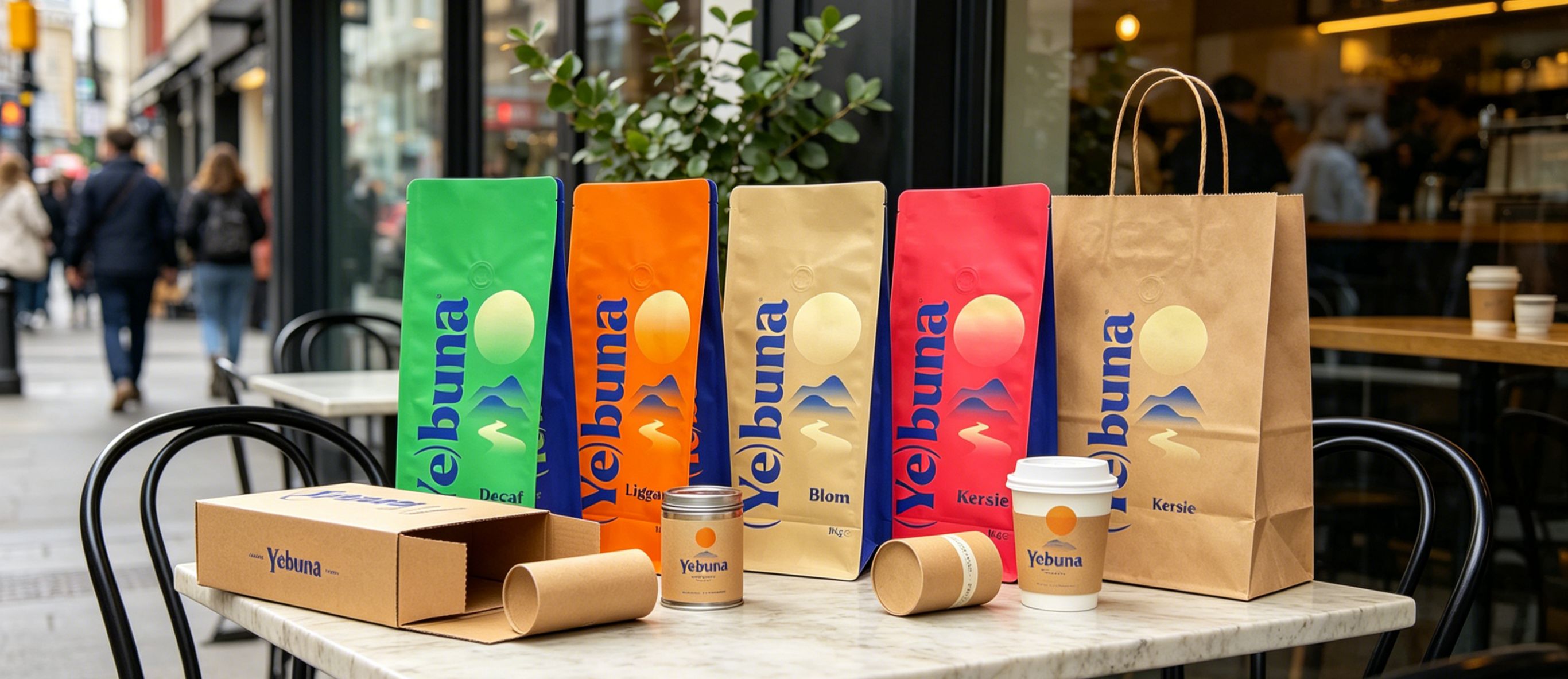
A packaging design that works across several related products can reduce unnecessary complexity compared with creating a completely different package for every SKU.
You can still make the products feel different through labels, roast names, color sections, stickers, or other controlled design elements while keeping the underlying packaging system more manageable.
Think of your first product range as a test bench.
You are not trying to prove how many coffees you can create. You are trying to discover which coffees deserve more production.
6. Promote the Coffee, Not Just the Brand
You do not need a huge marketing budget to make a new coffee brand visible.
But you do need something worth talking about.
Instead of posting the same product photograph repeatedly with captions such as “Our premium coffee is now available,” show people what happens behind the product.
Talk about why you selected a particular origin. Explain how you approach roast development. Show a small batch coming out of the roaster. Compare brewing methods. Talk about what changes when the coffee is rested for different periods. Let customers see the people behind the business.
If you sell locally, document the places where your coffee is served.
If you sell online, make useful content around brewing, grind size, storage, roast styles, origin differences, and choosing coffee for different brewing equipment.
The goal is not to turn every post into an advertisement.
It is to give potential customers a reason to remember you.
And there is another practical advantage: useful content can become part of your sales process. A well-written brewing guide can answer questions before someone contacts you. A video showing your roasting process can help explain your brand. A clear product page can reduce hesitation at checkout.
The SBA also identifies market research, websites, advertising, and marketing materials among common startup costs, which is a useful reminder that marketing should be planned as part of the business rather than treated as an afterthought. (sba.gov)
Spend where you can learn something. That is usually more useful than spending simply to look established.
7. Where New Coffee Brands Can Save Money
Saving money does not mean choosing the cheapest option for everything.
It means knowing which expenses need to be right now and which can wait.
You can often look for savings in areas such as:
Equipment: Avoid buying capacity you cannot currently use. Consider whether buying, leasing, shared facilities, or contract production makes more sense for your stage.
Product range: Start with fewer SKUs and let actual sales tell you what deserves expansion.
Packaging: Avoid overcomplicated structures or multiple bag formats before you understand your sales volume. At the same time, do not sacrifice the basic packaging performance your coffee requires.
Website: Build a clean store that makes buying easy before spending heavily on custom features that customers may never use.
Content: Produce useful photography, brewing information, roasting stories, and educational material that can continue bringing value after publication.
Inventory: Buy according to a realistic sales plan rather than because a larger purchase “feels” more professional.
Marketing: Track where inquiries and sales actually come from. If one channel consistently produces customers while another only produces likes, the difference matters.
The SBA recommends organizing startup costs, estimating expenses realistically, and using break-even analysis to understand how much you need to sell before the business covers its costs.
There is one more area worth watching: cash tied up in packaging.
A beautifully printed bag that sits in storage for months is not helping your cash flow. Neither is an oversized packaging order made before you know which SKU will become your bestseller.
That is why packaging discussions should happen alongside your product planning, not after it.
7. Where New Coffee Brands Can Save Money
A small coffee roastery does not have to look small.
Your branding can be polished. Your packaging can look retail-ready. Your website can feel established. Your coffee can have a clear point of view.
What you want to avoid is spending money simply because established coffee companies spend money that way.
They have different sales volumes, different purchasing power, different production requirements, and years of operational data behind those decisions.
You are still collecting yours.
Start with a business model you can explain in one sentence. Build a budget that includes working cash, not just equipment. Choose production capacity around realistic demand. Keep your first product range manageable. Treat packaging as part of the coffee system rather than a decorative final step. Then use customer feedback and sales data to decide what deserves more investment.
That approach leaves you something every new brand needs:
room to adjust.
If you are comparing packaging structures, sizes, printing options, valves, closures, or material choices for a new coffee brand, contact DINGLI PACK to discuss the requirements before committing to a large packaging order. You can also explore the DINGLI PACK website to review different coffee packaging formats and customization options.
Frequently Asked Questions
01 What type of coffee bag is best for a small roastery? +
It depends on how you roast, sell, and ship your coffee. A stand-up pouch works well for flexible retail shelves and smaller batches, while a flat-bottom bag gives larger coffee brands more front-facing space and a stable shelf presence. For roasted beans, barrier performance matters just as much as the bag shape. DINGLI PACK can produce custom coffee bags with different structures, finishes, closures, and valve options based on your product and filling process.
02 What coffee bag size should I use for different roast quantities? +
Start with the actual fill weight and the physical volume of your roasted beans rather than choosing a bag only by its printed capacity. Different roast levels and bean densities can change how much space the same weight occupies. For this reason, DINGLI PACK usually recommends checking the filling volume, seal area, and shelf presentation together when selecting coffee packaging bags. Samples are useful when you need to confirm the fit before a production order.
03 Do coffee bags need a valve and resealable zipper? +
For roasted whole beans, a one-way degassing valve can help release gases from freshly roasted coffee while limiting outside air from entering the package. A resealable zipper is useful when customers open the bag repeatedly at home or in a shop. These features solve different problems, so they should not be treated as interchangeable. Our coffee bags with valve can be configured with different closure and valve combinations depending on the product, filling method, and expected storage conditions.
04 How does coffee packaging affect shelf life and storage? +
The package cannot compensate for poor roasting, filling, or storage, but the right barrier structure can help protect roasted coffee from oxygen, moisture, light, and external odors. The required protection depends on the coffee, expected shelf life, distribution conditions, and storage environment. For brands comparing coffee packaging solutions, DINGLI PACK can discuss material structures and sealing requirements before production rather than simply selecting a bag based on appearance.
05 Are custom coffee bags suitable for food-contact packaging? +
They can be, provided the selected materials, inks, adhesives, and production process meet the requirements applicable to the intended market and food-contact use. Compliance should be considered at the material and production stage, not added after the bags are printed. When sourcing food grade coffee bags, buyers should confirm the applicable documentation and intended use with the packaging supplier before placing the order. DINGLI PACK can discuss the required material structure and documentation during the specification stage.
06 What MOQ and pricing should I expect for custom coffee bags? +
There is no single price for every custom order. MOQ and unit cost depend on bag size, structure, printing method, finish, accessories, quantity, and production requirements. Smaller brands may also need to balance the cost of custom printing against the amount of packaging they can realistically use. As a coffee bag manufacturer, DINGLI PACK can work from your required size, quantity, artwork, material, and functional options to build a more practical quotation instead of pricing from the bag shape alone.
ONE-STOP PACKAGING SOLUTION - From Concept to Shelf in 7 Days
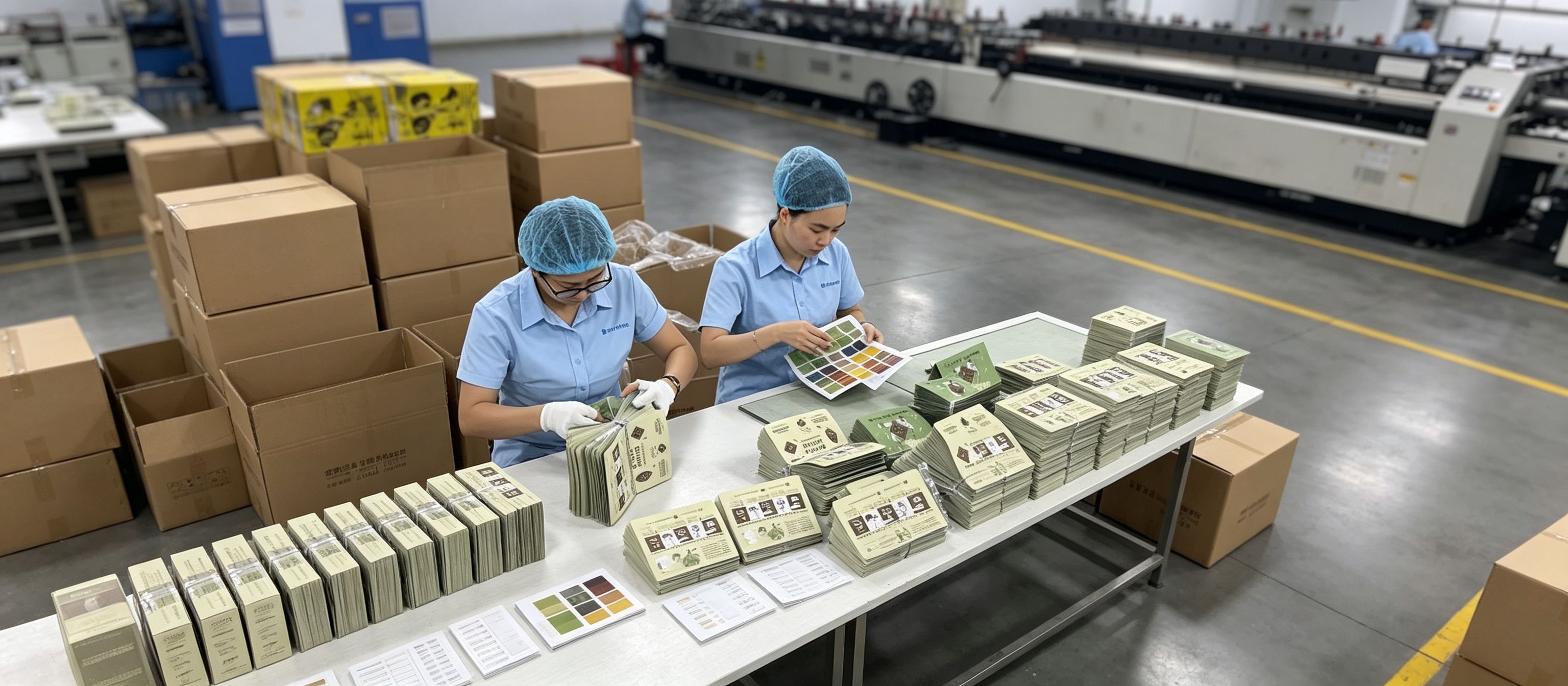
At DINGLI PACK, we know how stressful packaging can be for small brands, store owners, and startups. That’s why we focus on making it simple, reliable, and tailored to your needs. From stand up pouches, coffee bags with valves, flat bottom bags, spout pouches, shrink sleeves...
Our team provides hands-on support—from free package design and material advice to practical OEM guidance—making sure your product looks great and stays protected. Want to see us in action? Check our Video Center.
With a 5,000 m² workshop and 24/7 support, we deliver fast replies, consistent quality, and peace of mind. Stay updated with our tips and stories in the News Section, or explore all our solutions on the Products Page.
We’re more than a supplier—we’re a partner who understands the challenges of growing a brand and is ready to make your packaging shine.
Related Packaging Solutions

HuizhouDingli Packaging Products Co.Ltd.


Post time: Sep-28-2026