
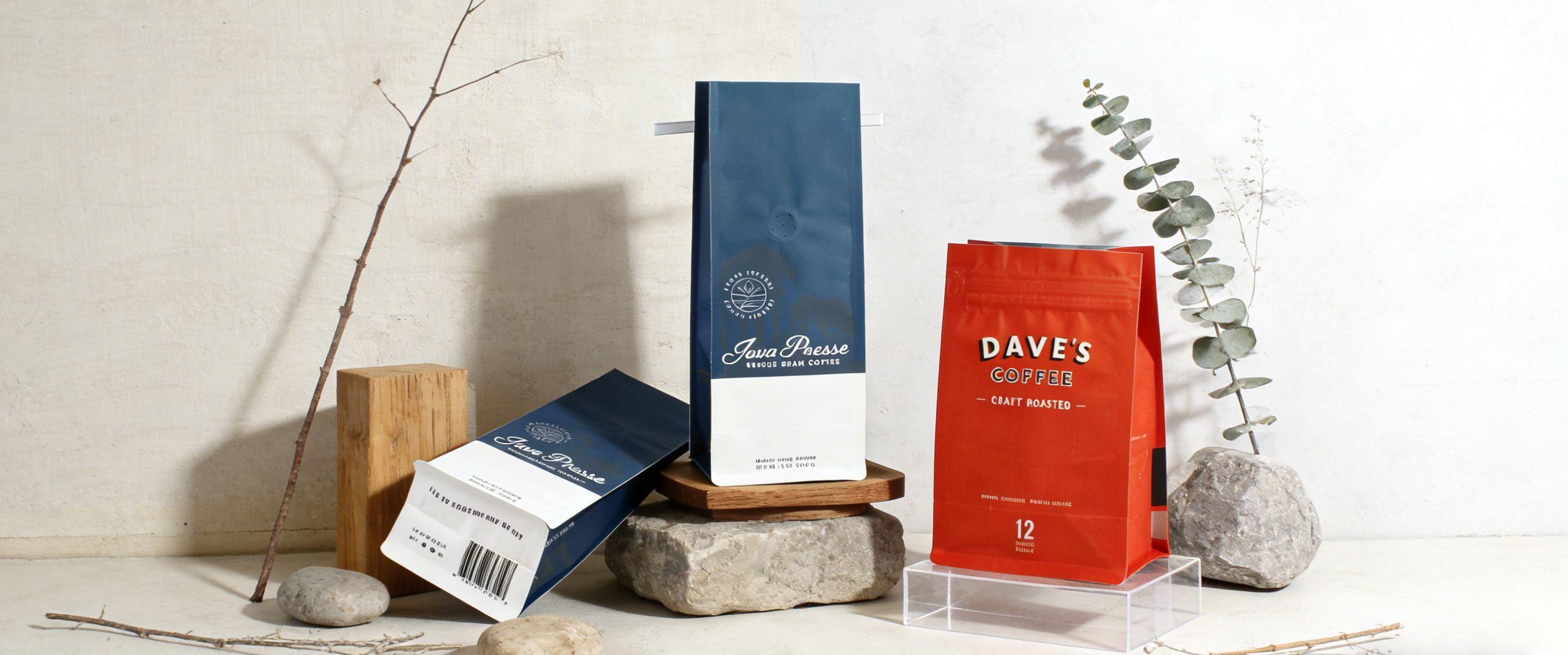
You’ve probably faced this question when reviewing a new coffee packaging design: can you replace a traditional foil bag with a recyclable pouch without compromising the freshness your customers expect? It’s a fair concern. Coffee is sensitive to oxygen, moisture and light. Even a well-roasted batch can lose its aroma if the packaging lets too much air through. The good news? Recyclable packaging has come a long way.
With the right film structure, barrier performance and sealing design, recyclable stand up pouches can protect coffee quality while helping your brand reduce its reliance on conventional multi-material packaging. The trick is choosing the right structure—not simply looking for a recyclable label. Start by exploring our custom printed coffee packaging bags and the options available for your product.
01. Why Coffee Needs More Than Just Good Packaging

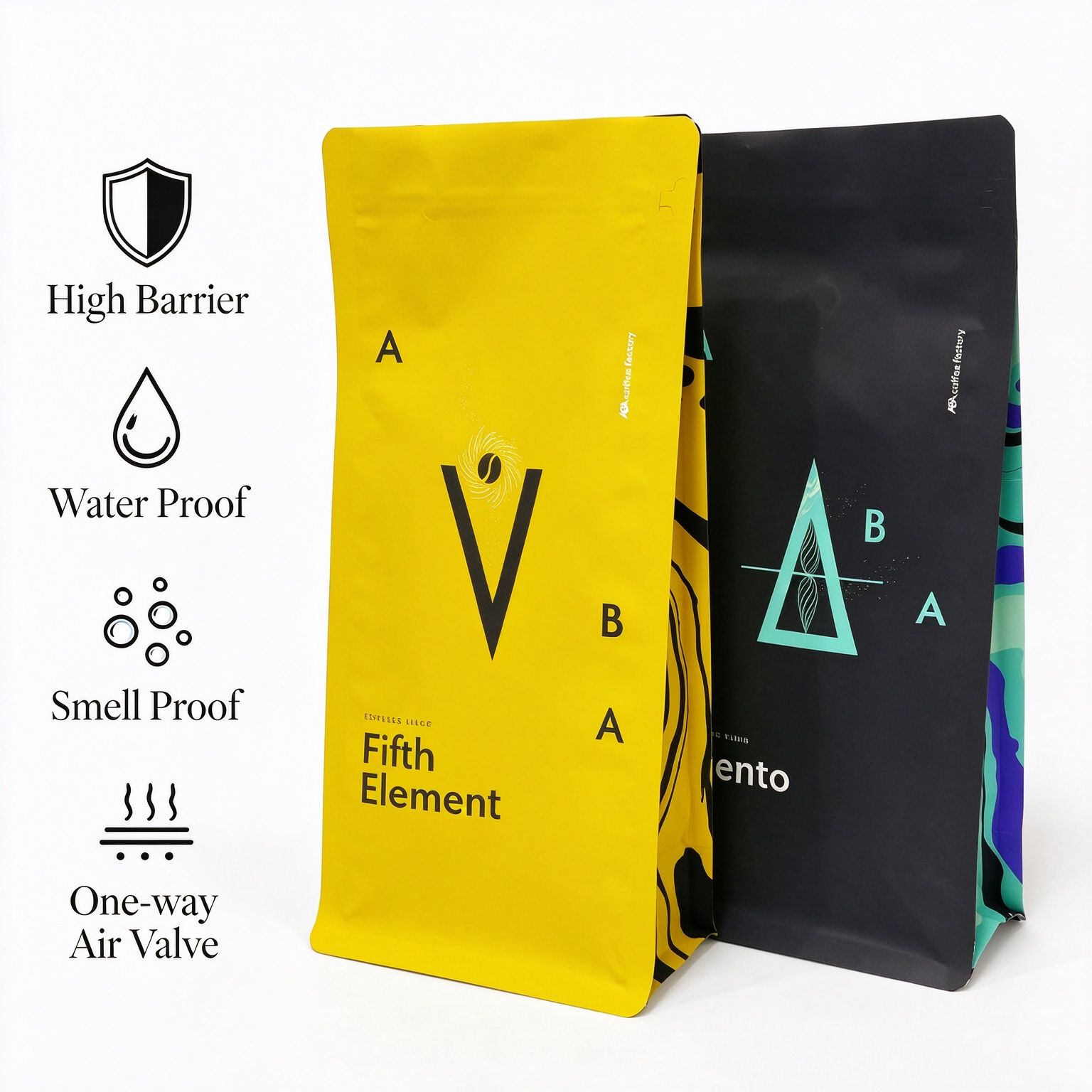
A coffee bag has a demanding job. It needs to protect a product that continues to change after roasting, preserve its aroma and keep unwanted moisture out during storage and shipping.
And here's something worth remembering: a pouch can look excellent on a retail shelf and still do a poor job of protecting the coffee inside. A beautiful design won't fix a weak barrier or a leaking seal.
For coffee roasters and brand owners, three factors deserve particular attention: oxygen, moisture and light.
Oxygen Exposure Accelerates Coffee Staling
Oxygen is one of the main reasons roasted coffee gradually loses its freshness.
After roasting, coffee contains oils and aromatic compounds that give each roast its characteristic flavor. Exposure to oxygen triggers oxidation, which can gradually dull those aromas and leave the coffee tasting flat or stale.
Ground coffee needs even more attention. Grinding increases the surface area exposed to air, making it more vulnerable to oxidation than whole beans.
That's why a coffee pouch needs more than an attractive outer film. It needs an appropriate oxygen barrier for the product and its intended storage period.
One measurement matters here: Oxygen Transmission Rate (OTR). It tells you how much oxygen passes through a packaging material over a specified area and period under defined testing conditions. Generally, a lower OTR means better oxygen protection.
When comparing two coffee bags, don't stop at the material names. Ask for the actual OTR figures—and check the test conditions behind them.
Moisture Can Affect Coffee Quality
Oxygen isn't the only concern. Coffee can absorb moisture from its surroundings, and changes in moisture content may affect its aroma, physical condition and overall quality.
A film with suitable moisture resistance helps slow down water vapor entering the pouch during storage and distribution.
Look at the Water Vapor Transmission Rate (WVTR) when comparing packaging structures. A lower WVTR generally indicates better moisture barrier performance.
This becomes particularly important when your coffee travels through humid regions, shipping containers or warehouses where temperature and humidity can fluctuate.
Light and Aroma Loss Are Often Overlooked
Light exposure can also contribute to changes in coffee quality. A transparent pouch may show off the beans, but it won't necessarily provide the protection your product needs.
There's another detail: aroma retention. Customers buy coffee for its smell as much as its taste. The packaging should help retain those volatile aromatic compounds while limiting unwanted exposure to the outside environment.
In short, coffee packaging needs to do several jobs at once. Focusing on just one barrier figure won't tell you the whole story.
02. How Do Recyclable Stand Up Pouches Protect Coffee Freshness?
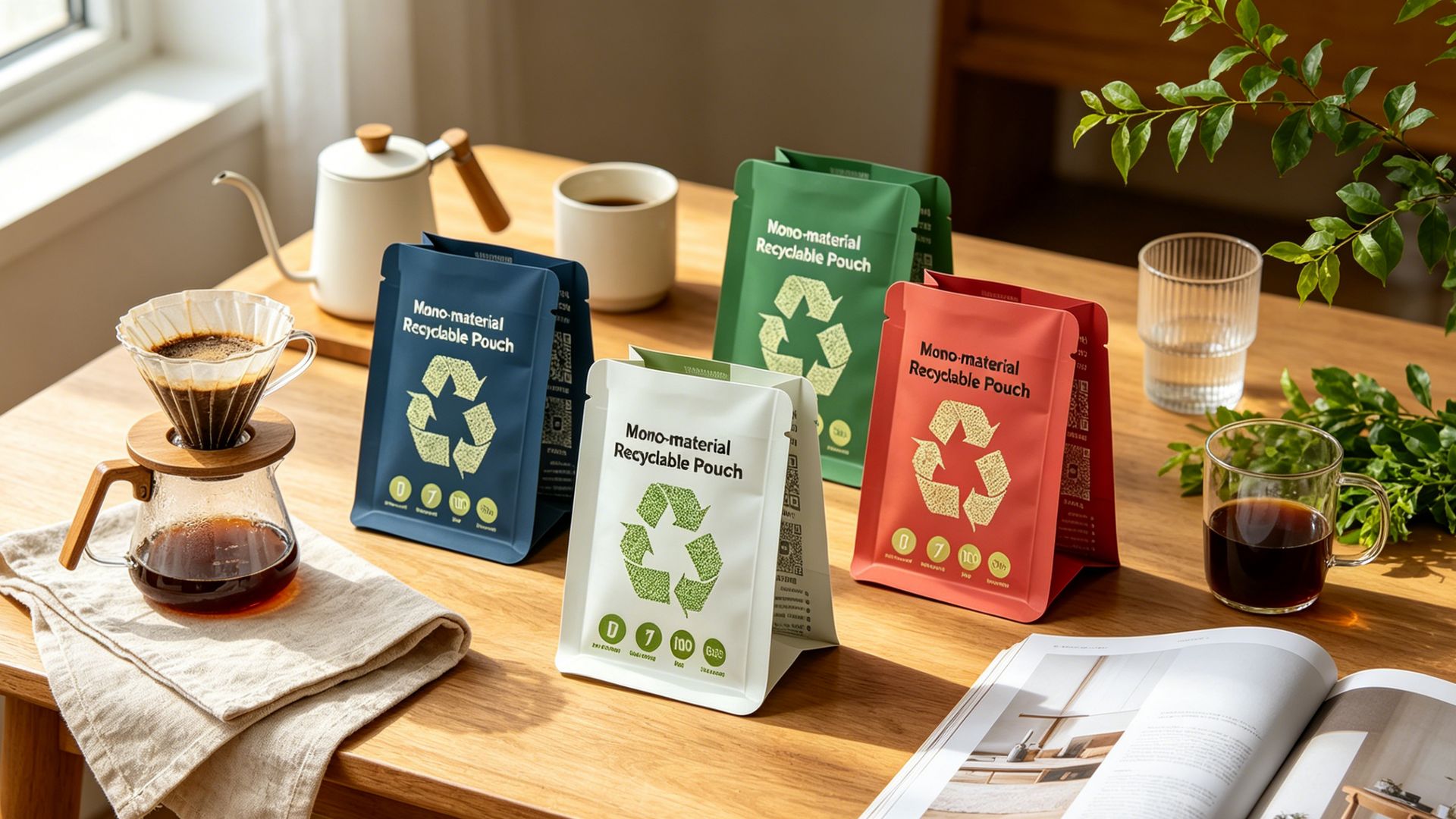
The short answer: through carefully engineered material structures.
Not all recyclable coffee pouches are made alike. Some use conventional multi-material laminates, while others are designed around a single polymer family, typically polyethylene (PE) or polypropylene (PP).
For coffee brands looking to change their packaging, Mono-PE and Mono-PP are two material directions worth examining.
Mono-Material Structures Designed for Barrier Protection
Here's a common misconception: a single-material pouch must be a simple, low-performance bag. That's not necessarily true.
Mono-material packaging can contain multiple compatible film layers, each serving a different purpose. One layer may provide strength, another may support heat sealing, while a functional coating or barrier layer helps control oxygen transmission.
Common options include:
- Mono-PE: A polyethylene-based structure designed for flexible packaging applications and potential compatibility with PE recycling streams.
- Mono-PP: A polypropylene-based structure that can offer suitable stiffness, heat resistance and packaging performance for selected applications.
- Barrier-enhanced structures: Specialized coatings and compatible barrier technologies can improve oxygen and moisture protection.
Actual performance depends on the film formulation, thickness, manufacturing process and barrier technology.
One detail is easy to miss: a multi-layer structure isn't automatically a multi-material structure. Several layers can still belong to a compatible polymer family.
That said, a Mono-Material label doesn't automatically guarantee that a pouch will be accepted by local recycling facilities. The complete packaging design must meet the relevant recycling guidelines and local collection requirements.
Oxygen Barrier Performance Matters More Than Material Labels
When evaluating recyclable coffee bags, ask one question first: How much oxygen can actually pass through the pouch?
That answer matters more than whether a supplier describes the film as recyclable, eco-friendly or mono-material.
A well-designed Mono-PE structure may provide sufficient protection for certain coffee applications. But not every Mono-PE film performs equally well.
Several factors influence the result:
- Film thickness and layer composition.
- Barrier coatings and their integrity.
- Manufacturing consistency.
- Temperature and humidity during storage.
- The condition of the finished pouch.
If your brand has a defined shelf-life target, start with the required barrier performance—not a material name printed on a specification sheet.
Moisture Barrier and Seal Integrity Work Together
Even a high-barrier film can't do its job properly if the finished pouch has a weak seal.
Think about the areas where problems can occur: bottom seals, side seals, zipper closures, top heat seals and degassing valve installation points. Each needs attention during product development and quality inspection.
A reliable heat seal helps prevent unwanted air and moisture exchange. A resealable zipper makes the pouch more convenient after opening, but it shouldn't replace the original hermetic heat seal.
At DINGLI PACK, we consider material selection and pouch converting together. The film must perform well, but the finished bag also needs consistent sealing and construction.
03. Recyclable Coffee Pouches vs. Traditional Foil Coffee Bags
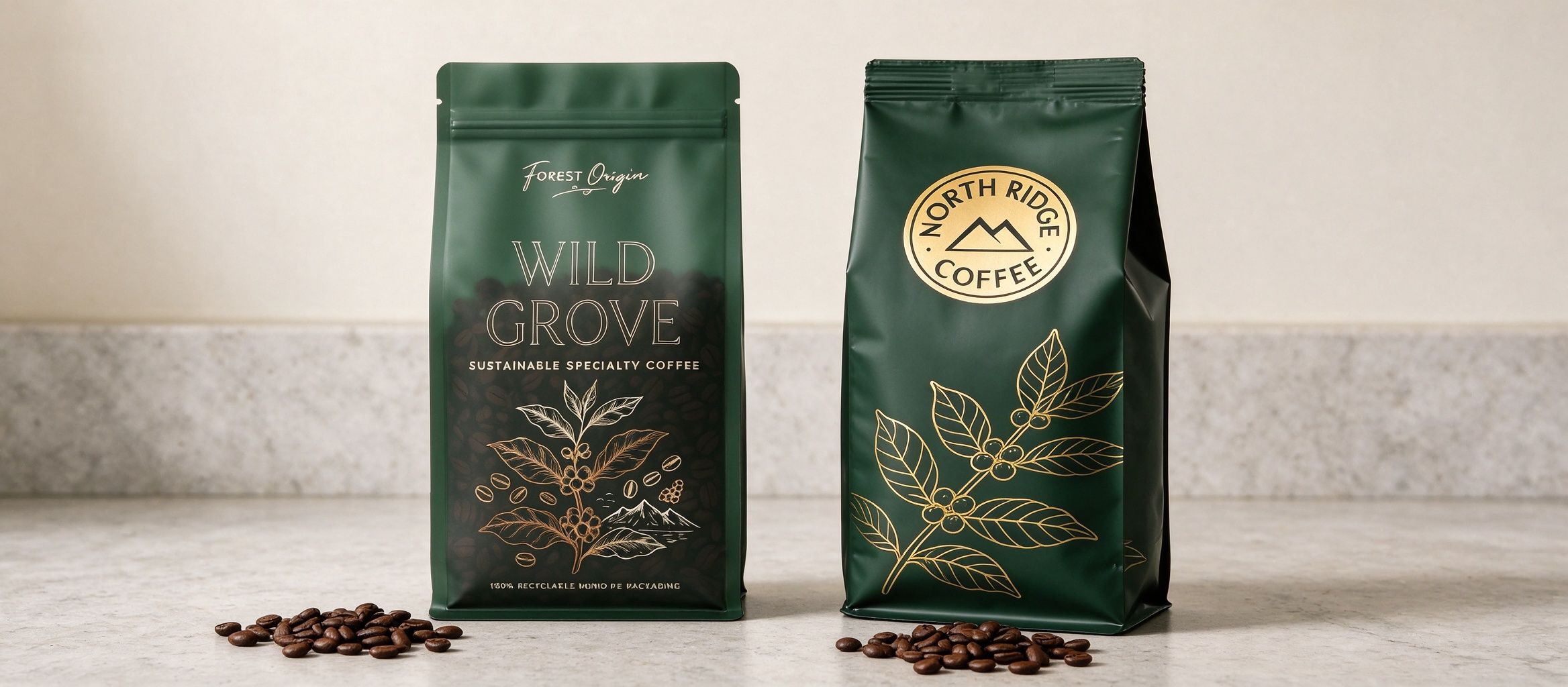
Should you replace a traditional foil pouch with a recyclable structure? That depends on your coffee and its storage requirements.
Aluminum foil has long been used in coffee packaging because it provides excellent protection against oxygen, moisture and light. Recyclable mono-material structures offer a different set of advantages, particularly for brands looking to simplify their packaging material composition.
| Comparison | Traditional Foil Bags | Recyclable Mono-Material Pouches |
|---|---|---|
| Material structure | Usually combines different materials | Designed around a compatible polymer family |
| Oxygen barrier | Excellent when properly constructed | Depends on film and barrier technology |
| Moisture barrier | Generally excellent | Depends on film structure |
| Light protection | Excellent with an intact foil layer | Depends on opacity and design |
| Packaging applications | Suitable for demanding barrier requirements | Suitable for selected applications with validated performance |
| Recycling considerations | Multi-material construction can complicate recycling | Can be more compatible with certain recycling streams |
Does Recyclable Packaging Always Mean Lower Barrier Performance?
No. But it would also be misleading to claim that every recyclable pouch performs as well as an aluminum foil bag.
Traditional aluminum foil offers an exceptionally strong barrier when the structure remains intact. Recyclable structures have different performance characteristics, and their suitability depends on the technology used.
Advances in barrier coatings and film engineering have expanded the applications of Mono-PE and Mono-PP packaging. Some structures can provide sufficient protection for selected coffee products without relying on a conventional foil laminate.
The important distinction is between potential performance and verified performance.
A film may look promising in a laboratory specification. Your finished coffee pouch still needs to be evaluated under realistic packaging and storage conditions.
When Is Traditional Aluminum Foil Still the Better Choice?
There are applications where conventional foil packaging remains the sensible option.
You may want to retain an aluminum foil structure if:
- Your coffee requires exceptionally high oxygen and moisture protection.
- Your target shelf life is particularly demanding.
- Your distribution involves extended storage or challenging environmental conditions.
- Light protection is a critical requirement.
- Your existing packaging has already demonstrated reliable shelf-life performance.
Switching materials just to make a sustainability claim isn't a good business decision if product quality suffers. Compare the actual performance requirements with what an alternative structure can deliver.
04. Do Recyclable Stand Up Pouches Need a One-Way Degassing Valve?
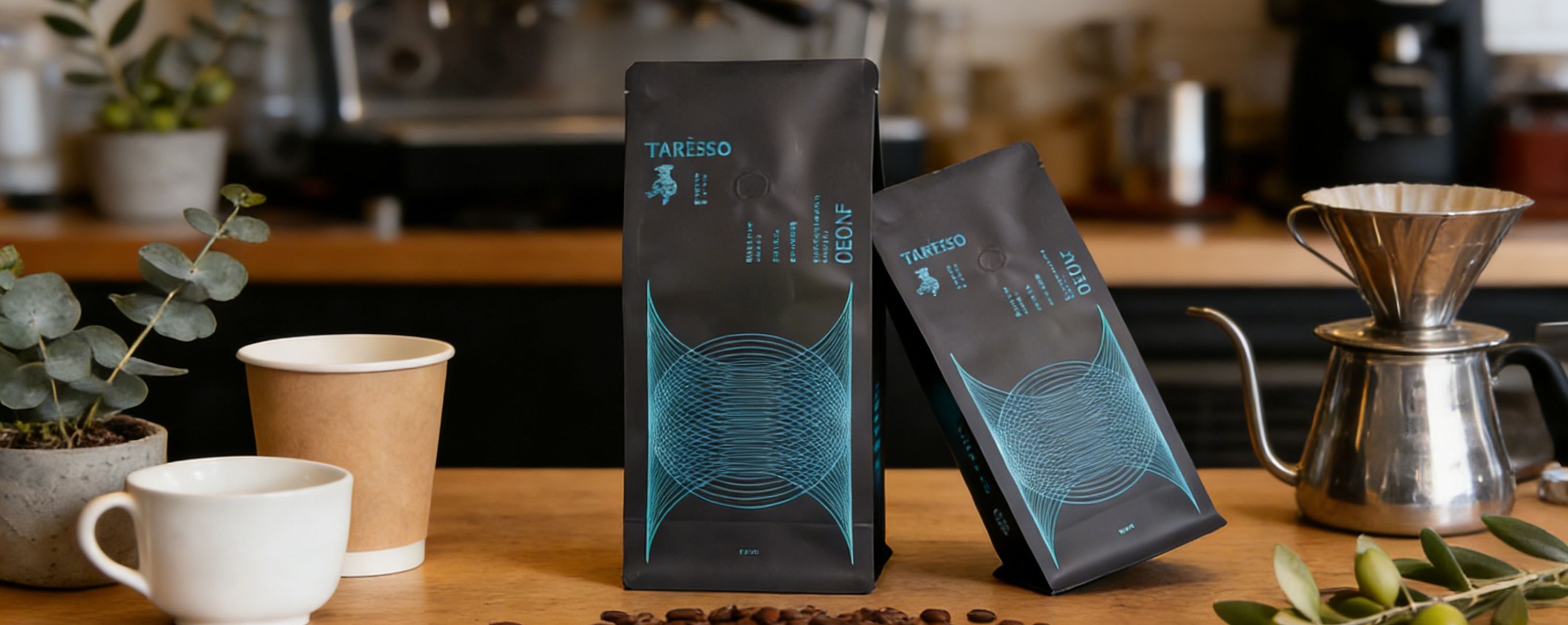
For freshly roasted coffee beans, the degassing valve is more than a packaging accessory. It has a specific job to do.
Why Freshly Roasted Coffee Releases Carbon Dioxide
Coffee beans continue releasing carbon dioxide after roasting. This process is known as degassing.
If freshly roasted beans go straight into a sealed bag without a suitable gas-release mechanism, carbon dioxide can build up inside. The pouch may swell, and excessive internal pressure can put stress on the seals.
The amount and timing of gas release vary with the roast profile, bean characteristics and storage conditions.
How a One-Way Degassing Valve Works
A one-way valve allows carbon dioxide to escape while restricting outside air from entering the pouch.
In practical terms, it helps:
- Release excess carbon dioxide after roasting.
- Reduce excessive internal pressure.
- Limit the risk of pouch swelling.
- Support the storage of freshly roasted coffee in sealed packaging.
But don't expect the valve to do everything. It doesn't replace the oxygen barrier of the packaging film. The pouch still needs a suitable structure, reliable seals and a properly installed valve.
Can Degassing Valves Be Used on Recyclable Coffee Bags?
Yes. Recyclable coffee pouches can be designed with one-way degassing valves.
There's one detail brands shouldn't overlook: the valve is part of the complete packaging system.
If you're developing a Mono-PE or Mono-PP coffee bag, check whether the valve material and construction are compatible with the intended recycling route. The same applies to zippers, inks, adhesives and other components.
For brands selling in markets with specific packaging regulations, evaluating the complete package is much more useful than looking at the main film alone.
05. Which Recyclable Stand Up Pouch Is Right for Your Coffee?
Different coffee products have different packaging needs. A pouch designed for whole beans may not be the best choice for finely ground coffee.
Before choosing a structure, consider the product, filling conditions, target shelf life and how customers will use the package.
Recyclable Coffee Pouches for Whole Coffee Beans
Whole beans continue releasing carbon dioxide after roasting, so a one-way degassing valve is often a practical feature.
When selecting a pouch, pay attention to:
- Oxygen barrier performance.
- Moisture protection.
- Valve compatibility.
- Heat seal integrity.
- Pouch size and internal headspace.
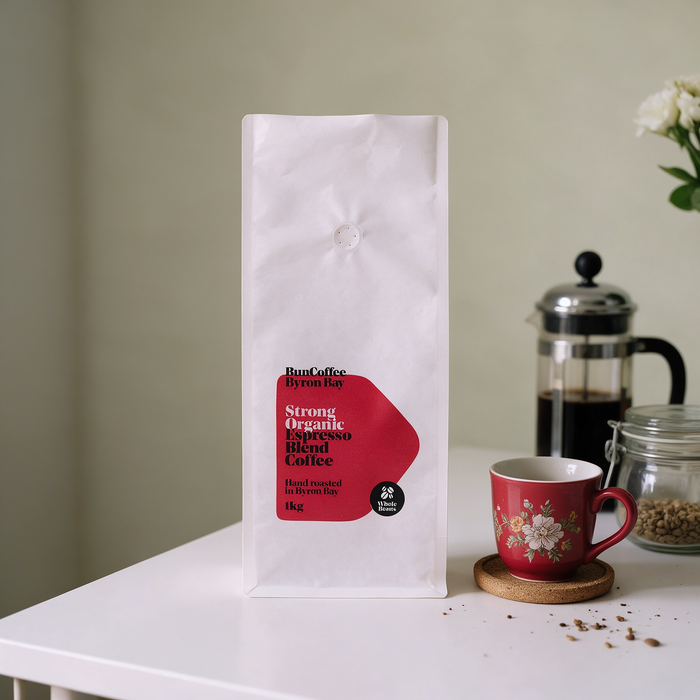
For retail coffee brands, stand-up pouches are a popular format. They sit neatly on shelves and provide a useful printable surface for branding and product information.
If you need a more structured retail package, custom eco-friendly eight-side seal coffee bags are another option worth considering. Their flat base provides stability, while the larger printable surface gives your brand more room for product details and visual design.
Recyclable Packaging for Ground Coffee
Ground coffee presents a different challenge.
Once beans are ground, the increased surface area makes the coffee more vulnerable to oxygen exposure. That means material selection, filling conditions and seal quality deserve extra attention.
Consider these points:
- Choose a film structure with an appropriate oxygen barrier.
- Pay close attention to seal quality.
- Evaluate nitrogen flushing if your filling process supports it.
- Check the finished package for leaks and residual oxygen.
- Test the coffee over the intended storage period.
Nitrogen flushing can reduce the amount of oxygen initially present inside the package. It doesn't stop oxygen from passing through the film, so it should work alongside an appropriate barrier structure.
For coffee powder and similar products, moisture-proof matte-finished stand-up zipper pouches offer a practical starting point for discussing pouch design, surface finish and resealable functionality.
Recyclable Coffee Pouches for Different Retail Sizes
Your packaging size affects more than the amount of coffee inside.
A 100g specialty coffee pouch has different display and storage requirements from a 1kg wholesale bag. The right dimensions also depend on coffee density, filling method and headspace.
Common coffee packaging sizes:
- 100g: Small-batch specialty coffee, samples and trial products.
- 250g: A common retail size for roasted whole beans and ground coffee.
- 500g: Regular household consumption and larger retail packs.
- 1kg: Coffee roasters, wholesale suppliers and foodservice businesses.
For larger packs, 1kg flat bottom coffee bags with a valve offer a useful reference for combining greater filling capacity with a stable bottom structure.
If your product line includes paper-based packaging concepts, take a look at certified compostable kraft paper flat coffee pouches as well.
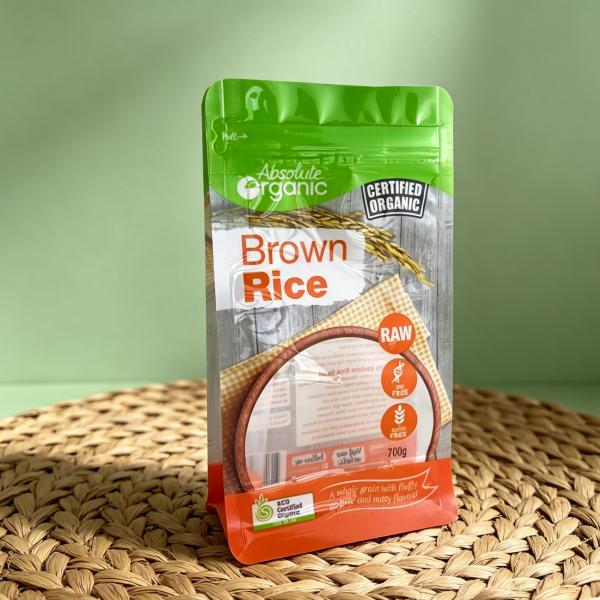
One distinction matters here: compostable and recyclable are different packaging claims. Check the material certification, intended disposal conditions and local infrastructure before making either claim on your product packaging.
06. What Should Coffee Brands Test Before Switching to Recyclable Pouches?
A new packaging material may look suitable on paper. Before placing a bulk order, you need evidence that the finished pouch can protect your coffee.
Here are the checks worth discussing with your packaging supplier.
Oxygen Transmission Rate (OTR)
Ask for OTR data for the proposed film structure.
Check the reported value, test temperature, relative humidity, film thickness and applicable testing method. Also confirm whether the result refers to the film itself or the finished package.
Don't compare OTR figures without checking their test conditions. Results measured under different conditions may not be directly comparable.
Water Vapor Transmission Rate (WVTR)
WVTR helps you understand how well the film resists moisture transmission.
It's particularly relevant when coffee travels through humid environments or sits in storage for extended periods. Ask your supplier to provide the testing conditions alongside the reported value.
Heat Seal Strength and Leak Testing
A material with good barrier performance still needs a reliable seal.
Testing should cover:
- Heat seal strength.
- Seal consistency.
- Pouch leakage.
- Zipper closure performance.
- Valve installation and sealing.
For high-volume production, consistency matters just as much as the result of a single sample test. A few good-looking sample bags can't tell you whether every pouch in a production run will perform the same way.
Real-World Coffee Shelf-Life Testing
This is where laboratory data meets the actual product.
If you're replacing an existing foil bag with a recyclable alternative, compare both structures using the same coffee batch and similar filling conditions.
A practical testing plan might look like this:
- Pack the same roasted coffee in the existing and proposed packaging structures.
- Keep filling conditions and initial product quality as consistent as possible.
- Record the initial residual oxygen level where applicable.
- Store samples under defined temperature and humidity conditions.
- Inspect the packaging and evaluate aroma, flavor and product quality at planned intervals.
- Compare the results against your required shelf life.
Research on Mono-PE coffee packaging with an oxygen barrier coating has examined storage performance over a 36-week period under specified conditions. Studies like this help demonstrate the potential of recyclable structures, but results from one film and coffee application shouldn't be treated as a guarantee for another.
Your own product needs its own validation.
A practical point to remember
Film testing and finished-pouch testing answer different questions. You need both to understand how your packaging will perform after printing, converting, sealing and filling.
07. How DINGLI PACK Helps Brands Develop Recyclable Coffee Packaging
Choosing a recyclable coffee pouch involves more than picking a film from a material list.
You may already have an established coffee product, a filling line and packaging artwork that customers recognize. Change one part of that system, and several other details may need adjusting.
DINGLI PACK works with overseas brands, coffee businesses and packaging buyers to develop customized flexible packaging based on product requirements and production needs.
Material Structures Matched to Your Coffee Products
Not every coffee product needs the same material structure.
A whole-bean specialty coffee pouch may require a different combination of barrier properties and functional features from a ground coffee package.
DINGLI PACK can discuss several material directions:
- Mono-PE packaging structures.
- Mono-PP packaging structures.
- Barrier-enhanced flexible films.
- Paper-based packaging concepts.
- Traditional high-barrier laminated structures.
The goal is to find a suitable structure based on your target shelf life, packaging process and market requirements.
Where recyclability is a priority, material compatibility and relevant recycling guidelines should be considered from the beginning. You can explore DINGLI PACK's custom recyclable pouches to see available packaging directions.
Custom Pouch Styles and Functional Features
The pouch format affects shelf presentation, filling operations and everyday convenience.
Depending on your product, DINGLI PACK can develop different formats, including:
- Recyclable stand-up pouches.
- Flat-bottom coffee bags.
- Eight-side seal pouches.
- Custom printed coffee bags.
- Pouches with resealable zippers.
- Coffee bags with one-way degassing valves.
You can also specify tear notches, rounded corners, different pouch dimensions and other practical features.
If you're preparing a new coffee launch, decide on these details before finalizing the artwork. Changing pouch dimensions or valve positions after approving the printing layout can create unnecessary delays (and nobody wants to redo an entire print setup over a few millimeters).
Custom Printing for Coffee Brand Identity
Coffee packaging has a strong visual role. Customers often make their first purchasing decision before they have tasted the product.
Your bag needs to communicate the roast profile, origin, product range and brand identity clearly.
DINGLI PACK supports customized printing with CMYK and Pantone color matching, along with matte and gloss surface finishes, depending on the selected material structure.
For example:
- A matte finish can suit specialty coffee brands with a restrained visual identity.
- Gloss finishes can create stronger visual contrast on retail shelves.
- Clear windows may be considered where the material and barrier requirements allow.
- Custom color combinations help distinguish roast profiles and product ranges.
Leave enough room for product information, barcode placement and the labeling requirements of your target market. Good artwork needs to work on the shelf and on the back panel.
From Material Selection to Finished Pouch Production
A coffee bag goes through several manufacturing stages before it reaches your filling line.
At DINGLI PACK, the production process includes:
Printing → Lamination → Curing → Slitting → Pouch Converting → Quality Inspection
Each stage has a job to do. Printing determines how accurately the artwork and brand colors are reproduced. Lamination combines the selected film layers. Curing allows the laminated structure to develop the required bond strength. Slitting and pouch converting prepare the material for the final bag format.
The finished pouch then needs inspection for appearance, dimensions, seals and other agreed quality requirements.
For brands placing repeat orders, production consistency matters. Your next batch should follow the approved material structure, dimensions and artwork specifications as closely as possible.
If your business is also preparing for European packaging requirements, DINGLI PACK can discuss material and packaging design considerations related to the EU PPWR packaging requirements. Regulatory compliance should always be assessed against the applicable rules and the complete packaging configuration.
Frequently Asked Questions
01 Are recyclable coffee bags suitable for keeping roasted coffee fresh? +
02 Which eco-friendly coffee packaging is better for whole beans and ground coffee? +
03 What pouch styles and sizes are available for custom coffee packaging? +
04 Do recyclable coffee pouches need a zipper, degassing valve or heat seal? +
05 Are recyclable coffee bags food-safe, and what compliance information should buyers check? +
06 What is the MOQ and what affects the price of custom printed recyclable coffee bags? +
ONE-STOP PACKAGING SOLUTION - From Concept to Shelf in 7 Days
At DINGLI PACK, we know how stressful packaging can be for small brands, store owners, and startups. That’s why we focus on making it simple, reliable, and tailored to your needs. From stand up pouches, coffee bags with valves, flat bottom bags, spout pouches, shrink sleeves...
Our team provides hands-on support—from free package design and material advice to practical OEM guidance—making sure your product looks great and stays protected. Want to see us in action? Check our Video Center.
With a 5,000 m² workshop and 24/7 support, we deliver fast replies, consistent quality, and peace of mind. Stay updated with our tips and stories in the News Section, or explore all our solutions on the Products Page.
We’re more than a supplier—we’re a partner who understands the challenges of growing a brand and is ready to make your packaging shine.
Related Recyclable Packaging
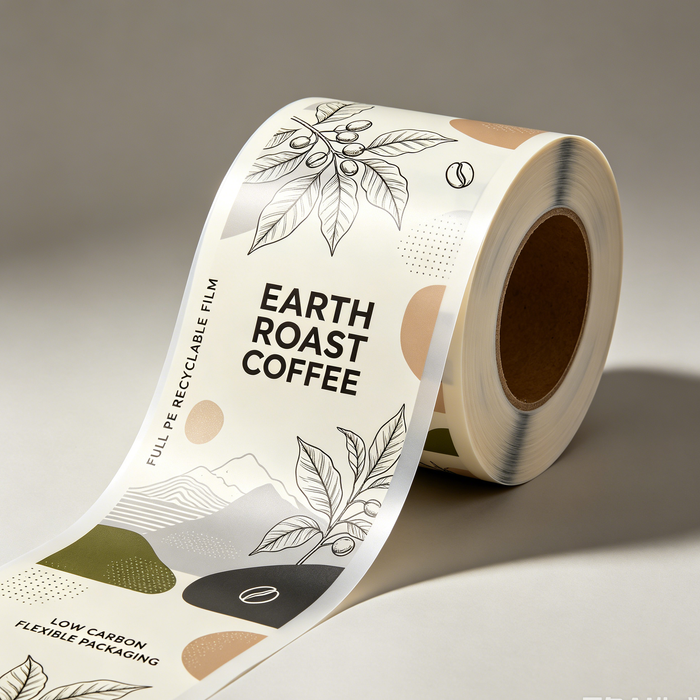
Explore flexible packaging formats and material options for your next sustainable packaging project.
More Ideas for Sustainable Packaging
Get practical insights into mono-material structures, PPWR preparation, and choosing the right packaging partner.
Why Switching to Mono Material Packaging Can Reduce Long-Term Costs
Understand how simpler material structures can affect sourcing, production, inventory, and recycling decisions.
Read Article →
PPWR Compliance Checklist 2026: What Brands Need to Prepare
Review material information, testing documents, and packaging details before your next EU-bound order.
Read Article →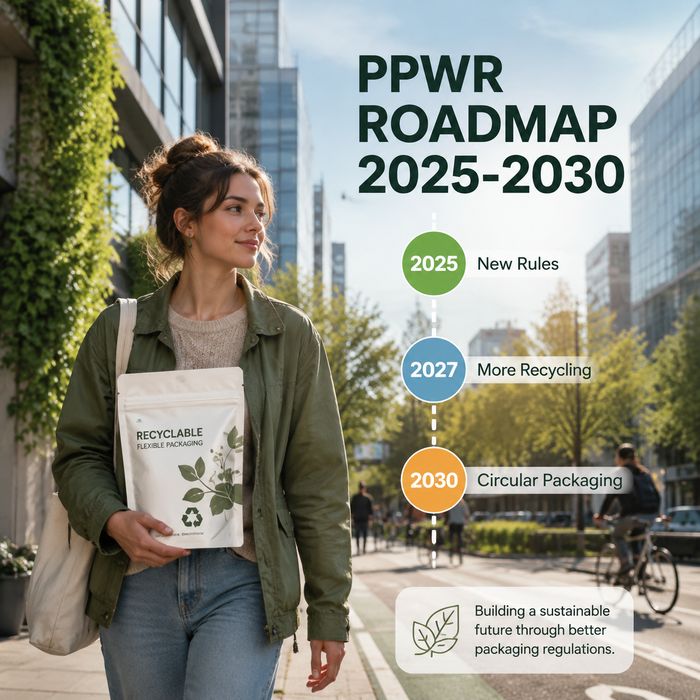
How to Choose a PPWR-Compliant Packaging Supplier
Learn what to check in material knowledge, testing capability, production control, and supplier documentation.
Read Article →

HuizhouDingli Packaging Products Co.Ltd.


Post time: Nov-23-2026