
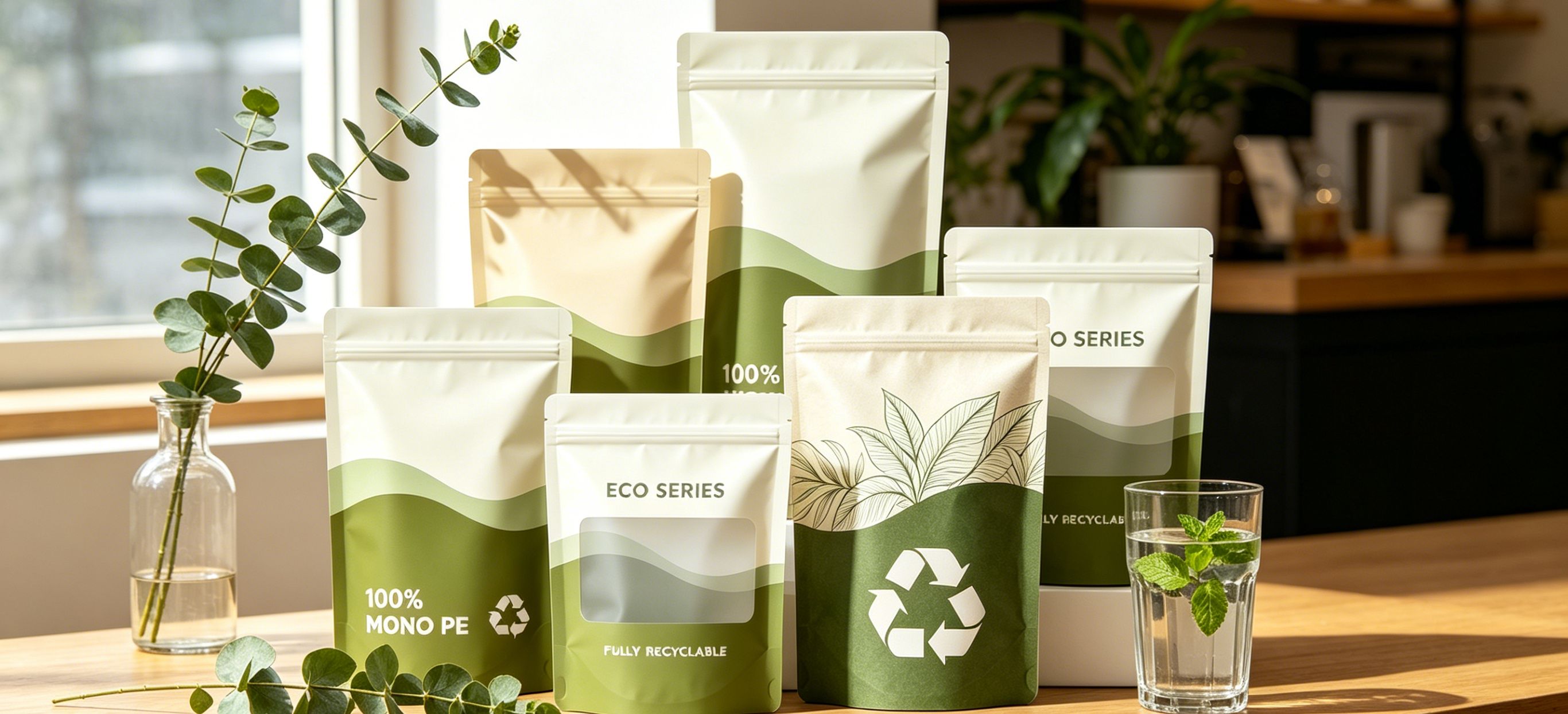
Have you ever sat in a packaging meeting and heard three terms thrown around like they mean the same thing—compostable, recyclable, reusable? They don’t. Not even close.
And here’s the uncomfortable truth most brands eventually run into: choosing “sustainable packaging” is less about what sounds green, and more about what actually survives real-world systems—waste streams, consumer habits, and infrastructure that varies wildly from country to country.
So the real question is not just which option is more eco-friendly, but rather: what actually fits your product, your supply chain, and how your customers behave in real life?
For brands looking for scalable solutions, you can explore custom sustainable mono material stand up pouches, which are increasingly becoming the practical baseline for global packaging transitions.
What Compostable Packaging Really Means

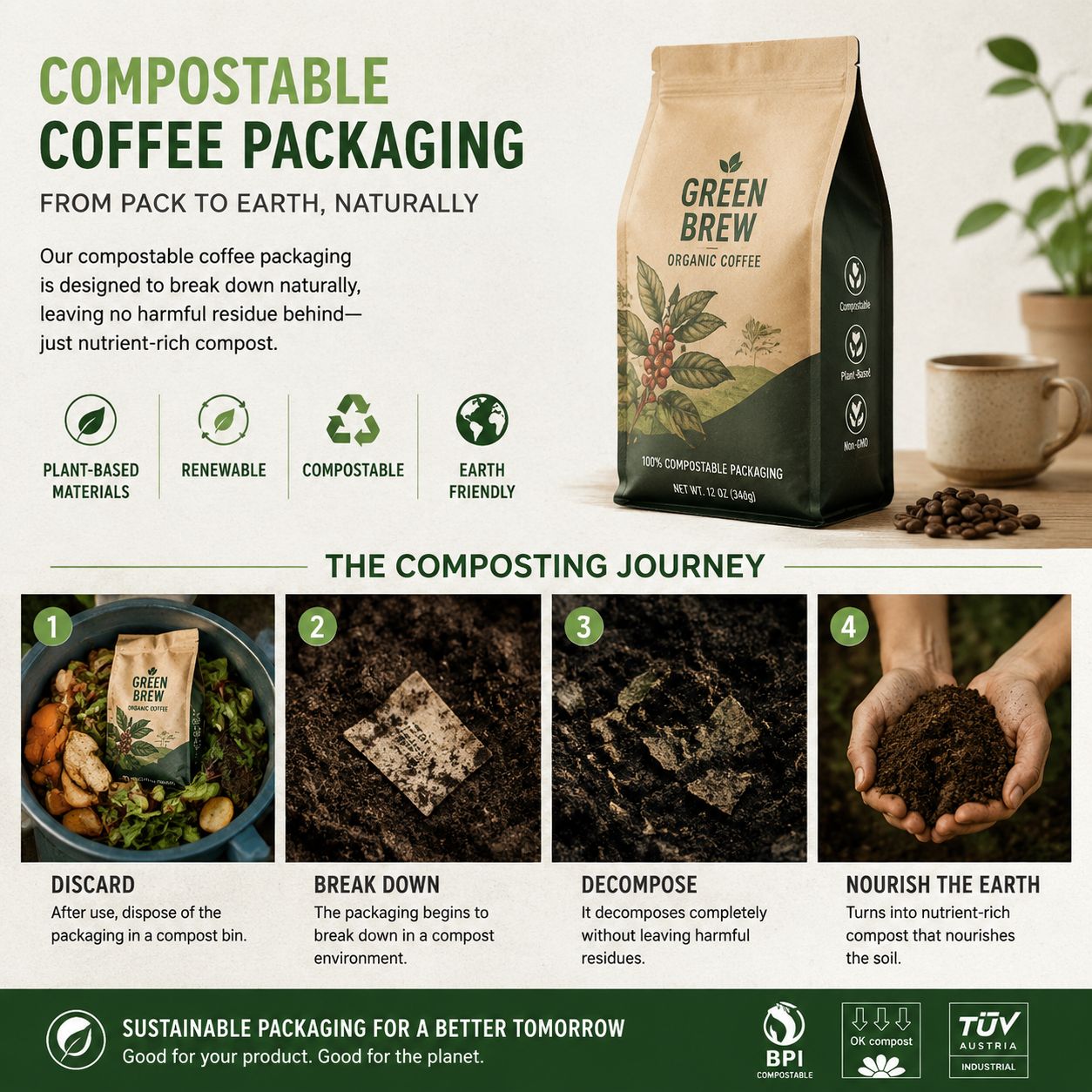
Compostable packaging is designed to break down into water, CO₂, and organic matter under specific industrial conditions. The keyword here is “specific.” Without the right temperature, humidity, and microbial environment, it simply doesn’t behave the way people expect.
Most compostable materials rely on PLA, PHA, or plant-based composites. They sound simple on paper, but in practice, they depend heavily on waste processing systems that are not evenly available.
A common misconception is that compostable means “it disappears anywhere.” It doesn’t. Most of the time, it requires industrial composting facilities operating around 58°C or higher.
Another misunderstanding is mixing compostable materials with recycling streams. That’s where things go wrong—contamination can disrupt entire recycling batches.
If you are working with regulated food or wellness packaging, solutions like EU compliant compostable stand up pouches are typically used in controlled markets where infrastructure exists.
What Recyclable Packaging Actually Delivers
Recyclable packaging is probably the most misunderstood category because it sounds straightforward. In theory, it means the material can be collected, processed, and turned into something new.
In reality, whether something is recycled depends less on the material itself and more on local infrastructure. A pouch might technically be recyclable, but if the facility doesn’t accept it, it still ends up in landfill.
This is where mono-material design becomes important. Instead of mixing layers, brands are shifting toward single-material structures like PE or PP to improve real recyclability.
You can see this approach in recyclable mono stand up pouches with window, or even more retail-focused formats like recyclable bakery packaging bags.
There’s also a reality brands often don’t talk about: global plastic recycling rates remain low. OECD data suggests only a small fraction of plastic waste is actually recycled in practice.
That gap between design intent and actual outcome is where most packaging strategies quietly fail.
What Reusable Packaging Means in Practice
Reusable packaging sounds ideal—use it again and again, reduce waste, close the loop. In controlled systems, it works very well. But outside of those systems, it becomes complicated fast.
It usually requires reverse logistics: collection, cleaning, redistribution. That only works when brands already have strong customer retention or localized distribution models.
Think subscription coffee brands or high-end DTC beauty companies. Not every business can realistically support that infrastructure.
For most brands, reusable packaging is less about replacing single-use formats and more about niche applications where customer behavior is predictable.
| Comparison Factor | Compostable Packaging | Recyclable Packaging | Reusable Packaging |
|---|---|---|---|
| Core Concept | Breaks down into natural elements under industrial composting conditions | Reprocessed into new materials through recycling systems | Designed for multiple use cycles within a controlled system |
| Common Materials | PLA, PHA, starch-based bioplastics, molded pulp | PET, HDPE, paper, aluminum, mono-material PE/PP | Glass, durable plastics, returnable containers |
| Real-World Requirement | Requires industrial composting facilities (58°C+, controlled humidity) | Depends heavily on local recycling infrastructure | Requires reverse logistics and collection system |
| Environmental Reality | Low impact only when properly composted; otherwise similar to plastic waste | Recycling rate varies; global plastic recycling remains under 10% | Lowest per-use footprint when reused multiple cycles successfully |
| Cost Structure | Higher material cost, limited scalability in some markets | Balanced cost, best scalability for global brands | High upfront cost, low long-term cost per cycle |
| Brand Fit | Organic food, premium wellness, short lifecycle products | Coffee, snacks, pet food, e-commerce consumer goods | DTC subscription brands, luxury cosmetics, closed-loop systems |
| Key Risk | Misleading compostability claims due to lack of infrastructure | “Wish-cycling” and contamination in recycling streams | High operational complexity and logistics cost |
| Scalability | Medium (depends on regional composting systems) | High (best global compatibility today) | Low to medium (requires closed-loop ecosystem) |
How to Actually Choose the Right Option
If your product is food-related—coffee, snacks, or fresh goods—and your audience cares deeply about “natural” positioning, compostable packaging can make sense. But only if your market actually has composting systems.
If you’re selling at scale, across regions, or through retail channels where infrastructure varies, recyclable packaging is usually the more stable option. It’s not perfect, but it works in more places.
And if your brand is built around subscription models or premium experiences, reusable packaging becomes interesting—but only if you’re ready to invest in logistics and customer education.
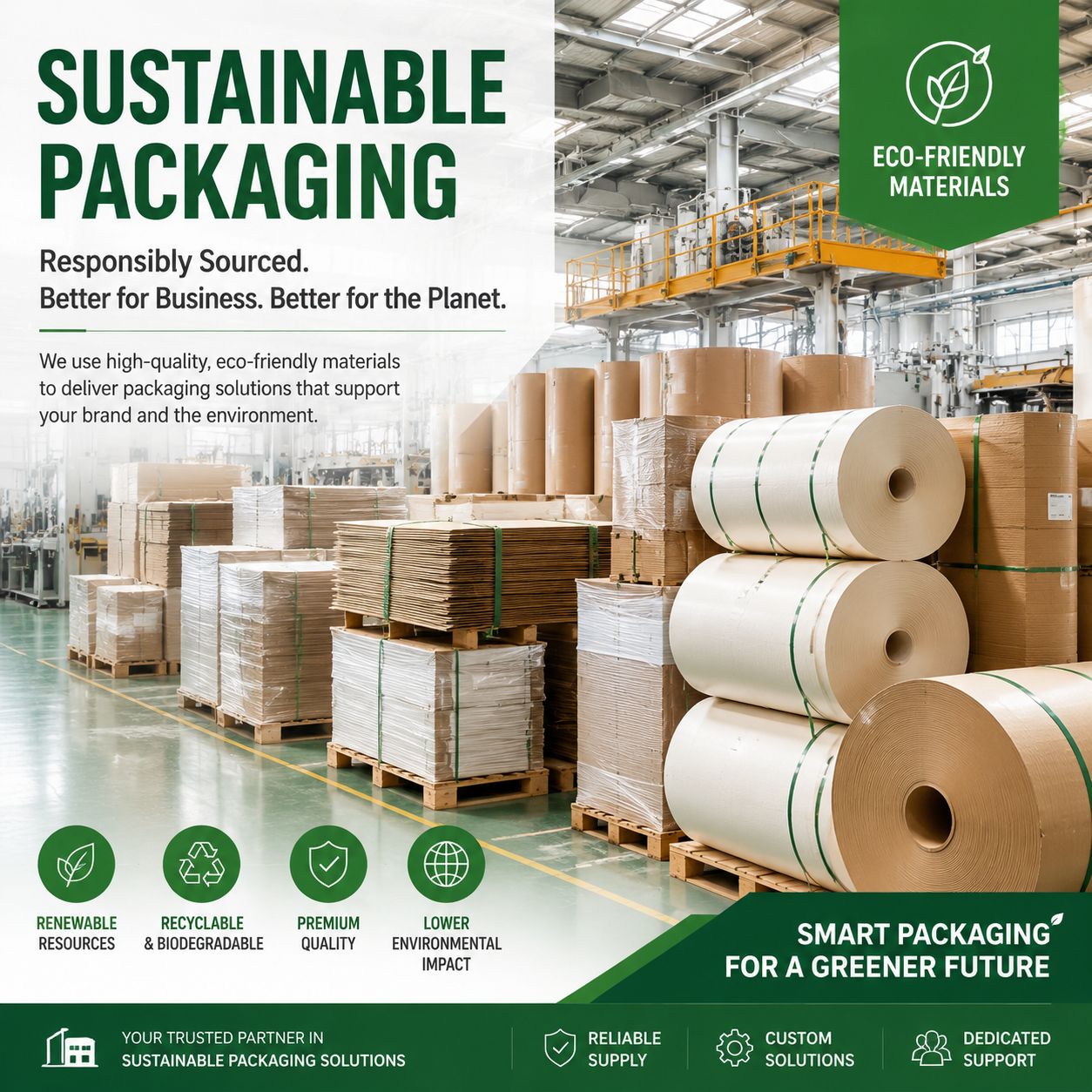
For many global brands, the most balanced solution today is still recyclable mono-material packaging, especially when paired with strong design and compliance alignment such as mono PE recyclable zipper pouches.
Where DINGLI PACK Fits Into This
At DINGLI PACK, we don’t treat sustainable packaging as a trend. It’s more like a system problem we help brands navigate.
Some clients come to us looking for compostable solutions. Others want recyclable structures that actually perform in global markets. And some are still figuring out what direction makes sense for their category.
We support all of it—custom design, material consultation, and production at scale. That includes eco friendly kraft packaging display solutions, mono-material pouches, and compostable packaging systems depending on the project.
The goal isn’t just to make packaging look sustainable. It’s to make it function in real supply chains without creating new problems downstream.
Final Thought
There is no single winner between compostable, recyclable, and reusable packaging. Each one works—but only under the right conditions.
The brands that get this right are not the ones chasing the most “eco-friendly” label. They’re the ones thinking through systems: infrastructure, consumer behavior, and cost at scale.
And that’s usually where packaging decisions become less about ideology, and more about practicality.
ONE-STOP PACKAGING SOLUTION - From Concept to Shelf in 7 Days
At DINGLI PACK, we know how stressful packaging can be for small brands, store owners, and startups. That’s why we focus on making it simple, reliable, and tailored to your needs. From stand up pouches, coffee bags with valves, flat bottom bags, spout pouches, shrink sleeves...
Our team provides hands-on support—from free package design and material advice to practical OEM guidance—making sure your product looks great and stays protected. Want to see us in action? Check our Video Center.
With a 5,000 m² workshop and 24/7 support, we deliver fast replies, consistent quality, and peace of mind. Stay updated with our tips and stories in the News Section, or explore all our solutions on the Products Page.
We’re more than a supplier—we’re a partner who understands the challenges of growing a brand and is ready to make your packaging shine.
Address
Block B-29,
VanYang Crowd Innovation Park ,
No 1 ShuangYang Road,
YangQiao Town, BoLuo District,
HuiZhou City, 516157, China
Phone
Support: +86 13410678885
Hours
Monday-Friday: 9am to 6pm
Saturday, Sunday: Closed


Post time: Jul-06-2026