
Is your packaging actually recyclable, or could it become a problem when your products enter the European market?
Many brands come to us saying, “Our pouch is recyclable because the material supplier told us so.” But when we check the actual structure, things are often more complicated. A package may look sustainable on the shelf, but a mixed material structure can make recycling much harder in real-world systems.
This is exactly why PPWR is getting so much attention from European brands. The regulation is pushing companies to rethink packaging design before problems appear. At DINGLI PACK, we help brands review their existing structures and develop PPWR packaging solutions that balance recycling goals, product protection, and production reality.
In this article, we will explain how recyclability grades A-E are commonly used in the packaging industry, what actually affects recycling performance, and what brands can do today to prepare for future requirements.
What Are Recyclability Grades A-E Under PPWR?

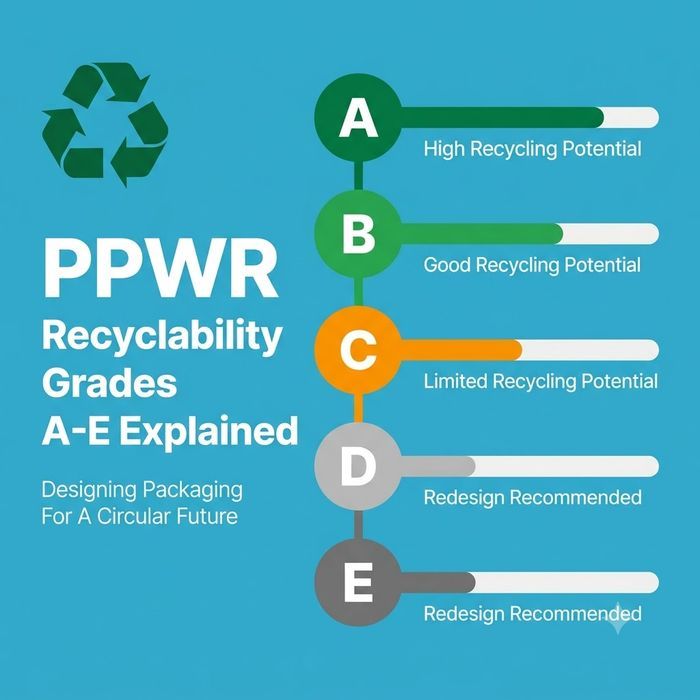
When brands first hear about PPWR recyclability grades, many assume it is simply a ranking of “good” and “bad” materials. In reality, recycling performance depends on much more than the name of the material.
The EU Packaging and Packaging Waste Regulation (PPWR) is designed to improve packaging circularity across Europe. Instead of only asking whether packaging can technically be collected, the focus is moving toward whether packaging can actually enter recycling systems and produce usable recycled materials.
The official PPWR framework introduces recyclability requirements, while the A-E grading system is commonly used by industry professionals to explain different levels of recycling performance. You can check the latest regulatory direction from the EU Packaging and Packaging Waste Regulation information.
A simple way to understand the grading concept:
| Grade | General Meaning | Packaging Situation |
| A | Excellent recyclability potential | Designed to work well within recycling systems |
| B | Good recyclability potential | Generally meets strong recycling expectations |
| C | Limited recyclability | May need redesign in the future |
| D/E | Poor recycling performance | Higher compliance risk |
Why PPWR Is Changing The Way Brands Think About Packaging
Over the years, packaging buyers have mainly focused on three questions:
Can it protect the product?
Does it look good on the shelf?
Can we produce it at a reasonable cost?
Those questions are still important. A snack pouch that loses freshness or a supplement bag that lets moisture in is not a successful package, even if the material sounds environmentally friendly.
But now brands also need to ask another question:
What happens to this package after the customer throws it away?
This is where many companies get confused. A recyclable claim does not automatically mean the package is easy to recycle.
For example, a traditional PET/AL/PE laminate pouch offers excellent protection. We still use similar structures for some applications because they perform extremely well against oxygen, moisture, and light.
However, the downside is obvious: different layers are bonded together, and separating them during recycling is much more challenging.
Material Structure: One Of The Biggest Factors Behind Recycling Performance
From our experience working with brands, material structure is usually the first place we review when discussing PPWR preparation.
The simpler the structure, the easier it is to fit into existing recycling streams.
Traditional Multi-Layer Packaging
A common example is:
PET / Aluminum / PE
This structure is still popular because it solves real packaging problems:
- Strong oxygen barrier
- Excellent moisture protection
- Long shelf life
But there is a trade-off. The same layers that protect the product can also make recycling more difficult.
Mono-Material Packaging
This is why many European brands are moving toward **mono-material packaging**.
For example, mono PE structures use mainly one polymer family, which makes sorting and recycling easier compared with mixed-material designs.
DINGLI PACK works with brands looking for practical alternatives, including custom sustainable mono-material stand up pouches designed for modern food, supplement, and retail applications.
Recycling Compatibility: Why “Looking Green” Is Not Enough
One mistake we often see from brands is choosing packaging based only on appearance. A kraft paper look, a recycling symbol, or an “eco-friendly” label can make a package feel sustainable, but recycling facilities do not judge packaging by appearance.
They look at the actual structure.
Things like polymer type, coatings, adhesives, inks, and barrier layers can all influence recycling performance. This is why two packages that look almost identical on the shelf can have completely different recycling outcomes.
For example, a paper-based pouch may perform well from a branding perspective, but if it contains a difficult-to-separate plastic layer or coating, the recycling process becomes more complicated.
That does not mean paper packaging or compostable packaging is the wrong choice. It simply means the material needs to match the product, the market, and the recycling system it is designed for.
For brands exploring alternative solutions, DINGLI PACK also develops custom compostable packaging bags for applications where compostability makes sense, such as selected food and specialty products.
Balancing Sustainability With Real Packaging Performance
There is something we always tell our customers: the most sustainable package is not always the package with the fewest materials.
A package has a job to do. Coffee needs aroma protection. Protein powder needs moisture control. Snacks need freshness. Beauty products need stability and clean presentation.
If a brand removes too much protection and the product gets damaged, the environmental cost can actually become higher.
Good packaging design is about finding the right balance:
- Enough barrier performance to protect the product
- A simpler material structure where possible
- Better compatibility with recycling systems
- Reasonable production cost for the brand
This is why experienced packaging suppliers do not simply recommend the “greenest” material. We first ask what the product is, how long it needs to last, where it will be sold, and what customers expect.
Different Packaging Materials And Their Recyclability Potential
There is no single packaging material that works for every product. However, some structures are generally more compatible with recycling goals than others.
| Packaging Type | Recyclability Potential | Why |
| Mono PE packaging | A/B potential | Single polymer structure improves recycling compatibility |
| Mono PP packaging | A/B potential | Works well with PP recycling streams |
| Paper-based barrier packaging | B/C potential | Depends on coatings and barrier layers |
| PET/AL/PE laminate pouch | C/D risk | Multiple bonded materials are harder to separate |
| Mixed plastic structures | D/E risk | Low recycling compatibility |
What Do Grade A, B, C, D, And E Packaging Examples Look Like?
Grade A Packaging Examples
Grade A represents packaging designs with strong recyclability performance. These packages usually have simple structures and work well with established recycling systems.
Examples may include:
- Single-material PET or HDPE containers
- Uncoated paper packaging without plastic barriers
- Aluminum packaging made from one material
- Glass containers without complex components
For flexible packaging brands, moving toward mono-material designs is one of the main strategies being explored. DINGLI PACK provides recyclable mono PE packaging pouches for brands looking to simplify their packaging structure.
Grade B Packaging Examples
Grade B packaging usually performs well but may include small components that require additional recycling considerations.
Common examples:
- PET bottles with removable labels
- Paper packaging with recyclable adhesives
- Glass jars with compatible closures
Grade C Packaging Examples
Grade C packaging can still have commercial value, but brands should carefully evaluate whether it is the right long-term choice.
Examples:
- Packaging with difficult pigments
- Paper packaging with complex coatings
- Multi-layer films designed for specific barrier needs
For some products, these structures are still necessary today. The key is understanding the trade-off before making a long-term packaging decision.
Grade D/E Packaging Examples
Lower recyclability performance is usually linked to packaging that combines multiple incompatible materials or cannot be efficiently processed.
Examples may include:
- Traditional non-separable multi-layer laminates
- PVC-based packaging
- Complex material combinations with no clear recycling pathway
How Can Brands Improve Their Packaging Recyclability Performance?
Step 1: Review Your Current Packaging Structure
Before changing anything, brands should understand what they already have.
Look at:
- Film combination
- Barrier layers
- Printing methods
- Adhesives and coatings
Step 2: Consider A Simpler Material Structure
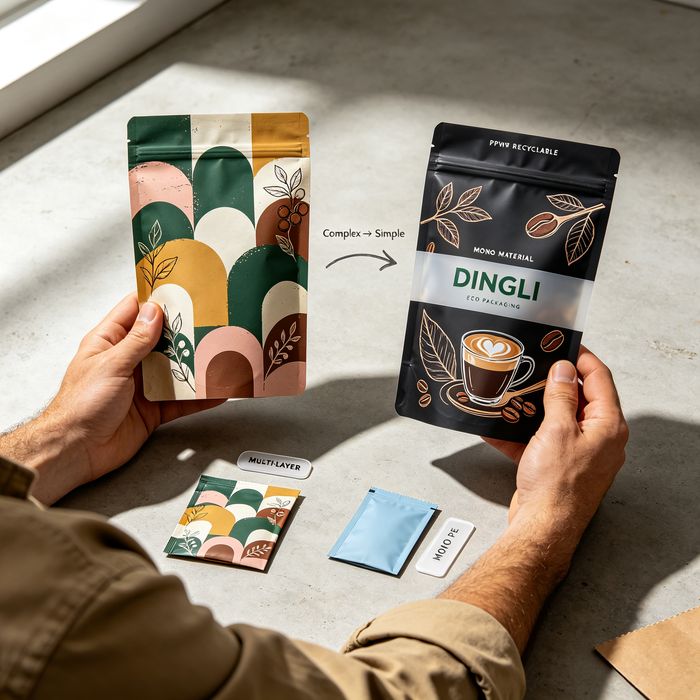
A common upgrade path is moving from traditional mixed structures toward mono-material alternatives.
For example:
PET/PE structure
↓
Mono PE recyclable pouch
Step 3: Work With A Packaging Partner Who Understands Compliance
A packaging supplier should do more than print your artwork and make bags.
A good supplier should help you evaluate:
- Material selection
- Structure optimization
- Production feasibility
- Documentation requirements
How DINGLI PACK Helps Brands Prepare For Future Packaging Requirements
At DINGLI PACK, we work with brands that need packaging solutions for Europe, North America, and other international markets.
We do not believe every product needs the same packaging structure. A coffee brand, a vitamin company, and a beauty brand usually have very different requirements.
Our team helps customers develop packaging options including:
- Mono-material recyclable pouches
- Refill packaging solutions
- Sustainable paper-based packaging
- Custom flexible packaging for different industries
For brands looking at refill and lightweight formats, our eco refill packaging solutions can help reduce unnecessary packaging materials while maintaining product protection.
We also support brands searching for natural-looking packaging options with recyclable kraft paper packaging solutions for supplements, food powders, and specialty products.
Ready To Review Your Packaging For Future Recycling Requirements?
Packaging rules are changing, but brands do not need to redesign everything overnight. The first step is understanding where your current packaging stands and what improvements make sense.
DINGLI PACK helps brands evaluate packaging structures, explore recyclable alternatives, and develop practical solutions based on real production experience.
Contact our packaging team today to discuss your current packaging structure and explore suitable PPWR-ready options.
Contact DINGLI PACK packaging experts
Learn more about our company and sustainable packaging capabilities at DINGLI PACK.
Frequently Asked Questions
Choosing sustainable packaging is not only about finding a greener material. Most brands we work with are trying to understand one thing: “Will this packaging still make sense in the next few years?”
DINGLI PACK Tip:
The best packaging solution is not always the most expensive or the newest material. It is the one that fits your product, market, and future recycling requirements.
1. What is PPWR and why does it matter for packaging brands?
PPWR is changing how brands evaluate packaging before entering the European market. From our experience working with international customers, many companies are now reviewing their structures earlier instead of waiting for compliance pressure. At DINGLI PACK, we help brands develop **PPWR compliant packaging solutions** by reviewing materials, barrier requirements, and recyclable alternatives based on the real application.
2. Is mono-material packaging better than traditional flexible packaging?
In many cases, yes. **Mono-material packaging** uses mainly one polymer family, which can simplify recycling compared with complex multi-layer structures. However, we always remind customers that it is not a universal replacement. Some products with extremely high barrier requirements may still need advanced structures. Our job is to find the right balance between protection, cost, and recyclability.
3. Can compostable packaging replace recyclable packaging?
Not always. Compostable and recyclable packaging solve different problems. For brands selling products where composting infrastructure is available, **custom compostable packaging bags** can be a suitable option. But for many mainstream food and retail applications, recyclable structures may provide a more practical long-term solution. We normally review the product, market requirements, and disposal system before recommending a material.
4. What packaging materials are commonly used for recyclable pouches?
Many brands are exploring PE and PP-based structures because they can offer good flexibility and recycling potential. For example, **recyclable mono PE pouches** are becoming popular for snacks, pet food, supplements, and refill products. DINGLI PACK works with brands to customize pouch structures according to product protection needs, printing requirements, and market goals.
5. How can brands improve their packaging recyclability score?
The first step is understanding your current packaging structure. We usually check the film layers, barrier materials, adhesives, and printing methods before suggesting improvements. Moving from complex laminates to **sustainable stand up pouches** or simplified mono-material designs can often improve recyclability potential while keeping the package functional.
6. How do I choose a reliable sustainable packaging manufacturer?
A good supplier should do more than produce bags. They should understand materials, production limits, and your target market. When brands contact DINGLI PACK, we focus on practical solutions: material suggestions, custom structures, printing quality, and production support. Our goal is to help companies create packaging that works in the real market, not just on paper. You can contact our team for a packaging review and discuss your next project.
ONE-STOP PACKAGING SOLUTION - From Concept to Shelf in 7 Days
At DINGLI PACK, we know how stressful packaging can be for small brands, store owners, and startups. That’s why we focus on making it simple, reliable, and tailored to your needs. From stand up pouches, coffee bags with valves, flat bottom bags, spout pouches, shrink sleeves...
Our team provides hands-on support—from free package design and material advice to practical OEM guidance—making sure your product looks great and stays protected. Want to see us in action? Check our Video Center.
With a 5,000 m² workshop and 24/7 support, we deliver fast replies, consistent quality, and peace of mind. Stay updated with our tips and stories in the News Section, or explore all our solutions on the Products Page.
We’re more than a supplier—we’re a partner who understands the challenges of growing a brand and is ready to make your packaging shine.
Address
Block B-29,
VanYang Crowd Innovation Park ,
No 1 ShuangYang Road,
YangQiao Town, BoLuo District,
HuiZhou City, 516157, China
Phone
Support: +86 13410678885
Hours
Monday-Friday: 9am to 6pm
Saturday, Sunday: Closed


Post time: Jul-28-2026