
Have you ever looked at your packaging and wondered whether it’s still the right choice for today’s market?
Because honestly, things are changing faster than most brands expect. Between EU PPWR regulations, EPR rules, and growing pressure from retailers, packaging is no longer just “a bag or a pouch”. It’s becoming part of your brand responsibility.
At the same time, traditional packaging still works really well in many cases. It protects products, keeps costs stable, and has been used for decades without problems.
So the real question is not which one is perfect. It’s more like:
Which packaging actually fits your product and your market right now?
What is Mono Material Packaging?

Mono Material Packaging Explained in Simple Terms
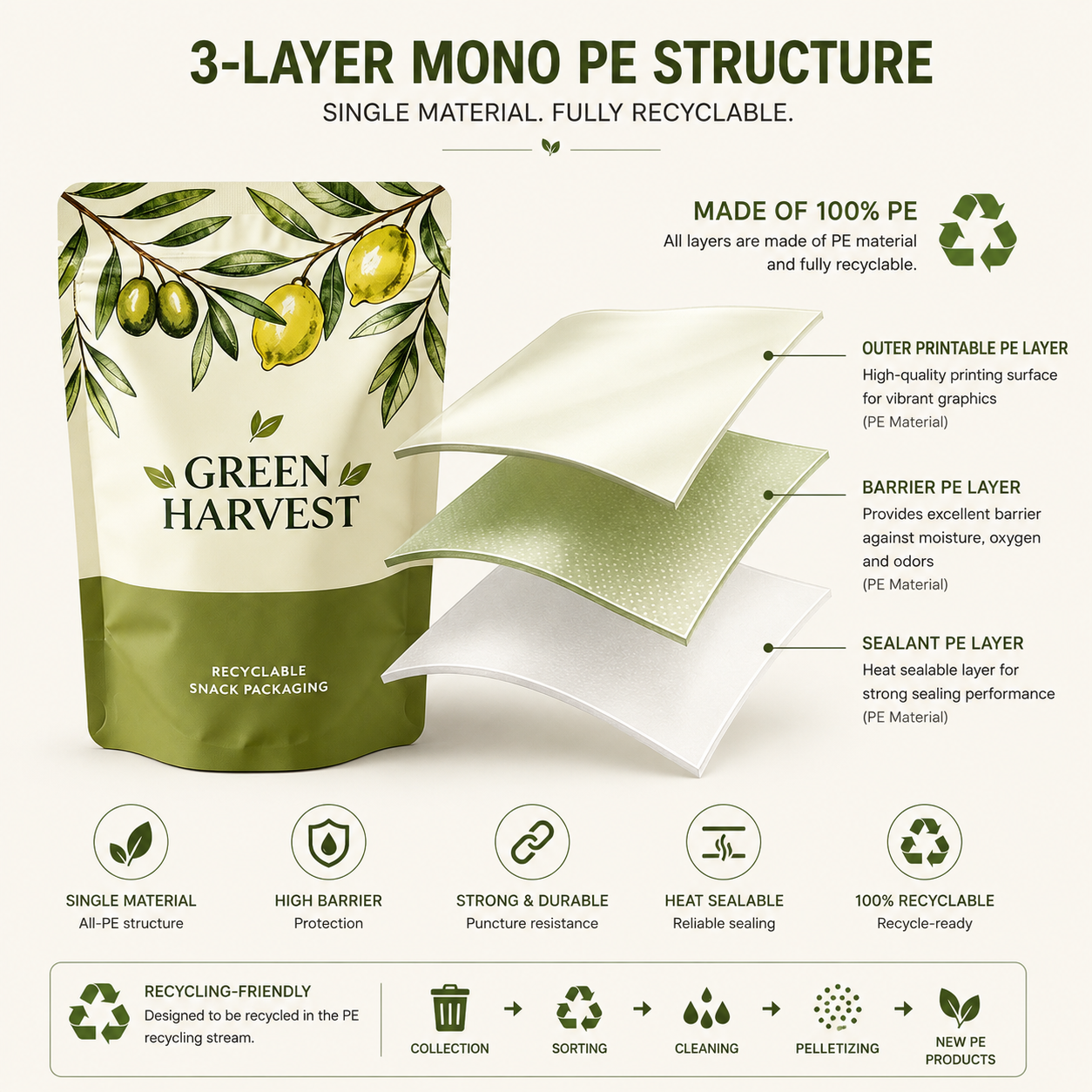
Mono material packaging simply means the packaging is made from one main type of plastic, like PE or PP.
Unlike old laminated structures (which mix PET, foil, nylon, and PE), mono material keeps things much simpler.
Common structures you’ll see:
• PE/PE
• PP/PP
• PE/EVOH/PE (for better barrier)
• PP/EVOH/PP
• All PE stand-up pouches
• All PP stand-up pouches
For example, brands in retail and apparel often use solutions like mono PE recyclable packaging bags because they look clean and are easier to recycle compared to older structures.
Why is it considered recyclable?
The idea is actually quite simple.
When packaging uses the same type of material, recycling becomes easier because:
• No need to separate different layers
• Less complicated waste processing
• Higher chance of being recycled properly
• Better fit for circular economy systems
This is also why governments in Europe are pushing hard on recycling rules like the upcoming EU Packaging and Packaging Waste Regulation (PPWR).
Mono Material vs Traditional Packaging
Below is a simplified comparison that highlights how both systems perform across key packaging metrics:
| Comparison Dimension | Mono Material Packaging | Traditional Packaging |
|---|---|---|
| Recyclability | ★★★★★ | ★★ |
| Oxygen Barrier | ★★★ | ★★★★★ |
| Moisture Protection | ★★★★ | ★★★★★ |
| Printability | ★★★★ | ★★★★★ |
| Cost Efficiency | ★★★ | ★★★★★ |
| Regulatory Compliance | ★★★★★ | ★★ |
| Sustainability | ★★★★★ | ★★ |
| Product Protection | ★★★ | ★★★★★ |
This comparison clearly shows a trade-off:
- Mono materials win in sustainability and compliance
- Traditional packaging wins in performance and cost efficiency
Key Advantages of Mono Material Packaging
1. Easier recycling (and less headache)
To be honest, recycling systems in many countries are still not perfect.
But mono material helps reduce complexity. That alone makes it more “future-proof”.
It supports:
• Better sorting
• Higher recycling rates
• Easier compliance with new laws
2. Better fit for EU and global regulations
Brands selling in Europe are already dealing with EPR systems and stricter packaging rules.
And this pressure is only increasing.
Governments are pushing companies toward:
• Lower carbon footprint
• Circular packaging systems
• Reduced plastic waste
That’s why more brands are moving toward packaging like sustainable box pouches for coffee and pet food.
3. Better brand image (this part matters more than people admit)
Let’s be honest. Customers notice packaging more than we think.
Especially younger buyers. They care about recyclability and sustainability even if they don’t say it directly.
Studies from McKinsey & Company show that consumers are more likely to choose products with sustainable packaging.
So yes, packaging affects trust.
Why Traditional Packaging Still Exists (and still works)
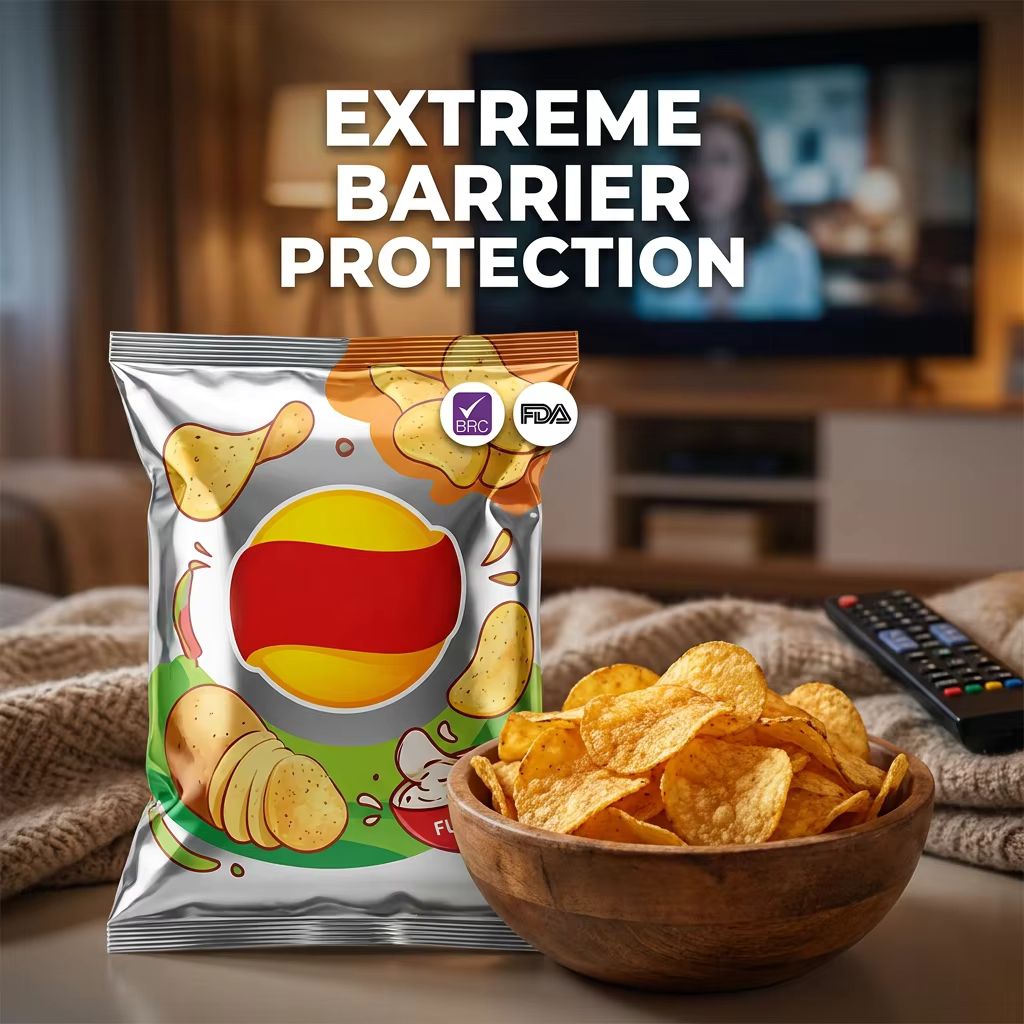
1. Strong barrier protection
If you sell coffee, pet food, or nutrition products, you already know this part.
Traditional multilayer packaging is still better at:
• Blocking oxygen
• Keeping moisture out
• Preserving aroma and freshness
2. Longer shelf life
This is one of the biggest reasons brands still use it.
More layers = better protection. It’s simple.
That’s why it’s still widely used in frozen food, coffee, and premium snacks.
3. Lower cost at scale
For large production runs, traditional packaging is often cheaper and easier to source.
So for price-sensitive markets, it still makes sense.
For example, bakery brands often choose window packaging bags for snacks and desserts to balance cost and shelf appeal.
Where DINGLI PACK Fits In
At DINGLI PACK, we don’t just produce packaging. We help brands figure out what actually works for their market.
Sometimes it’s mono material. Sometimes it’s still traditional structure with better optimization. It depends.
What we focus on:
• Custom mono material packaging
• High-barrier recyclable solutions
• Small batch sampling
• Digital and flexo printing
• Export support for global brands
We also work with functional packaging formats like spout pouches for liquid products.
If you want to explore options, you can always check our official website or just reach out directly via contact page.
Final Thought
There is no absolute winner between mono material and traditional packaging.
Each one has its place.
But if we look at where the market is going—regulations, sustainability pressure, consumer behavior—mono material packaging is clearly becoming more important.
Still, the smartest brands are not choosing emotionally. They are choosing based on product needs, cost, and long-term strategy.
And that’s probably the most realistic way to think about it.
Frequently Asked Questions
What is the difference between mono material packaging and biodegradable packaging?
This is a very common confusion.
Mono material packaging is focused on recyclability, while biodegradable packaging is focused on decomposition under specific conditions.
They are not the same thing.
Mono material (like PE/PE or PP/PP):
- Designed to be recycled
- Compatible with existing waste systems
- More stable for food and retail use
Biodegradable materials:
- Require industrial composting conditions
- Not always accepted in regular recycling streams
- Can have limitations in barrier performance
At DINGLI PACK, we help brands choose based on product needs, not trends—because the wrong material choice often creates more problems than solutions.
Can mono material packaging be used for food products?
Paper, cardboard, PET, HDPE, and aluminum generally perform best across both regions. These materials benefit from relatively mature collection systems and higher recycling demand in secondary markets.
Are plastic bags and flexible pouches recyclable?
Yes, absolutely.
Mono material packaging is widely used for:
- Snacks
- Coffee
- Bakery products
- Frozen food
- Pet food
At DINGLI PACK, we also develop high-barrier mono structures to ensure food freshness is not compromised.
Does mono material packaging affect product shelf life?
It can, depending on the structure.
Basic mono PE or mono PP films may not match the barrier level of aluminum-based multilayer packaging. However, modern solutions using EVOH layers (like PE/EVOH/PE) significantly improve oxygen barrier performance.
For example, coffee, snacks, and pet food brands often use high-barrier recyclable structures such as:
- Mono PE high-barrier pouches
- Mono PP EVOH structures
At DINGLI PACK, we develop customized barrier solutions to balance:
shelf life + recyclability + cost
So it’s not a downgrade—it’s a redesign.
How can brands ensure their packaging complies with EU and US regulations?
Brands need to consider both material selection and design structure. Working with an experienced supplier like DINGLI PACK helps ensure compliance with EU PPWR requirements and US EPA guidelines, especially when it comes to single-material design and verified recyclability claims.
ONE-STOP PACKAGING SOLUTION - From Concept to Shelf in 7 Days
At DINGLI PACK, we know how stressful packaging can be for small brands, store owners, and startups. That’s why we focus on making it simple, reliable, and tailored to your needs. From stand up pouches, coffee bags with valves, flat bottom bags, spout pouches, shrink sleeves...
Our team provides hands-on support—from free package design and material advice to practical OEM guidance—making sure your product looks great and stays protected. Want to see us in action? Check our Video Center.
With a 5,000 m² workshop and 24/7 support, we deliver fast replies, consistent quality, and peace of mind. Stay updated with our tips and stories in the News Section, or explore all our solutions on the Products Page.
We’re more than a supplier—we’re a partner who understands the challenges of growing a brand and is ready to make your packaging shine.
Address
Block B-29,
VanYang Crowd Innovation Park ,
No 1 ShuangYang Road,
YangQiao Town, BoLuo District,
HuiZhou City, 516157, China
Phone
Support: +86 13410678885
Hours
Monday-Friday: 9am to 6pm
Saturday, Sunday: Closed


Post time: Jun-08-2026