
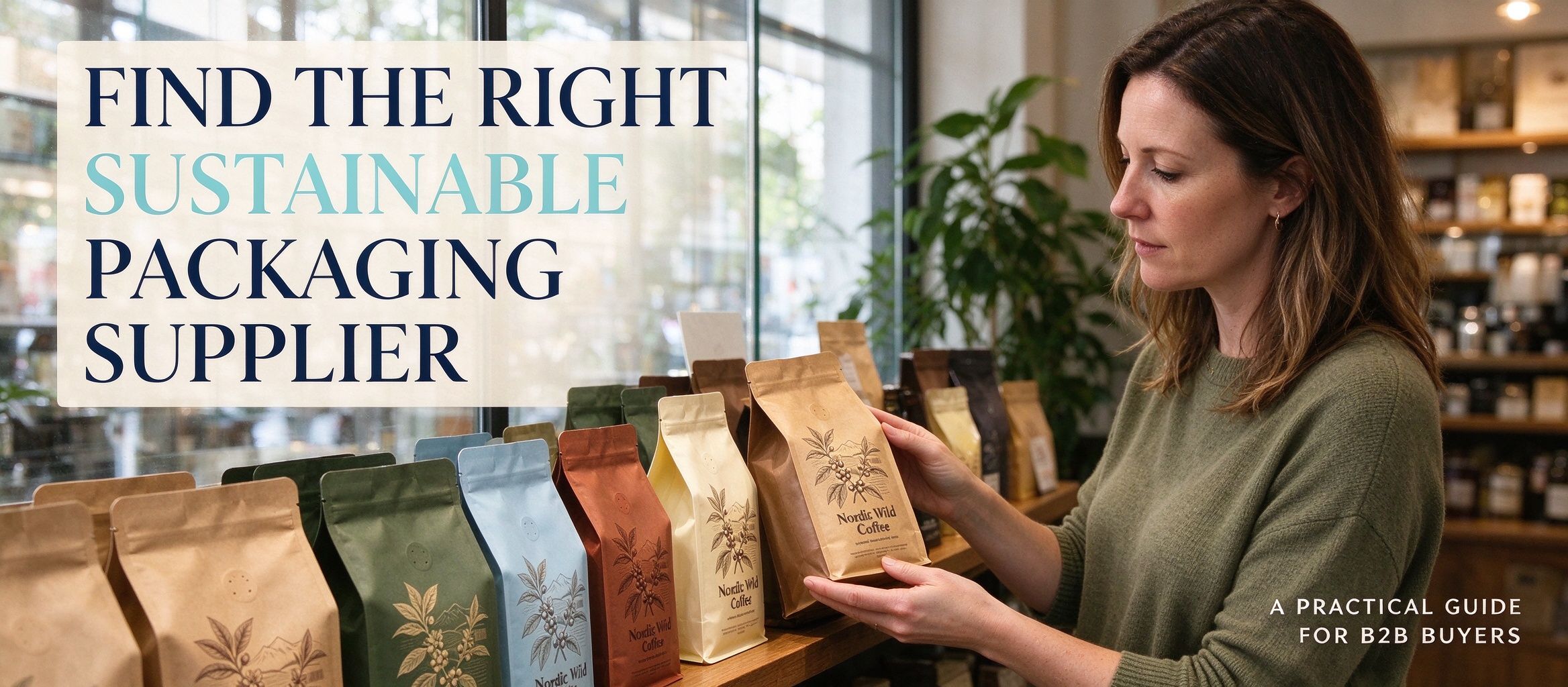
Finding a sustainable packaging supplier isn't particularly difficult. A quick Google search will give you plenty of options. The harder part? Finding a manufacturer that can explain exactly what goes into your packaging, provide reliable samples, maintain consistent quality, and deliver your orders as promised.
You may have already compared dozens of websites. One supplier offers recyclable pouches, another promotes compostable films, and a third claims to have every eco-friendly solution under the sun. But which one can actually meet your requirements?
If you're exploring custom recyclable pouches, replacing traditional packaging, or sourcing a new manufacturer for your brand, this guide will help you make a more informed decision.
We'll walk through the entire sourcing process — from finding potential suppliers and sending your first inquiry to checking samples, comparing quotations, and approving your first bulk order.
ARTICLE GUIDE Quick Overview +
WHAT YOU'LL LEARN
This guide walks you through the supplier search process — from finding potential manufacturers and sending your first inquiry to checking certifications, testing samples and comparing quotations. Use it to make a more informed sourcing decision before placing a bulk order.
JUMP TO A SECTION
Where Can You Find Sustainable Packaging Suppliers?

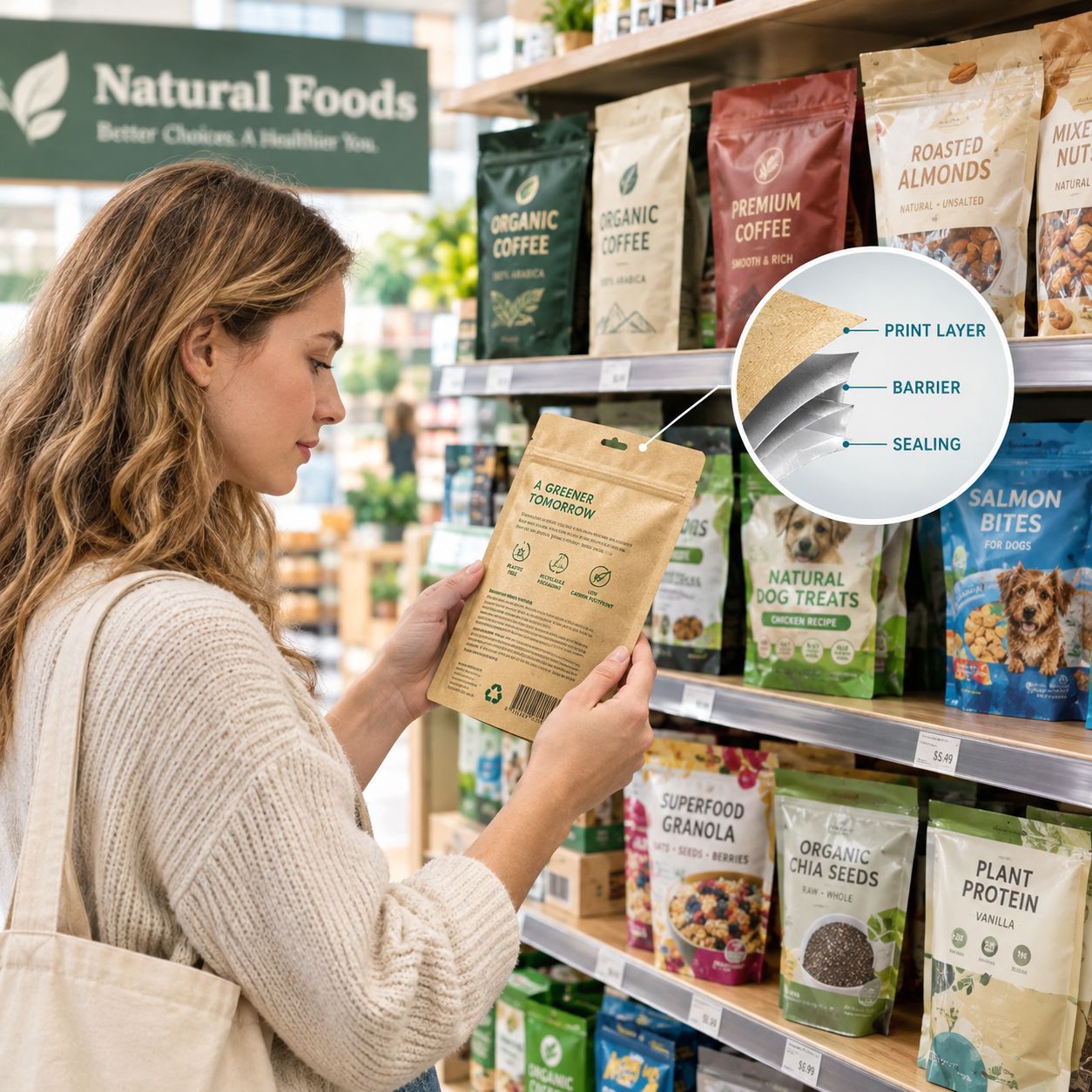
Before contacting manufacturers, you need to know where to look. Don't rely on a single search or recommendation. Different channels reveal different things about a supplier, and using several of them gives you a much clearer picture.
Google Search
Google is a good starting point when you already know what type of packaging you need. Search with specific phrases instead of broad terms such as "eco-friendly packaging."
- Recyclable flexible packaging manufacturer
- Custom compostable packaging bags supplier
- Wholesale sustainable food packaging manufacturer
- Mono-material pouch manufacturer
- Custom paper packaging supplier for food brands
Look beyond the homepage. Open product pages, material guides, manufacturing information, and case studies. A supplier with detailed product specifications is usually easier to evaluate than one that only makes general sustainability claims.
B2B Platforms and Industry Directories
Platforms such as Alibaba, Global Sources, Thomasnet, and Europages can help you build an initial supplier list. Compare several companies offering similar products, then visit their official websites to check their manufacturing experience and product range.
Keep in mind that a supplier listed on a B2B platform is not automatically a manufacturer. Ask who actually produces the packaging and who is responsible for quality control.
LinkedIn, Social Media, and Industry Recommendations
LinkedIn can help you identify packaging manufacturers, sales teams, and industry professionals. Instagram and YouTube are useful for seeing product examples, printing results, and factory videos. You can also ask questions in relevant packaging groups on Reddit or Facebook, but treat user comments as opinions rather than proof of certification or production capability.
Recommendations from business contacts are worth checking, too. Ask whether they have placed a real bulk order, how consistent the quality was, whether delivery dates were met, and how the supplier handled problems.
Trade Shows
Events such as interpack, PACK EXPO, and FACHPACK give you the chance to compare packaging materials and meet suppliers directly. You can discuss your product requirements, inspect samples, and ask technical questions in person. If you are attending a trade show, prepare a short brief before you go so you can compare suppliers on the same basis.
2. Shortlist Suppliers Before You Contact Them
Once you have found several potential suppliers, narrow the list to around three to five companies. You do not need to contact dozens of factories at once. A focused comparison makes it easier to spot differences in technical knowledge, service, and pricing.
Check these points before sending an inquiry:
- Relevant product experience: Does the supplier make the packaging you actually need, such as stand-up pouches, flat bags, roll stock, or paper packaging?
- Material knowledge: Can the company explain the difference between recyclable mono-material structures, compostable materials, and conventional laminates?
- Printing and customization: Does it offer the printing methods, sizes, closures, valves, spouts, or other features your product requires?
- Manufacturing transparency: Is it clear whether the company operates its own production lines or works with external factories?
- Communication: Does the sales team answer technical questions clearly, or does it simply send a generic price list?
A trading company is not necessarily a poor choice. Some provide useful sourcing and project management services. The important thing is to understand who manufactures your packaging, who inspects it, and who will take responsibility if something goes wrong.
3. How to Contact a Supplier and What to Ask
Your first inquiry does not need to be complicated. However, the more useful information you provide, the more accurate the supplier's recommendation and quotation will be.
Include the following details whenever possible:
- Product type and intended application
- Preferred packaging style and approximate dimensions
- Material preference, if you already have one
- Order quantity and expected reorder volume
- Printing requirements or artwork files
- Special features, such as a zipper, window, valve, spout, or tear notch
- Destination country and delivery location
If you are unsure about the material, do not guess. Explain what you are packing, how long it needs to stay fresh, and what environmental requirements apply in your target market. A knowledgeable supplier should help you evaluate suitable structures.
A Simple First Inquiry Template
Subject: Inquiry for Custom Sustainable Packaging
Hello,
We are looking for a packaging supplier for our [product type]. We are interested in [packaging style] and would like to explore recyclable or other suitable sustainable material options.
Our estimated order quantity is [quantity]. We also need [printing, size, closure, or other requirements].
Could you please recommend a suitable material structure and share your MOQ, sampling options, estimated production lead time, and quotation requirements?
Thank you. We look forward to hearing from you.
Best regards,
[Your Name]
Questions Worth Asking During the Discussion
Once a supplier replies, move beyond the price. Ask questions that help you understand whether the proposed packaging will work for your product.
- What is the complete material structure and thickness?
- What barrier performance can the material provide? Can you share OTR or WVTR data if my product needs it?
- Is the packaging recyclable or compostable in my destination market, and under what conditions?
- Which relevant certificates or test reports can you provide?
- What is the MOQ for this material, size, and printing method?
- How much do samples, cylinders, plates, or setup costs add to the project?
- Which production stages are handled in-house?
- How do you inspect finished packaging and maintain consistency across repeat orders?
Pay attention to how the supplier responds. A reliable partner should be willing to explain trade-offs, ask questions about your product, and tell you when a requested material may not be suitable.
4. Verify Materials, Certifications, and Factory Capabilities
Sustainable packaging claims can be confusing. "Eco-friendly," "green," and "biodegradable" do not tell you exactly what a package is made of or how it should be disposed of. Ask for the material specification and supporting documents before making a decision.
Different standards serve different purposes:
- EN 13432: A standard used to assess industrial compostability of packaging. It does not mean the package will break down in a home compost bin.
- ASTM D6400: A specification for plastics designed for aerobic composting in municipal or industrial facilities.
- FSC certification: Relates to responsible sourcing and forest management for applicable paper and forest-based materials.
- ISO 14001: Covers environmental management systems at an organization level. It does not prove that an individual package is recyclable or compostable.
Ask whether a certificate applies to the exact material, finished packaging, or production facility being offered. Check its validity and scope. Also remember that food-contact compliance is a separate issue from environmental certification. If you are packaging food, request the relevant food-contact declarations or test reports for your target market.
For European sales, review the requirements that may affect your packaging under the EU Packaging and Packaging Waste Regulation (PPWR). Do not assume that a material described as recyclable automatically meets every local collection, sorting, or recycling requirement.
Factory capability matters just as much as the material. Ask about printing, lamination, slitting, pouch converting, inspection, and quality control. If you need flexible packaging with custom printing, the supplier should be able to explain how these stages work together and how defects are identified before shipment.
5. Request Samples and Compare Quotations
Do not approve a large order based on photographs or a digital mock-up alone. Request existing material samples first, then arrange customized samples if the project moves forward.
Test the packaging with your actual product whenever possible. For a dry snack, check the seal, zipper, opening experience, and protection against moisture. For liquids, test leakage, spout performance, and seal strength. For products sensitive to oxygen or moisture, ask about suitable barrier specifications and testing.
Also confirm whether the sample uses the same material structure and thickness planned for mass production. A digital proof can show the artwork layout, but it cannot fully represent the final printed result. Printing methods, substrates, and finishes may affect color appearance.
Compare Quotations on the Same Basis
A low quotation is not necessarily the best deal. Before comparing prices, make sure each supplier is quoting for the same specifications:
- Material structure and total thickness
- Bag dimensions, style, and functional features
- Printing method, number of colors, and finish
- Order quantity and price breaks
- Sampling, setup, cylinder, or plate charges
- Packaging, shipping, and delivery terms
- Estimated production lead time
MOQ can vary depending on material availability, bag dimensions, printing method, and production setup. Ask for pricing at more than one quantity level if you expect to scale your order. This helps you understand how the unit cost changes as volume increases.
Finally, agree on the approved sample, artwork, specifications, inspection criteria, and delivery schedule before placing the bulk order. Keep these records for future reorders.
6. Watch for These Supplier Warning Signs
Some issues are easy to overlook when you are focused on price or a fast delivery date. Take a step back if a supplier:
- Uses broad environmental claims but cannot explain the material structure or disposal conditions.
- Provides certificates that do not clearly match the proposed packaging.
- Refuses to provide samples or discuss testing.
- Cannot explain who handles production and quality inspection.
- Gives a quotation without confirming dimensions, material, or order quantity.
- Promises unusually short lead times without checking production requirements.
- Avoids discussing material limitations, compliance, or possible production risks.
A dependable supplier does not have to say yes to every request. In fact, honest advice about what a material can and cannot do is often a better sign of experience than a promise that everything is possible.
7. Is DINGLI PACK the Right Packaging Partner for Your Project?
Choosing a sustainable packaging supplier is a long-term purchasing decision. You need more than a company that can print a logo on a pouch. You need a partner who understands material selection, product protection, production requirements, and the practical details of repeat orders.
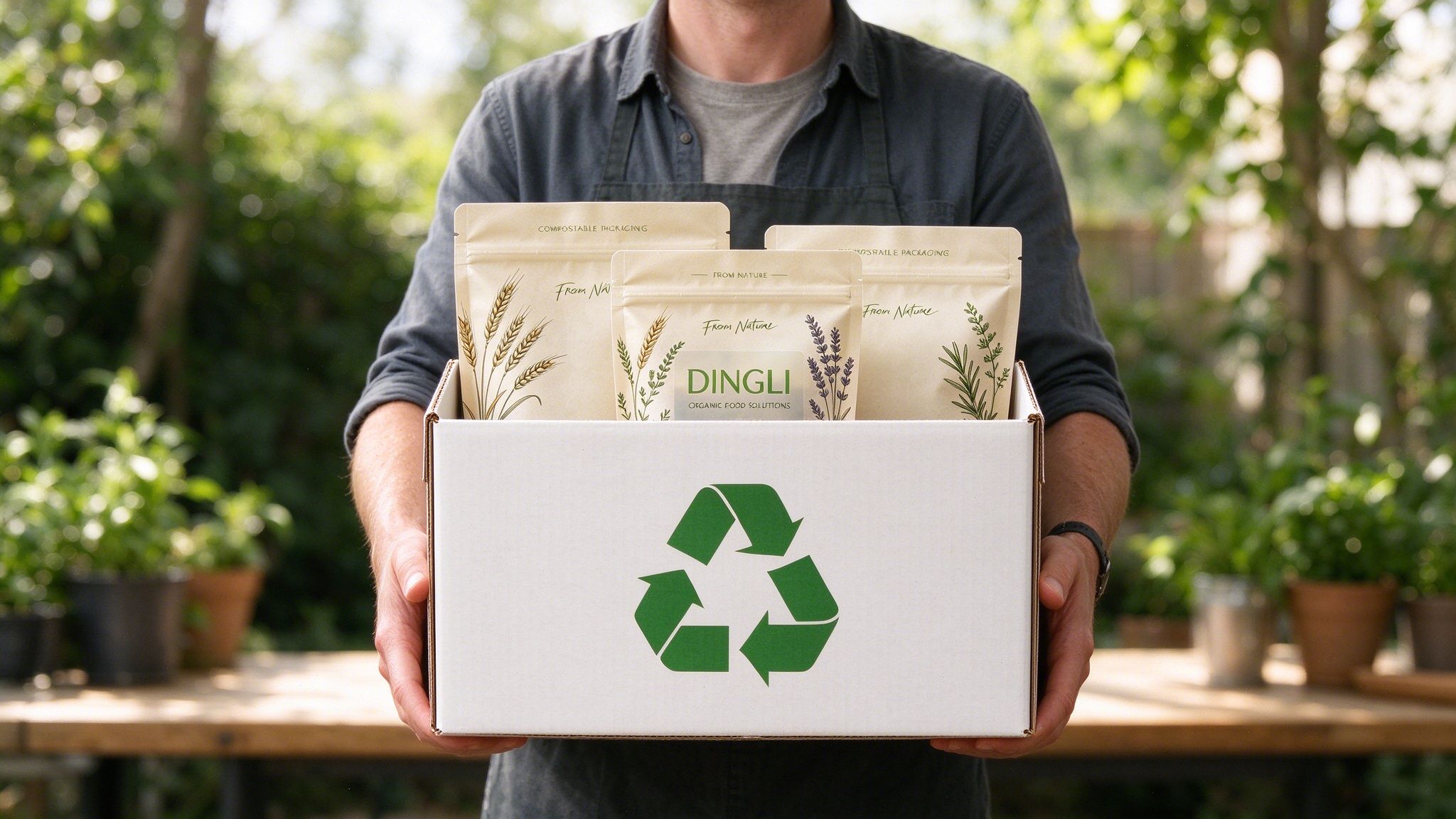
DINGLI PACK works with businesses looking for customized flexible packaging, OEM/ODM services, and factory-direct wholesale supply. Our packaging solutions cover different pouch styles and material options, including recyclable, mono-material, and compostable packaging options where suitable.
We support projects from material selection and artwork preparation through printing, lamination, slitting, converting, and inspection. Whether you are developing a new product or reviewing packaging for an existing product line, our team can help you compare suitable structures and customization options.
Explore our custom packaging services, including custom compostable packaging bags and one-stop packaging manufacturing services. Share your product details, target market, and estimated quantity with us. We can discuss the options that make sense for your project.
Let's Find the Right Packaging for Your Product
Send us your packaging brief. Our team will help you review material options, customization requirements, and the next steps for your order.
Frequently Asked Questions
1. How do I know if a sustainable packaging supplier is reliable?
Check its relevant manufacturing experience, material specifications, certificates, sample quality, and communication. Ask for documents that match the exact packaging you plan to order. A reliable supplier should also be able to explain limitations instead of making broad environmental promises.
2. What is the best way to find a packaging manufacturer for a small business?
Start with specific Google searches, B2B directories, LinkedIn, and industry recommendations. Shortlist three to five suppliers that offer your packaging style and ask about their MOQ, sample costs, and customization options. Compare the full project cost rather than only the unit price.
3. What should I send when requesting a custom packaging quotation?
Provide your product type, preferred bag style, dimensions, quantity, printing requirements, special features, and delivery country. If you do not know which material to choose, explain your product's shelf-life and protection requirements. The supplier can then recommend suitable options.
4. Is recyclable packaging always more expensive than conventional packaging?
Not necessarily. Pricing depends on the material structure, thickness, availability, printing method, dimensions, and order quantity. Some recyclable structures may cost more than conventional laminates, but the difference varies by project. Request quotations based on identical specifications to make a fair comparison.
5. Should I order samples before placing a bulk packaging order?
Yes. Samples let you check dimensions, material feel, print quality, seals, closures, and product compatibility before committing to production. For important performance requirements, ask about relevant test data as well. Approve the final specifications before starting the bulk order.
6. How can I compare sustainable packaging manufacturers in Europe and overseas?
Use the same technical brief for every supplier. Compare material options, relevant compliance documents, sample quality, production capability, communication, MOQ, lead time, and total delivered cost. Overseas manufacturing can offer useful customization and production options, but make sure shipping, import requirements, and quality checks are included in your planning.
Related Reading: Europe's Top 10 Eco-Friendly Packaging Manufacturers You Should Know
Ready to discuss your packaging project? Contact DINGLI PACK with your requirements and let us help you explore the next step.
ONE-STOP PACKAGING SOLUTION - From Concept to Shelf in 7 Days
At DINGLI PACK, we know how stressful packaging can be for small brands, store owners, and startups. That’s why we focus on making it simple, reliable, and tailored to your needs. From stand up pouches, coffee bags with valves, flat bottom bags, spout pouches, shrink sleeves...
Our team provides hands-on support—from free package design and material advice to practical OEM guidance—making sure your product looks great and stays protected. Want to see us in action? Check our Video Center.
With a 5,000 m² workshop and 24/7 support, we deliver fast replies, consistent quality, and peace of mind. Stay updated with our tips and stories in the News Section, or explore all our solutions on the Products Page.
We’re more than a supplier—we’re a partner who understands the challenges of growing a brand and is ready to make your packaging shine.
Related Sustainable Packaging Solutions
Explore more recyclable and eco-conscious packaging options designed for food, retail, and consumer brands.
Kraft Paper Stand Up Bags for Spices & Seasonings
A natural-looking packaging option for spice, seasoning, and dry food brands that need shelf appeal with sustainable material choices.
View Packaging Solution →Recyclable Back Seal Flat Pouches for Candy & Snacks
Designed for snack brands looking for practical packaging formats with recyclable structures, reliable sealing, and customized printing.
View Packaging Solution →Kraft Paper Zipper Pouches Wholesale
Flexible zipper pouch solutions for brands needing convenient resealing, attractive presentation, and sustainable packaging options.
View Packaging Solution →Related Packaging Insights
Learn more about materials, printing methods, and sustainable packaging trends before choosing your next package design.
Laminated vs Non-Laminated Pouches: Which Is Best?
Understand how pouch structures affect barrier performance, durability, and packaging selection.
Read Article →Which Pouch Printing Method Fits Your Needs?
Compare different printing options and find the right solution for your brand appearance and order requirements.
Read Article →Europe’s Top Eco-Friendly Packaging Manufacturers
Explore sustainable packaging trends and what brands should consider when selecting packaging suppliers.
Read Article →
HuizhouDingli Packaging Products Co.Ltd.


Post time: Nov-02-2026