
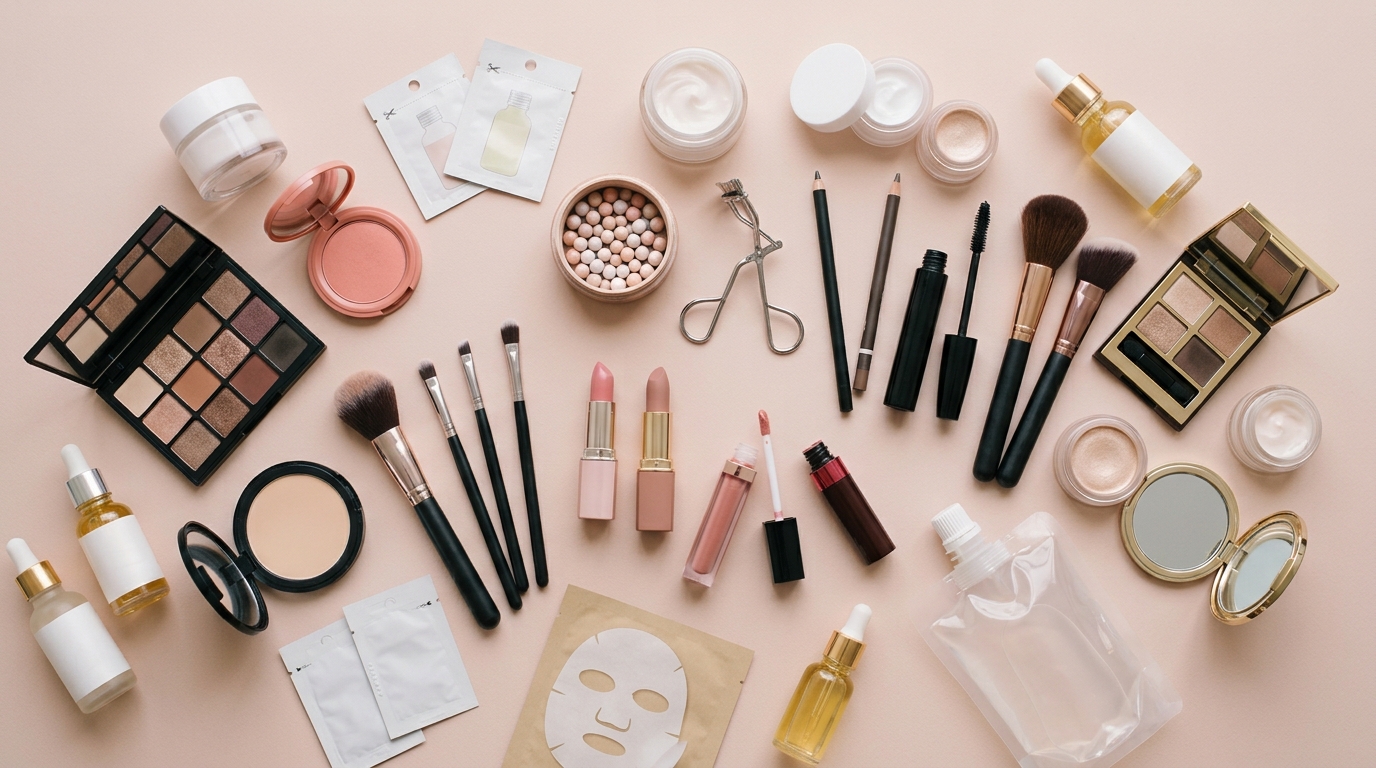
Your customers may love the formula, the bottle, and the way your skincare line looks on the shelf. But what happens when the product runs out? For beauty brands looking to reduce plastic without compromising product protection or shelf appeal, there is rarely a one-size-fits-all answer. The right approach depends on your formula, price point, sales channel, and refill strategy. Exploring custom printed beauty packaging is one way to rethink your packaging—from the materials you use to the experience you offer customers.
You don't have to redesign your entire product line, either. A refill pouch, a lighter container, or a mono-material structure may be enough to get started. Some brands will need a combination of approaches.
In this guide, we'll look at eight practical sustainable beauty packaging solutions, where each one makes sense, and what to check before committing. The goal is simple: make a packaging decision that works for your product and your business—not just your sustainability report.
Your reading guide
Quick Overview
A practical guide to lower-plastic beauty packaging
+
Why Is Reducing Plastic in Beauty Packaging So Challenging?

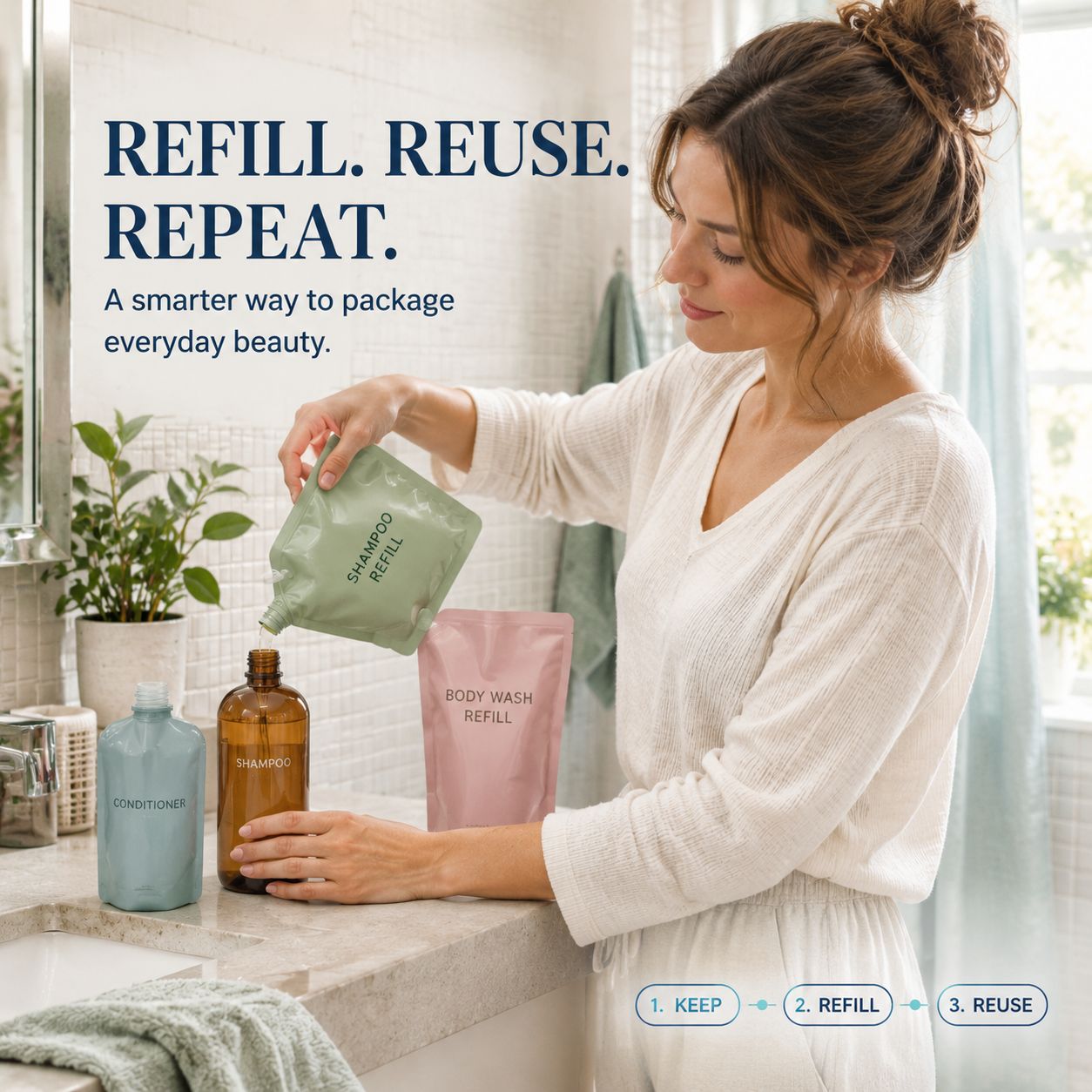
Reducing plastic sounds easy until you look at what a cosmetic package actually does. A moisturizer needs to stay stable. A vitamin C serum may need protection from oxygen and light. A sunscreen tube must dispense properly, while a premium cream jar often contributes to the product's perceived value.
Change one component, and you may affect filling, shipping, storage, or the customer experience. That's why a good packaging decision starts with the product—not a material trend.
Protecting the Formula Comes First
A lighter package isn't an improvement if it leaks in transit or allows the formula to deteriorate before its intended shelf life.
Different formulas need different levels of protection against oxygen, moisture, light, and contamination. A basic body lotion and a serum containing sensitive active ingredients may require very different packaging structures.
Before switching materials, check formula compatibility, seal integrity, and storage conditions. Your packaging supplier can help assess the structure, but product stability and shelf-life validation still need to be established for the specific formula.
Premium Packaging Still Matters
For some beauty brands, packaging is part of the product itself. A heavy glass jar, a distinctive cap, or a carefully finished carton can communicate quality before the customer even opens it.
Removing every premium feature isn't always the answer. Instead, look at which parts customers value and which parts they replace. A durable outer container paired with a lighter refill may preserve the original look while reducing the material needed for repeat purchases.
Alternative Materials Bring New Trade-Offs
Paper, recycled plastic, bio-based materials, and flexible packaging all have potential benefits. None is automatically the best choice for every cosmetic product.
Paper may need a barrier layer to resist moisture. Recycled resin may vary in color or processing behavior. Compostable materials may require specific disposal conditions that aren't available everywhere.
Choose materials based on the formula, packaging performance, and end-of-life options—not simply because one material sounds greener than another.
Packaging Changes Affect the Entire Supply Chain
A packaging quote tells only part of the story. Filling equipment, carton dimensions, shipping weight, warehouse space, tooling, and testing can all affect the final cost.
Set a clear target before changing anything: reduce plastic weight, improve recyclability, lower packaging costs, encourage refill purchases—or achieve several of these goals together.
8 Sustainable Beauty Packaging Solutions to Reduce Plastic
Not every brand needs all eight options. Some can start by removing unnecessary components; others may benefit from a completely different refill format. Here's what each approach can offer—and where it needs a closer look.
1. Lightweight Refill Cartridges and Integrated Filling Technologies
Picture a customer who has bought the same premium moisturizer for three years. They like the jar, recognize the brand, and don't want to replace the whole package every time the cream runs out.
A refill cartridge gives them another option. The brand keeps a durable outer shell and supplies a lighter inner container for replacement. Some integrated forming-and-filling technologies can also reduce the need to transport empty containers, depending on the production setup.
This approach may suit:
- Premium skincare with repeat-purchase demand.
- Long-running moisturizer, lotion, and essence lines.
- Brands that want to retain a recognizable outer package.
The business case depends on refill pricing, material savings, customer adoption, and how often the outer shell gets reused. Check the fit, seal, replacement process, and material weight before committing.
One catch: a refill system only delivers its intended benefits when customers actually use it. If replacing the cartridge feels like a small engineering project, adoption may suffer.
2. Refill Pouches for Skincare and Personal Care Products
Refill pouches let customers keep their existing bottle or jar instead of buying a complete rigid package with every purchase. Depending on the design, a spout can also make pouring easier and help reduce spills.
For brands, the opportunity goes beyond packaging weight. Refills can support subscriptions, loyalty programs, multipacks, and replenishment reminders. They can also create a separate product with its own pricing and sales strategy.
Products worth considering include:
- Body lotion and hand wash.
- Facial cleanser and toner.
- Shampoo and conditioner.
- Compatible liquid skincare products.
The structure must match the formula. A thin toner behaves differently from a thick lotion, so spout dimensions, barrier properties, seal strength, and filling conditions all deserve attention.
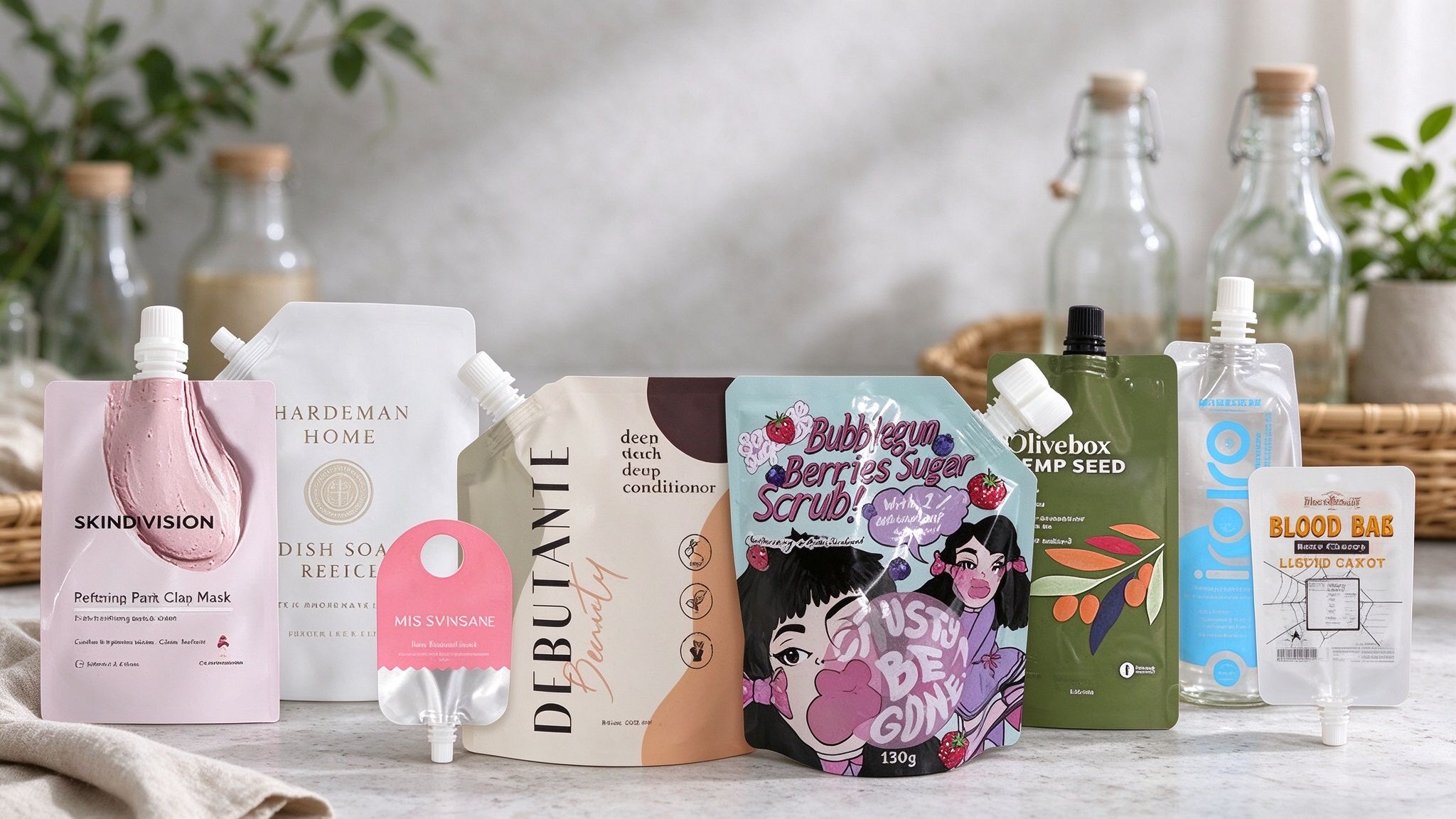
For brands exploring custom formats, custom eco-friendly fin-seal pouches offer one flexible packaging direction. For liquid products, custom matte-printed spout pouches are another option to consider.
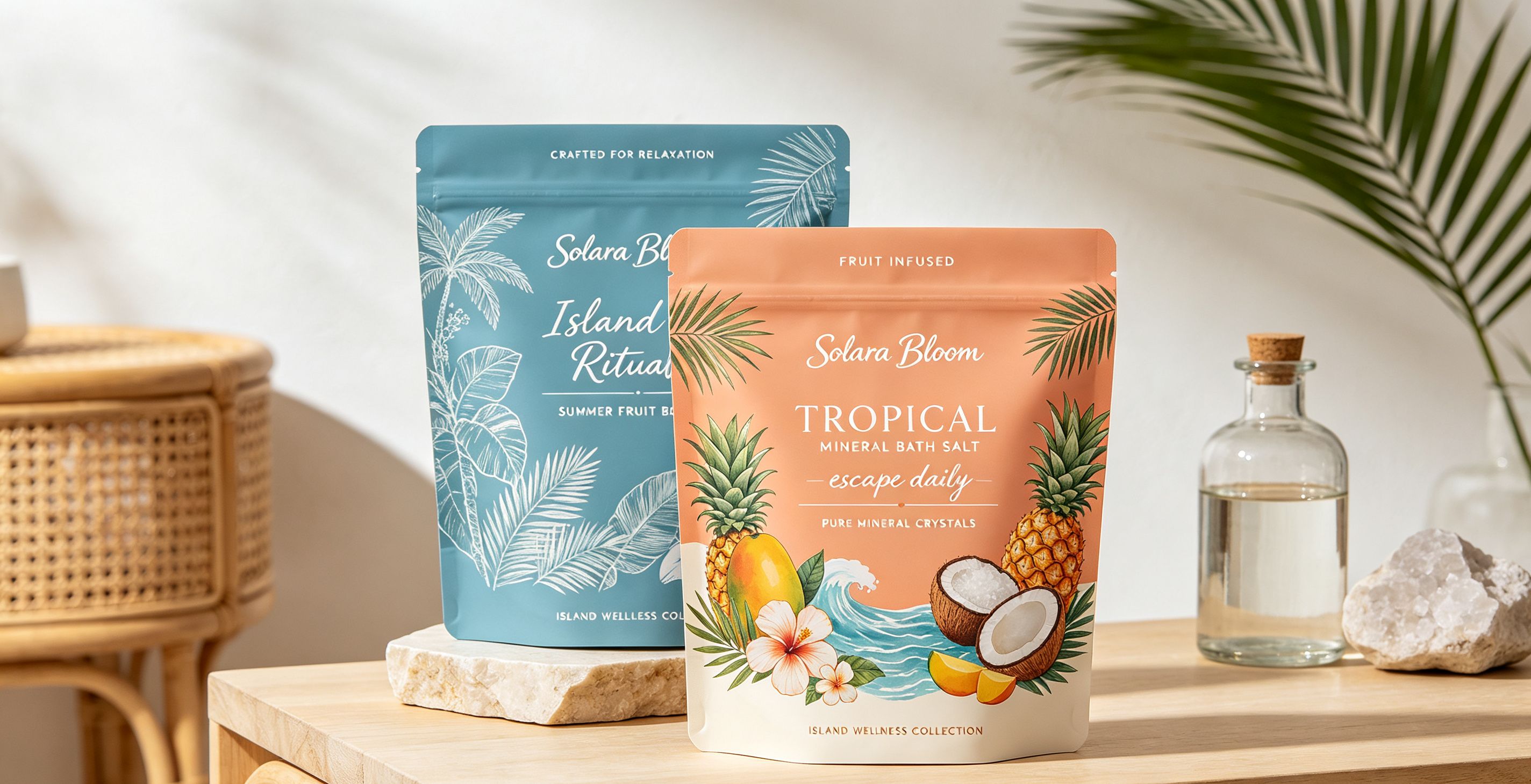
A matte finish can support a restrained, premium look, while custom printing helps keep your branding consistent across the original package and refill.
Keep the comparison fair: a refill pouch isn't automatically more sustainable than a bottle. Consider material use, refill frequency, product loss, transport, and local disposal options before drawing that conclusion.
3. Lightweight Packaging Through Structural Redesign
Sometimes the best packaging improvement is the one customers barely notice.
You may not need a new format at all. Reducing unnecessary material, simplifying the structure, or removing components that add little practical value can cut material use without changing how customers handle the product.
Possible changes include:
- Reducing container wall thickness where testing allows.
- Optimizing pouch dimensions to avoid unnecessary material.
- Removing redundant sleeves or decorative components.
- Improving package shape to use shipping cartons more efficiently.
- Evaluating paper-based tubes or flexible structures for suitable products.
This approach can work for hand creams, sunscreen, face masks, cleansers, and other personal care products. The main attraction is that brands may be able to improve an existing design without rebuilding the entire customer experience.
But there is a limit. Thinner material may increase punctures, deformation, or leakage if the structure isn't engineered properly. A smaller package can also create filling or dispensing problems.
Compare the current and proposed designs using package weight, material composition, seal performance, and transport tests. Less material is useful only when the package still does its job.
4. Replaceable Inner Cups and Refill Inserts for Premium Cosmetics
A replaceable inner cup usually sits inside a durable outer jar. Once the cream is finished, the customer removes the empty insert and fits a replacement—keeping the outer container.
For a premium skincare brand, this can preserve the weight, finish, and feel of a high-end jar without requiring a completely new outer package every time.
Potential applications include:
- Premium face creams.
- Anti-aging skincare.
- High-value treatment products.
- Giftable skincare ranges with reusable outer packaging.
The insert must fit securely, come out easily, and leave as little product behind as practical. Brands should also assess hygiene, filling operations, storage, and the cost of the replacement component.
A refill insert doesn't guarantee a lower environmental impact. The result depends on how much material it saves, how durable the outer container is, and whether customers reuse it enough times to justify the extra components.
5. Recycled and Alternative Materials for Cosmetic Packaging
Another option is to change the material rather than the way customers use the product. Recycled plastics, paper-based materials, and selected plant-derived materials can help brands reduce reliance on virgin fossil-based plastic or rethink individual packaging components.
| Material Option | Potential Benefit | What to Check |
|---|---|---|
| PCR Plastic | Uses post-consumer recycled material in place of some virgin resin. | Color consistency, odor, supply, and application suitability. |
| Paper-Based Packaging | Can reduce plastic use in suitable formats. | Moisture resistance, coatings, adhesives, and recycling conditions. |
| Plant-Derived Materials | May reduce reliance on fossil-based feedstocks. | Bio-based content, performance, sourcing, and end-of-life requirements. |
| Recycled-Content Flexible Packaging | Can support circular material goals where suitable structures are available. | Barrier properties, sealing, and verified recycled content. |
A paper carton may be relatively straightforward to redesign. A serum pouch that needs strong oxygen protection is a different story. Start with the packaging requirements, then compare materials that can meet them.
Don't treat recycled, bio-based, biodegradable, and compostable as interchangeable terms. They describe different properties, and none guarantees the same environmental outcome.
If compostable packaging is part of your strategy, check the material specification, relevant testing, and disposal conditions first. You can explore custom compostable packaging bags as a starting point for evaluating suitable flexible formats.
6. Mono-Material Packaging for Improved Recyclability
A package can use less plastic and still be difficult to recycle. That's why mono-material packaging deserves its own place in a sustainable beauty packaging strategy.
Traditional flexible packaging may combine several polymers, aluminum foil, adhesives, and other layers to achieve the required barrier and mechanical performance. Depending on the structure and local recycling system, those combinations can make material recovery more challenging.
Mono-material packaging aims to simplify the structure by using one main polymer family—such as polyethylene (PE) or polypropylene (PP)—across the layers where feasible.
The goal isn't necessarily to eliminate plastic. It's to design a package that better aligns with the requirements of a relevant recycling stream.
Where mono-material structures may be useful:
- Shampoo and body wash refill pouches.
- Liquid soap packaging.
- Selected skincare refill bags.
- Flexible packaging that can meet barrier requirements with a compatible material structure.
For example, a brand considering a PE-based refill pouch can evaluate a custom Mono-PE recyclable spout pouch for suitable liquid personal care products.
The design still has to perform. Check seal strength, puncture resistance, formula compatibility, and protection against oxygen or moisture where needed. Spouts, closures, inks, adhesives, and other components may also affect the recyclability of the complete package.
What should your team verify? Confirm the exact material composition, check the relevant recycling design guidelines, and establish whether suitable collection and processing systems exist in your target market.
Mono-material doesn't automatically mean recyclable everywhere. For beauty brands, though, it can be a useful direction when the goal is to improve flexible packaging design without giving up lightweight construction or custom printing.
7. Bio-Based Materials and Molded Fiber Packaging
Sometimes the best place to start isn't the bottle or pouch. Look at the parts around it.
Skincare gift sets and fragrance collections often include trays, inserts, and protective components. Some can be redesigned using molded fiber or other suitable bio-based materials, potentially replacing certain plastic trays or foam inserts.
Potential applications include:
- Skincare gift sets.
- Fragrance packaging.
- Makeup collections.
- Seasonal and promotional beauty kits.
A well-designed fiber insert can hold products in place while creating a more cohesive unboxing experience. It can also give the package a different texture and appearance without relying on decorative plastic components.
But the material must still survive shipping. Humidity, compression, and impact can affect performance. Additional coatings or protective layers may be necessary, so include them in your material and recycling assessment.
Bio-based doesn't automatically mean biodegradable or compostable. Those properties depend on the actual material composition and relevant testing. For many beauty brands, molded fiber works best as one part of a broader packaging strategy.
8. Recyclable Paper-Based Secondary Packaging
Secondary packaging is often a practical place to begin because it can be redesigned without changing the container that directly holds the formula.
Think about the carton around a serum bottle, the tray inside a skincare gift box, or the sleeve around a cosmetic tube. These components may offer opportunities to remove unnecessary plastic film, simplify inserts, or reduce excess space.
Possible changes include:
- Using recycled paperboard where appropriate.
- Removing unnecessary plastic windows or laminations.
- Replacing plastic inserts with suitable paper-based alternatives.
- Reducing carton size to fit the product more closely.
- Choosing printing and finishing methods compatible with the intended recycling route.
This can be useful for retail products, e-commerce orders, and gift sets, where packaging must balance protection, presentation, and shipping efficiency.
Still, paper isn't automatically the better choice. Coatings, laminations, adhesives, and mixed-material components can affect recyclability. The carton also needs enough strength to protect the product during storage and transit.
One distinction matters: changing the outer carton doesn't necessarily reduce plastic in the primary packaging. If that's your goal, review both the inner and outer components.

How to Choose the Right Sustainable Packaging for Your Beauty Brand
With eight possible approaches, where should you start? Work backward from the product, the customer, and the business objective. A refill pouch may suit a high-volume body wash, while a premium serum may need a different structure to protect its formula.
Start With Your Formula and Product Requirements
List the key requirements before requesting quotes. Is the formula water-based, oil-based, or highly viscous? Does it contain ingredients sensitive to oxygen or light? How long must it remain stable? Will it be shipped internationally or stored in hot conditions?
These details help narrow down suitable packaging structures and barrier requirements. Without them, comparing materials is a bit like choosing a raincoat without checking the weather.
Match the Format to Your Price Point and Customer Behavior
A premium cream with loyal repeat customers may benefit from a reusable outer jar and replacement insert. A high-volume cleanser may be a better candidate for a refill pouch.
Ask yourself three questions:
- Will customers realistically reuse the original package?
- Does the new format make replenishment easier or more affordable?
- Can the brand maintain the expected product experience?
The answers will help determine whether to prioritize refillability, material reduction, or a redesigned package.
Compare Total Costs, Not Just Unit Prices
A package with a lower unit price may require changes elsewhere in the supply chain. A more expensive refill structure might create repeat-sales opportunities or reduce shipping weight. You need to compare the full picture.
- Material and conversion costs.
- Printing, tooling, and setup costs where applicable.
- Filling equipment compatibility.
- Shipping weight and carton dimensions.
- Storage requirements and product losses.
- Minimum order quantities and forecast demand.
- Testing and validation costs.
A cost comparison based on your expected order volume can reveal which solution is commercially realistic. Don't assume the lowest material cost will deliver the lowest total cost.
Check Regulations and Recycling Infrastructure in Your Target Market
A package designed for one country may not have the same recovery options in another. Collection systems, sorting technology, recycling guidelines, and regulatory requirements vary.
If you sell in the US, UK, EU, or Australia, check the requirements relevant to each market. Your supplier can provide material specifications and supporting documentation, but your brand must ensure that its environmental claims and market-specific compliance are properly supported.
Test Before Scaling Up
A packaging change should be validated before it becomes a large production commitment.
Request samples, check the fit and dispensing experience, and conduct relevant sealing, leakage, transport, and compatibility tests. Products with demanding barrier requirements may need additional testing to establish suitability for the intended shelf life.
Start with one or two suitable products. Measure the results, collect customer feedback, and then decide whether to expand. A small, well-tested change beats a costly redesign that looks good on paper but fails on the production line.
How Sustainable Packaging Can Support Beauty Brand Growth
Reducing plastic is an environmental objective, but the right packaging decision can also support everyday business goals. The commercial value depends on the product and how you implement the change. Three opportunities are worth considering.
Reduce Material Use and Improve Shipping Efficiency
Lightweight packaging can reduce material use per unit. Flexible pouches may also take up less space than some rigid formats, especially during empty-package transport or when finished products are packed efficiently.
Actual savings depend on package dimensions, filling processes, shipping configuration, and order volume. Measure those factors rather than assuming every flexible format will outperform every rigid container.
Use Refills to Build Repeat-Purchase Relationships
A refill isn't just a different package. It can become a distinct product in your sales strategy.
Brands can offer replenishment reminders, subscription options, refill bundles, or loyalty incentives. The original container keeps the product recognizable, while the refill gives customers a convenient way to buy again.
For this model to work, the refill needs to be easy to use, competitively priced, and readily available. If customers struggle to transfer the product or can't find the right replacement, the repeat-purchase opportunity weakens.
Make Sustainability Claims Specific and Verifiable
Customers see claims such as "eco-friendly," "green," and "plastic-free" everywhere. Broad statements can be difficult to verify—and may create unnecessary compliance risks.
More useful claims describe a measurable change, such as:
- A reduction in packaging weight compared with a defined previous design.
- The verified percentage of recycled material used.
- The use of a specified mono-material structure.
- The removal of a particular secondary packaging component.
Document the baseline, measurement method, and scope of each claim. If the improvement applies only to the pouch, don't imply that the entire product is plastic-free or fully recyclable. A credible sustainability story starts with a change you can explain—and back up.
How to Work With a Custom Packaging Manufacturer on Your Plastic Reduction Goals
You don't need to arrive with a finished design. What helps most is a clear picture of your product, your current packaging, and what you want to improve.
DINGLI PACK works with brands and businesses exploring customized flexible packaging formats, including printed pouches and refill packaging. The first step is to identify the requirements your new package must meet.
Share Your Current Packaging Specifications
When contacting a supplier, provide as much of the following information as you can:
- Product type and formula characteristics.
- Current package format and dimensions.
- Target fill volume and dispensing method.
- Required barrier and sealing performance.
- Target sales markets.
- Expected order quantity and annual demand.
- Your main objective: lower material use, refillability, recyclability, or a combination.
You don't need every detail finalized. Even an initial specification helps narrow down the options and makes supplier discussions more productive.
Evaluate Suitable Materials and Pouch Structures
Depending on your product, you may want to compare conventional flexible packaging with a lighter structure, a refill format, or a mono-material option.
DINGLI PACK can help you explore relevant packaging formats and customization requirements. The final choice should reflect product protection, manufacturing feasibility, target-market conditions, and the performance of the finished package.
If you're comparing options, explore custom recyclable pouches to review flexible packaging directions, or discuss your specifications with DINGLI PACK before settling on a material structure.
Request Samples and Validate Performance
Before placing a large order, confirm that the proposed package works with your product and filling process.
Check dimensions, opening and dispensing, seal integrity, leakage risk, and transport durability. Where necessary, arrange product compatibility and shelf-life validation through the appropriate testing process.
Samples help you assess appearance and handling, but they don't replace the testing needed to establish product protection and production consistency.
Plan for Consistent Production
A package that works in a small trial must also perform reliably at your intended production volume.
Discuss material specifications, printing requirements, tolerances, quality checks, lead times, and order planning before scaling up. If you're managing several product formats, a coordinated packaging plan may also help reduce unnecessary design variation and simplify purchasing.
To learn more about DINGLI PACK's manufacturing and customization capabilities, visit our one-stop packaging manufacturing page.
Final Thoughts: Sustainable Beauty Packaging Starts With the Right Design
There is no single material or packaging format that solves every beauty brand's sustainability challenges.
Refill cartridges can preserve premium outer packaging. Refill pouches can reduce the need for complete replacement containers. Lightweight designs can cut material use, while mono-material structures may improve compatibility with specific recycling systems. Recycled materials, molded fiber, and paper-based secondary packaging offer other options—with their own limitations.
Look at the complete package: what it protects, how much material it uses, how customers handle it, how it moves through the supply chain, and what happens after use.
Your next step might be as simple as reviewing one high-volume product or comparing your current packaging with a refill alternative.
DINGLI PACK can help you explore custom flexible packaging options based on your product requirements and business goals. Share your current specifications, target quantity, and packaging priorities through our contact page, and start evaluating a solution that works for your product—not just your sustainability statement.
Eco-Friendly Beauty Packaging FAQs
01 What is the best eco-friendly packaging for skincare and beauty products? +
02 Are recyclable refill pouches suitable for shampoo, lotion and liquid skincare? +
03 How do I choose the right pouch size, spout and closure for beauty refills? +
04 Can eco-friendly cosmetic packaging provide enough barrier protection and leak resistance? +
05 What compliance checks are needed for recyclable beauty packaging? +
06 What is the MOQ and price for custom printed eco-friendly beauty packaging? +
ONE-STOP PACKAGING SOLUTION - From Concept to Shelf in 7 Days
At DINGLI PACK, we know how stressful packaging can be for small brands, store owners, and startups. That’s why we focus on making it simple, reliable, and tailored to your needs. From stand up pouches, coffee bags with valves, flat bottom bags, spout pouches, shrink sleeves...
Our team provides hands-on support—from free package design and material advice to practical OEM guidance—making sure your product looks great and stays protected. Want to see us in action? Check our Video Center.
With a 5,000 m² workshop and 24/7 support, we deliver fast replies, consistent quality, and peace of mind. Stay updated with our tips and stories in the News Section, or explore all our solutions on the Products Page.
We’re more than a supplier—we’re a partner who understands the challenges of growing a brand and is ready to make your packaging shine.
Related Sustainable Packaging Solutions
Explore more recyclable and eco-conscious packaging options designed for food, retail, and consumer brands.
Kraft Paper Stand Up Bags for Spices & Seasonings
A natural-looking packaging option for spice, seasoning, and dry food brands that need shelf appeal with sustainable material choices.
View Packaging Solution →Recyclable Back Seal Flat Pouches for Candy & Snacks
Designed for snack brands looking for practical packaging formats with recyclable structures, reliable sealing, and customized printing.
View Packaging Solution →Kraft Paper Zipper Pouches Wholesale
Flexible zipper pouch solutions for brands needing convenient resealing, attractive presentation, and sustainable packaging options.
View Packaging Solution →Related Packaging Insights
Learn more about materials, printing methods, and sustainable packaging trends before choosing your next package design.
Laminated vs Non-Laminated Pouches: Which Is Best?
Understand how pouch structures affect barrier performance, durability, and packaging selection.
Read Article →Which Pouch Printing Method Fits Your Needs?
Compare different printing options and find the right solution for your brand appearance and order requirements.
Read Article →Europe’s Top Eco-Friendly Packaging Manufacturers
Explore sustainable packaging trends and what brands should consider when selecting packaging suppliers.
Read Article →
HuizhouDingli Packaging Products Co.Ltd.


Post time: Oct-27-2026