
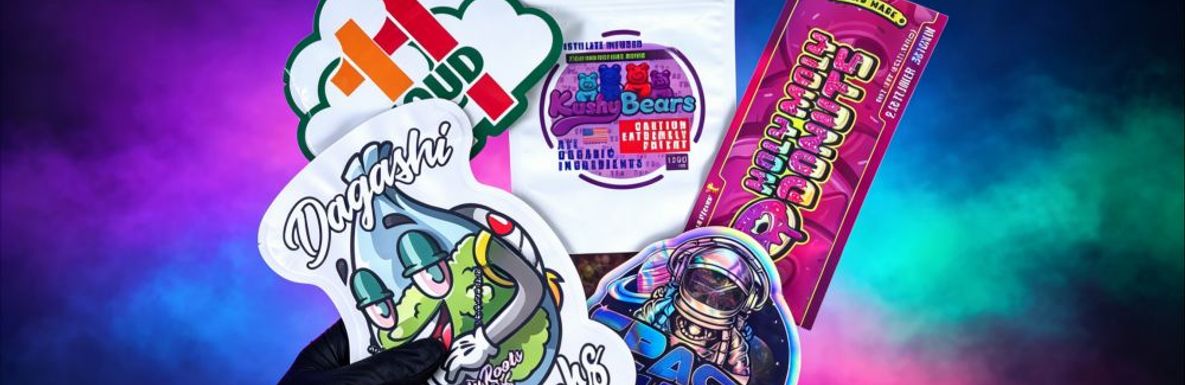
Have you ever looked at your Mylar packaging in a design file and felt confident about it, only to find that in real retail environments it quietly disappears among competitors? This gap between expectation and reality is more common than most brands admit.
In today’s retail landscape, products are not evaluated in detail. They are scanned, compared, and eliminated within seconds. In that short moment, consumers are not reading—they are reacting. This is why even well-designed packaging can fail when it does not communicate fast enough or clearly enough.
This is also where structural packaging solutions become important. For example, Custom Logo Mylar Bag Display Boxes are designed not only as packaging, but as a retail visibility tool that actively participates in shelf communication rather than passively sitting on it.
At DINGLI PACK, this is a recurring pattern we observe across food, vape, supplement, and herbal brands. The challenge is rarely about product quality. It is almost always about how the product is visually perceived in the first few seconds of shelf exposure.
Why Mylar Packaging Gets Overlooked in Real Retail Environments

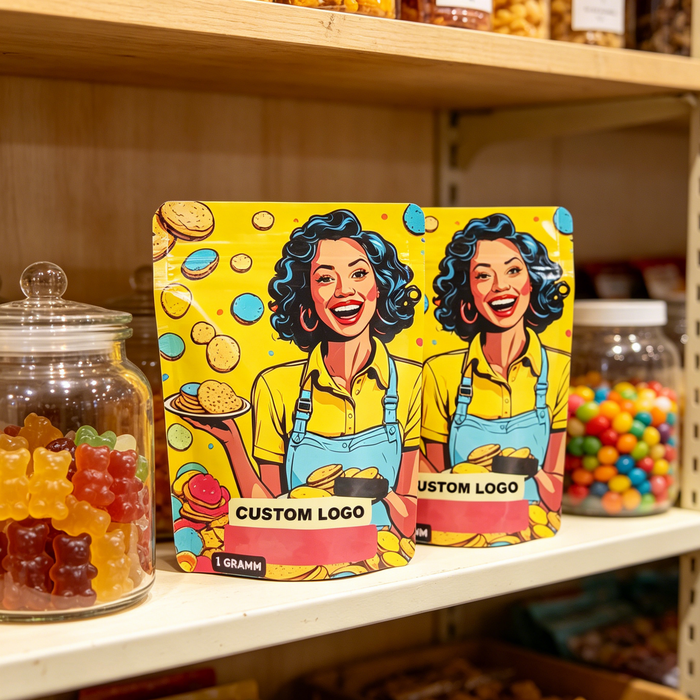
One of the most common issues lies in visual structure. When packaging does not guide the eye naturally, everything competes at the same level. The result is confusion rather than clarity. Brand names lose dominance, product identities blend into the background, and nothing feels anchored enough to hold attention.
Another critical factor is shelf contrast. Retail environments are visually dense, and without intentional differentiation, even high-quality packaging fades into the surrounding noise. When colors sit too close to category norms or when finishes fail to create separation, the product becomes visually familiar—and familiarity often leads to indifference.
We often see this even in structured formats such as Custom Printed Stand Up Mylar Pouches. The design may be technically correct, but without contrast or hierarchy, it still struggles to stand out on crowded shelves.
There is also a tendency among many brands to rely on overly generic design language. Templates, minimal layouts, and repetitive visual systems may feel safe during development, but on shelf they often fail to create identity. When packaging does not express a clear personality or category signal, it becomes interchangeable, and interchangeable products are easily ignored.
Information structure plays an equally important role. Some packaging attempts to communicate too much at once, filling every surface with messaging. Others go in the opposite direction, leaving too little information for consumers to understand value. In both cases, the outcome is the same: hesitation, followed by disengagement.
Print quality further amplifies these issues. Inconsistent color, weak finishing, or subtle production defects can significantly reduce perceived value. Mylar material, with its reflective surface, tends to highlight imperfections rather than hide them. This becomes especially visible in everyday consumer categories such as snack products, where trust is often built visually before anything else. Packaging like Cookie Snack Packaging relies heavily on this first impression to drive impulse purchase behavior.
How Consumers Actually Process Packaging on Shelf
When consumers approach a shelf, they do not read packaging line by line. Instead, their eyes move in patterns, typically scanning for color blocks, bold text, and simple shapes before anything else. If the key message is not located within this scanning path, it is effectively never processed.
Decisions are also heavily influenced by mental shortcuts. Color becomes a proxy for category, typography suggests brand positioning, and material finish signals price expectation. These judgments happen instantly and often unconsciously, which means packaging is shaping perception long before any logical evaluation begins.
Within this process, there is a silent filtering mechanism at work. If a product is not immediately understood, it is ignored. If it does not feel trustworthy, it is skipped. If it does not stand out, it is mentally grouped as ordinary. This is where many Mylar products lose visibility, not because they are weak, but because they fail to interrupt this automatic filtering process.
What Effective Mylar Packaging Actually Does Differently
Strong packaging design begins with structure, not decoration. A clear visual hierarchy ensures that the eye naturally lands where it should, guiding the consumer from brand identity to product understanding in a controlled sequence. Without this structure, even visually appealing packaging can feel directionless.
Another important practice is competitive shelf testing. Packaging should never be evaluated in isolation. When placed alongside competitors, its ability to stand out becomes immediately clearer. This real-world comparison often reveals issues that are not visible in digital mockups.
Simplification is equally important. Effective packaging does not try to communicate everything at once. Instead, it focuses on one dominant message and allows secondary details to support rather than compete with it. This clarity is what allows consumers to process information quickly without cognitive friction.
Successful brands also build what can be described as memory anchors. These may take the form of consistent color systems, recognizable graphic elements, or signature structural layouts. Over time, these repeated cues create familiarity, and familiarity builds recall.
Structural innovation further strengthens this effect. Packaging formats such as Custom Die Cut Mylar Bags or scalable retail sizes like Custom Printed Mylar Bags demonstrate how structure, functionality, and branding space can be balanced to support both compliance and visibility.
DINGLI PACK: Turning Packaging Into Shelf Performance
At DINGLI PACK, packaging is not treated as a simple manufacturing output. It is approached as a retail performance system designed to improve visibility, clarity, and conversion in real shelf environments.
As a professional Mylar packaging factory, we provide end-to-end solutions that include material selection, structural design, printing precision, and scalable production. More importantly, we align these elements with how consumers actually behave in retail spaces, not just how packaging looks in isolation.
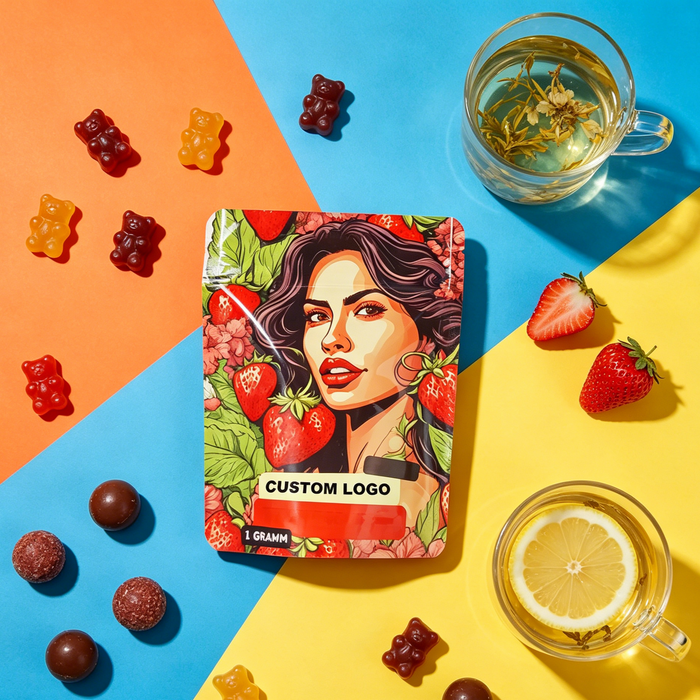
Our team supports global brands across food, vape, herbal, supplement, and snack industries, helping them move beyond generic packaging into systems that are designed for attention and recognition.
From concept to final production, every stage is controlled with one objective in mind: ensuring your product is not just seen, but noticed, understood, and remembered.
If you are exploring custom packaging solutions or would like to discuss a project, you can reach us directly through our Contact Page or learn more about our capabilities on the DINGLI PACK .

ONE-STOP PACKAGING SOLUTION - From Concept to Shelf in 7 Days
At DINGLI PACK, we know how stressful packaging can be for small brands, store owners, and startups. That’s why we focus on making it simple, reliable, and tailored to your needs. From stand up pouches, coffee bags with valves, flat bottom bags, spout pouches, shrink sleeves...
Our team provides hands-on support—from free package design and material advice to practical OEM guidance—making sure your product looks great and stays protected. Want to see us in action? Check our Video Center.
With a 5,000 m² workshop and 24/7 support, we deliver fast replies, consistent quality, and peace of mind. Stay updated with our tips and stories in the News Section, or explore all our solutions on the Products Page.
We’re more than a supplier—we’re a partner who understands the challenges of growing a brand and is ready to make your packaging shine.
Address
Block B-29,
VanYang Crowd Innovation Park ,
No 1 ShuangYang Road,
YangQiao Town, BoLuo District,
HuiZhou City, 516157, China
Phone
Support: +86 13410678885
Hours
Monday-Friday: 9am to 6pm
Saturday, Sunday: Closed


Post time: May-04-2026