
“Can we go eco-friendly without raising costs? Will it still protect the product? Can we do it in small quantities?”
In 2026, sustainable packaging affects compliance, cost, and customer perception. Many brands struggle to balance cost, performance, and practicality.
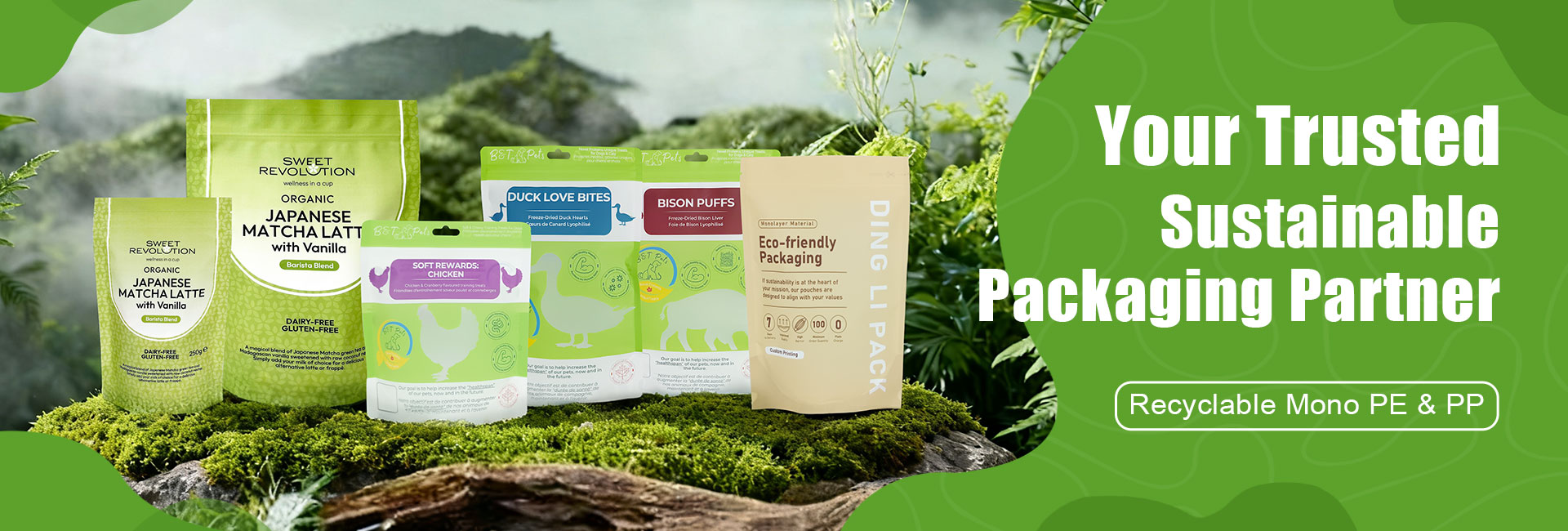
That’s why more brands are starting with practical, scalable options like recyclable stand-up pouches. Not because they solve everything at once, but because they offer a balanced starting point—reliable barrier performance, improved recyclability, and manageable cost structure.
What’s Actually Changing in Sustainable Packaging

From Material Choice to System Thinking
A few years ago, choosing kraft paper or recyclable films was enough to signal sustainability. Today, that’s just the surface layer.
More brands are realizing that packaging works like a system—if one part is inefficient, the whole structure feels it. You might choose an eco-friendly material, but if your pouch size isn’t optimized, you end up shipping unnecessary air. That translates directly into higher logistics costs and increased carbon emissions.
In other words, sustainable packaging is no longer just about what it’s made of—but how it performs across its entire lifecycle.
Why Mono-Material Is Becoming the Industry Baseline
Multi-layer laminates used to dominate because of their strong barrier properties. But recycling them is complex—and increasingly restricted by regulations.
Mono-material packaging simplifies that equation. By using a single polymer structure, it improves recyclability while maintaining functional performance.
Solutions like mono-material high-barrier pouches are gaining traction because they combine compliance readiness with reliable protection.
Lightweighting: A Practical Cost Lever
Lightweighting is one of the few strategies that improves both sustainability and profitability at the same time.
By reducing unnecessary thickness or optimizing structure, brands can:
- Lower raw material costs
- Reduce shipping weight
- Improve overall efficiency
It’s not about changing everything—it’s about removing what’s not needed.
Compostable vs Recyclable: Choose Based on Market Reality
Compostable packaging sounds appealing, but it depends heavily on local infrastructure. Without proper facilities, its benefits may not be realized.
Recyclable packaging, by contrast, is often more practical and scalable in markets like the US and EU.
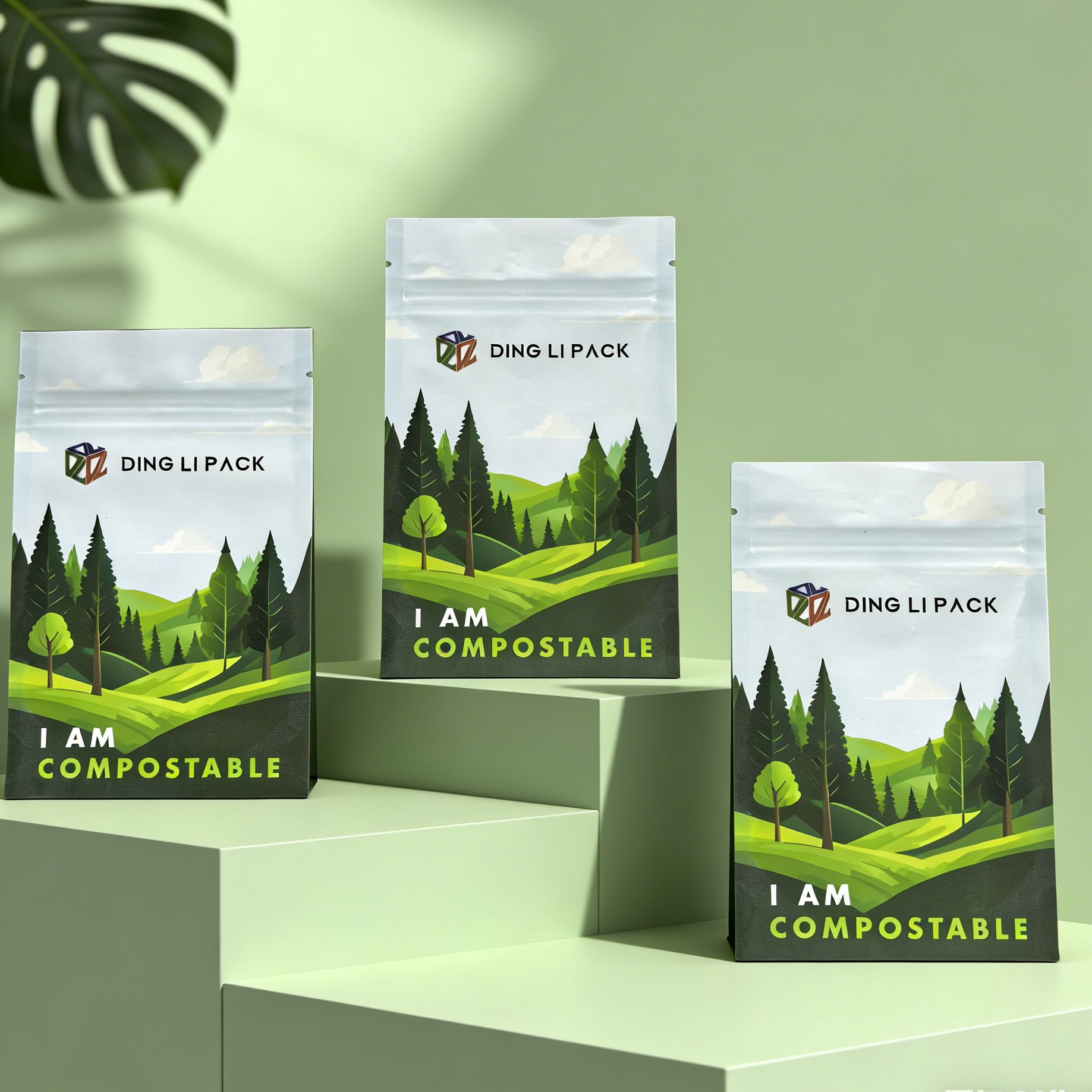
That said, for niche positioning, compostable stand-up pouches can still reinforce a strong eco-focused brand identity.
Where Brands Commonly Go Off Track
Focusing on Labels Instead of Real-World Use
Adding an “eco-friendly” label doesn’t guarantee impact. Packaging must align with actual disposal systems and customer behavior.
Going Too Premium Too Early
High-end materials can quickly increase cost pressure. Many brands instead begin with custom printed kraft stand-up pouches, balancing visual appeal, cost control, and brand presence.
Ignoring Functional Performance
Packaging still needs to protect your product. Poor sealing, weak barriers, or low durability can lead to customer dissatisfaction and lost repeat sales.
That’s why options like kraft paper zipper pouches remain widely used—they combine usability with sustainability perception.
How to Balance Sustainability and Cost
Start with a Transitional Strategy
Instead of aiming for perfection, start with recyclable solutions and improve step by step as your business scales.
Choose Flexible MOQ Suppliers
Smaller production runs allow you to test and refine packaging without overcommitting inventory.
Optimize Design Before Materials
Often, structural improvements deliver faster cost and sustainability gains than switching materials entirely.
Regulations in 2026: Why They Matter
Global regulations are tightening, especially in the EU. Requirements now focus on recyclability, material safety, and packaging efficiency.
Non-compliance can result in fines, product removal, and restricted market access.
At the same time, regions like the UK, North America, and Southeast Asia are introducing their own policies—making sustainable packaging a baseline requirement for global trade.
A Practical Takeaway for Growing Brands
The goal isn’t to find the “most sustainable” packaging—it’s to find the most suitable solution for your current stage and market.
If you’re evaluating your options, you can start a conversation here:
Contact DINGLI PACK
Or explore more about our capabilities:
Visit Our Homepage
Conclusion
Sustainable packaging in 2026 isn’t about doing more—it’s about doing it smarter.
For growing brands, it offers a way to improve efficiency, meet regulations, and build stronger customer trust. The key is to approach it as a process—one that evolves with your business.
So the real question isn’t whether you should switch to sustainable packaging—but how to do it in a way that actually works.
ONE-STOP PACKAGING SOLUTION - From Concept to Shelf in 7 Days
At DINGLI PACK, we know how stressful packaging can be for small brands, store owners, and startups. That’s why we focus on making it simple, reliable, and tailored to your needs. From stand up pouches, coffee bags with valves, flat bottom bags, spout pouches, shrink sleeves...
Our team provides hands-on support—from free package design and material advice to practical OEM guidance—making sure your product looks great and stays protected. Want to see us in action? Check our Video Center.
With a 5,000 m² workshop and 24/7 support, we deliver fast replies, consistent quality, and peace of mind. Stay updated with our tips and stories in the News Section, or explore all our solutions on the Products Page.
We’re more than a supplier—we’re a partner who understands the challenges of growing a brand and is ready to make your packaging shine.
Address
Block B-29,
VanYang Crowd Innovation Park ,
No 1 ShuangYang Road,
YangQiao Town, BoLuo District,
HuiZhou City, 516157, China
Phone
Support: +86 13410678885
Hours
Monday-Friday: 9am to 6pm
Saturday, Sunday: Closed


Post time: Mar-30-2026